Author: Jean-Philippe

  • Mastering oneself

    Mastering oneself

    It Was Never You Versus Them. It Was Always You Versus You.

    You’re not in competition with the people around you. Everyone is running a different race, carrying different burdens, chasing different goals, walking a path you’ll never fully understand. The only comparison that matters is the one between who you are today and who you were yesterday.

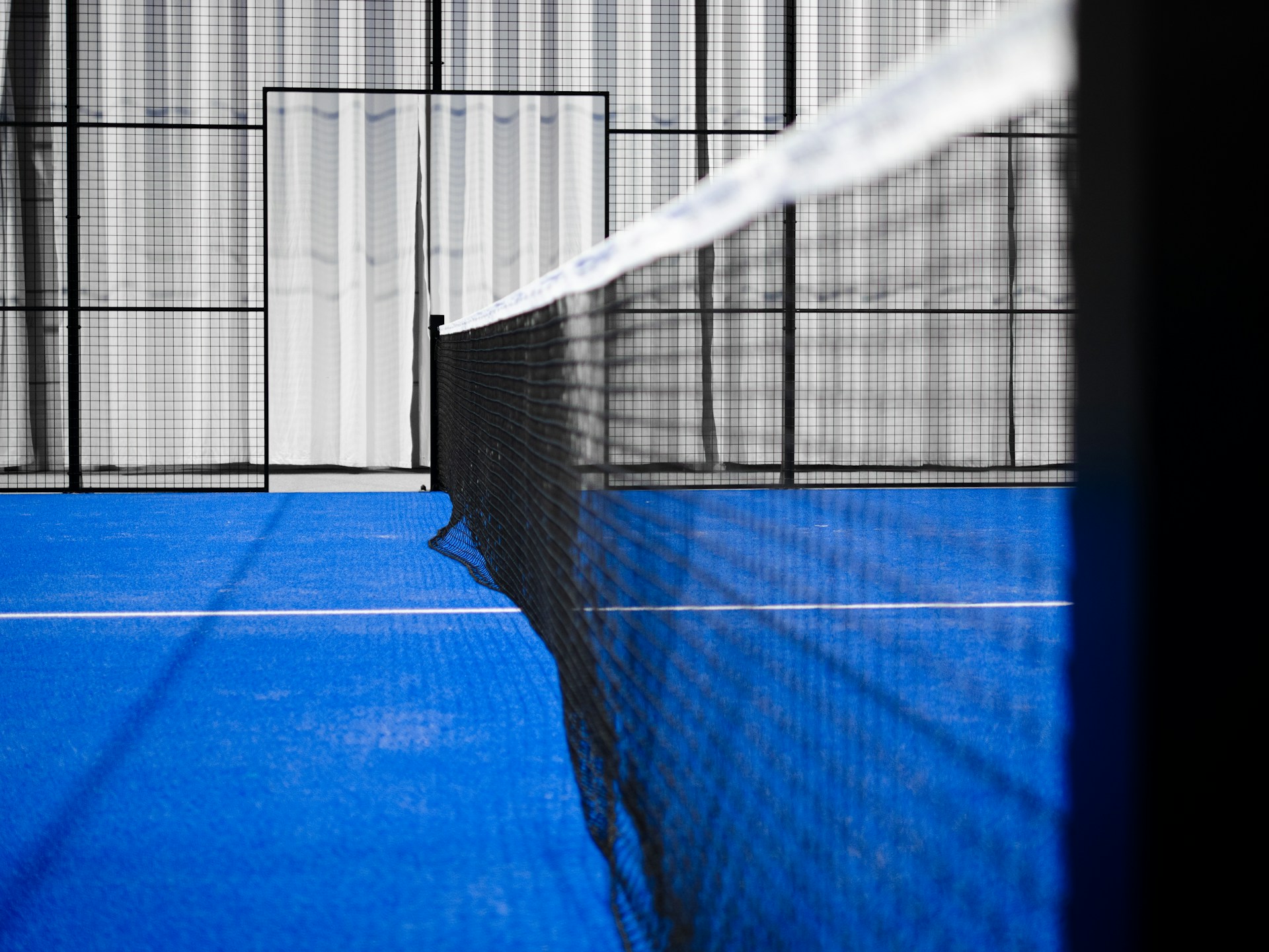
    A few years ago I took up padel, which is what a hairdresser does when he wants to be humbled by geometry. Last Tuesday I lost a match to a man half my age, and spent most of it furious at him. Between games, my partner set me straight: “Count the points. He’s hit maybe four winners all night. Everything else, we handed over. You’re not losing to him. You’re losing to yourself.”

    I counted. He was right. And on the drive home I realised he had described considerably more than padel.

    [Switches to serious face.] What follows is what I wish someone had told me thirty years ago — about the match each of us is actually playing.

    The Only Comparison That Matters

    Life becomes much simpler when you stop measuring yourself against everyone else. The truth is, you’re not in competition with the people around you. Everyone is running a different race, carrying different burdens, chasing different goals, and walking a path you’ll never fully understand.

    The only comparison that matters is the one between who you are today and who you were yesterday.

    Have you grown? Have you learned from your mistakes? Have you become wiser, stronger, kinder, or more disciplined?

    If the answer is yes, then you’re already succeeding.

    padel001

    The only place where your life can actually change is this present moment. Photo: Unsplash

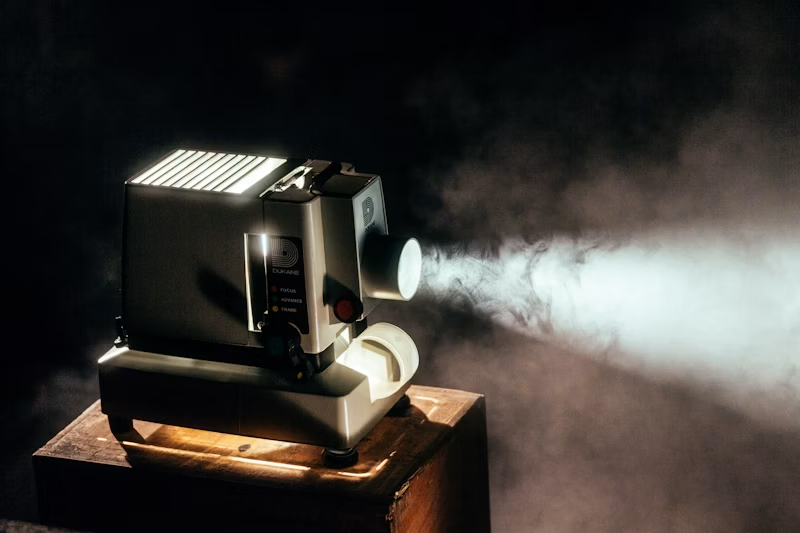
    The Movie in Your Head

    One of the greatest obstacles to that growth isn’t other people. It’s your own mind. We spend far too much time worrying about a future that hasn’t happened and replaying a past that cannot be changed. We suffer more from our imagination than we do from reality. Fear steals today’s peace by making us live in tomorrow’s problems, while regret keeps us chained to yesterday’s pain.

    Neither serves us.

    The past has already taught its lessons. The future will arrive when it arrives. The only place where your life can actually change is this present moment. Letting go of fear and regret doesn’t mean pretending painful experiences never happened. It means refusing to let them continue controlling the person you’re becoming.
    padel002

    Photo: Unsplash

    Kindness Needs Boundaries

    Growth also requires learning the difference between kindness and self-sacrifice.

    Having a good heart is a strength, but without boundaries it quickly becomes an invitation for others to take advantage of you. Some people mistake compassion for weakness. They assume your patience has no limits, your forgiveness has no end, and your generosity comes without a cost.

    That’s when respect begins to disappear.

    Being kind doesn’t mean allowing yourself to be disrespected. Real kindness includes respecting yourself enough to say no, to walk away when necessary, and to protect your peace. The saying “treat others the way you want to be treated” only works when respect flows in both directions. Without reciprocity, kindness becomes exploitation.

    An important truth to remember is that people give you what they have, not what you deserve.

    Someone who hasn’t learned to love cannot genuinely offer love. Someone who doesn’t respect themselves often struggles to respect others. A person who lives in constant chaos cannot bring peace into your life.

    Their behavior is a reflection of their character, not your worth.

    What you deserve isn’t determined by how someone else treats you. It’s determined by the standards you set for yourself and the behaviors you’re willing, or unwilling, to accept.

    “People give you what they have, not what you deserve.” — Their behavior is a reflection of their character, not your worth.

    Attitudes Are Contagious

    Those standards become even more important when you consider the people you surround yourself with. Attitudes are contagious. So is negativity.

    Researchers have shown that introducing just one consistently negative person into a group dramatically increases conflict while reducing cooperation, creativity, and performance. And those effects appeared after less than an hour together.

    Now imagine what years of exposure can do.

    Protecting your mental health isn’t selfish. It’s necessary. Not everyone deserves unlimited access to your time, your energy, or your attention. Sometimes the healthiest decision you can make is to let certain people go.

    padel005

    One bad apple, the researchers found, is not a figure of speech. Photo: Unsplash

    Red Cars

    The same principle applies to opportunity.

    Many people believe luck is something that randomly happens to a fortunate few. In reality, opportunity often goes unnoticed because we aren’t paying attention. If someone promised to pay you for every red car you spotted today, you would suddenly notice red cars everywhere. They didn’t magically appear. Your focus simply changed.

    Life works the same way.

    Opportunities surround us every day, but we only recognize what we’ve trained ourselves to see. The mind finds what it looks for. Focus on obstacles, and you’ll find reasons to quit. Focus on possibilities, and you’ll begin to notice doors that were always there.

    padel004

    The red cars didn’t magically appear — your focus changed. Photo: Unsplash

    The Receipts

    None of this is only folk wisdom. “We suffer more often in imagination than in reality” goes back to Seneca, two thousand years before anyone could measure a stress hormone. The one-bad-apple finding comes from modern research on team dynamics, and institutions like Berkeley’s Greater Good Science Center have documented the mirror image for two decades: calm, gratitude, and goodwill spread through groups just as infectiously as negativity does.

    You Versus You

    At the end of the day, the quality of your life is shaped less by what happens to you and more by where you place your attention, who you allow into your life, the boundaries you choose to protect, and the person you decide to become.

    Don’t waste your energy trying to outperform everyone else. Invest it in becoming a little wiser than yesterday, a little stronger than yesterday, and a little more at peace than yesterday.

    Because in the only competition that truly matters, it’s never you versus them.

    It’s always you versus you.

    Back to the Court

    We played the rematch this week. I lost again — padel is not a fairy tale — but the score tightened, because this time I played my own game instead of his. On one of the last points, my partner called out “Better!” after a rally we lost. He was keeping the only score that updates.

    I touched a related thread in a previous piece on the lemon that never existed — proof, in sixty seconds, that we suffer more from imagination than from reality. Tuesday’s match was the same lesson with a racket in my hand: the opponent was mostly a spectator, the disasters were mostly rehearsals, and the doors were mostly open.

    As for the salon — years in, the count stands at one chair, one mirror, and one opponent, who shows up every morning . Some mornings I win. The rematch is daily.

    The Salon California Journal is a space for ideas, culture, and conversation from my chair in Brasschaat, Belgium. I write about beauty, technology, society, and the intersections between them.
  • Portugal Pavilion

    Portugal Pavilion

    It Weighs 1,400 Tons. It Floats Like a Sheet of Paper.

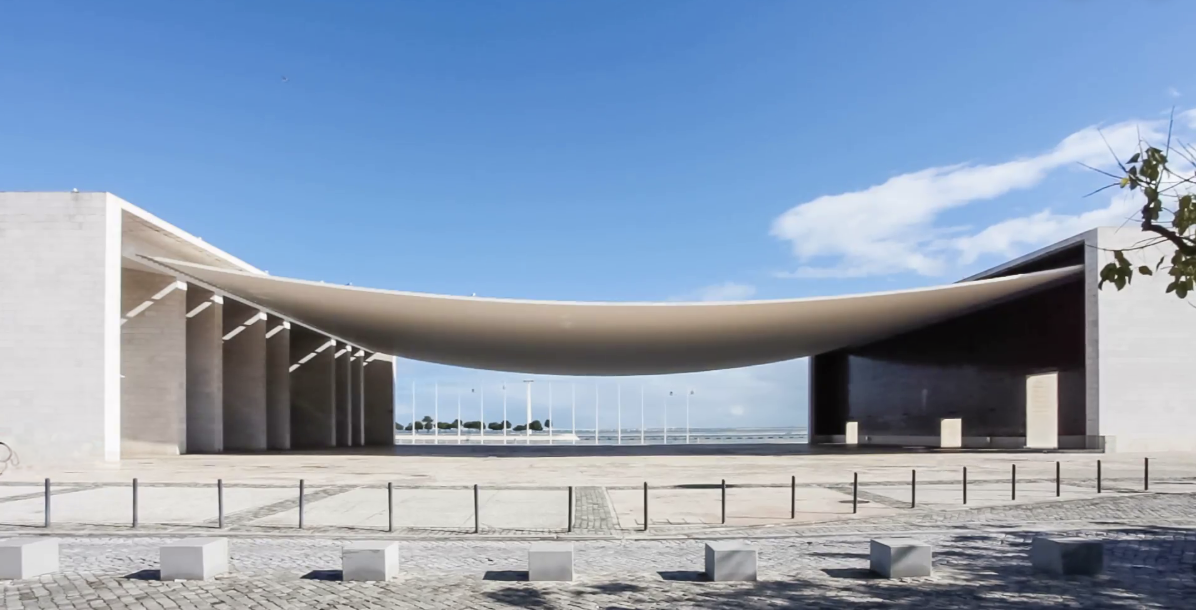
    For the 1998 World Expo in Lisbon, Álvaro Siza draped a concrete canopy — twenty centimeters thick, sixty meters of open span, not a single column beneath it — between two porticos, and framed a river with it. Nearly three decades later, it remains one of Europe’s most remarkable buildings, and one of its least famous. Both of those facts are worth explaining.

    A client came back from Lisbon last week with a sunburn and eight hundred photos. She scrolled through them in the chair — trams, tiles, custard tarts photographed with the reverence usually reserved for newborns — and then stopped at a picture that did not fit the set. A vast, empty plaza by the water. Above it, a grey sheet hanging in the air.

    “This thing,” she said. “We walked under it by accident. Enormous concrete… curtain? There was no sign, nobody around. My husband refused to stand under it. He said it looked like it was falling.”

    “It’s been falling since 1998,” I said. “Very slowly. That’s the design.”

    She looked at me. “You know what it is?”

    “You photographed the Pavilion of Portugal. Your husband refused to stand under one of the great architectural achievements in Europe.”

    [Switches to serious face.] The Pavilion of Portugal is one of the most remarkable buildings on the continent, and it rarely gets the recognition it deserves. It was built for the 1998 World Expo in Lisbon, and its centrepiece is a concrete canopy that weighs approximately 1,400 tons and appears to float effortlessly above an open plaza. The two years I spent studying architecture left me with a shortlist of buildings I think about while sweeping hair off a floor. This one is near the top.

    1998 the Lisbon World Expo for which Álvaro Siza built the pavilion — the last great World’s Fair of the twentieth century

    1,400 tons the approximate weight of the concrete canopy that appears to hang in the air like fabric

    20 cm the thickness of the concrete shell encasing the steel cables — a veil of concrete, at the scale of a city block

    60 m  the span of the canopy across the open plaza — without a single supporting column beneath it

    portugal005

    Photo: Unsplash

    A Sheet of Paper and Two Bricks

    The concept behind the design was elegantly simple — simple enough to demonstrate on any desk in the world. Take a sheet of paper. Drape it between two bricks. Look at the curve it makes as it sags under its own weight: relaxed, natural, inevitable. Nobody has to calculate that curve. Gravity draws it for free.

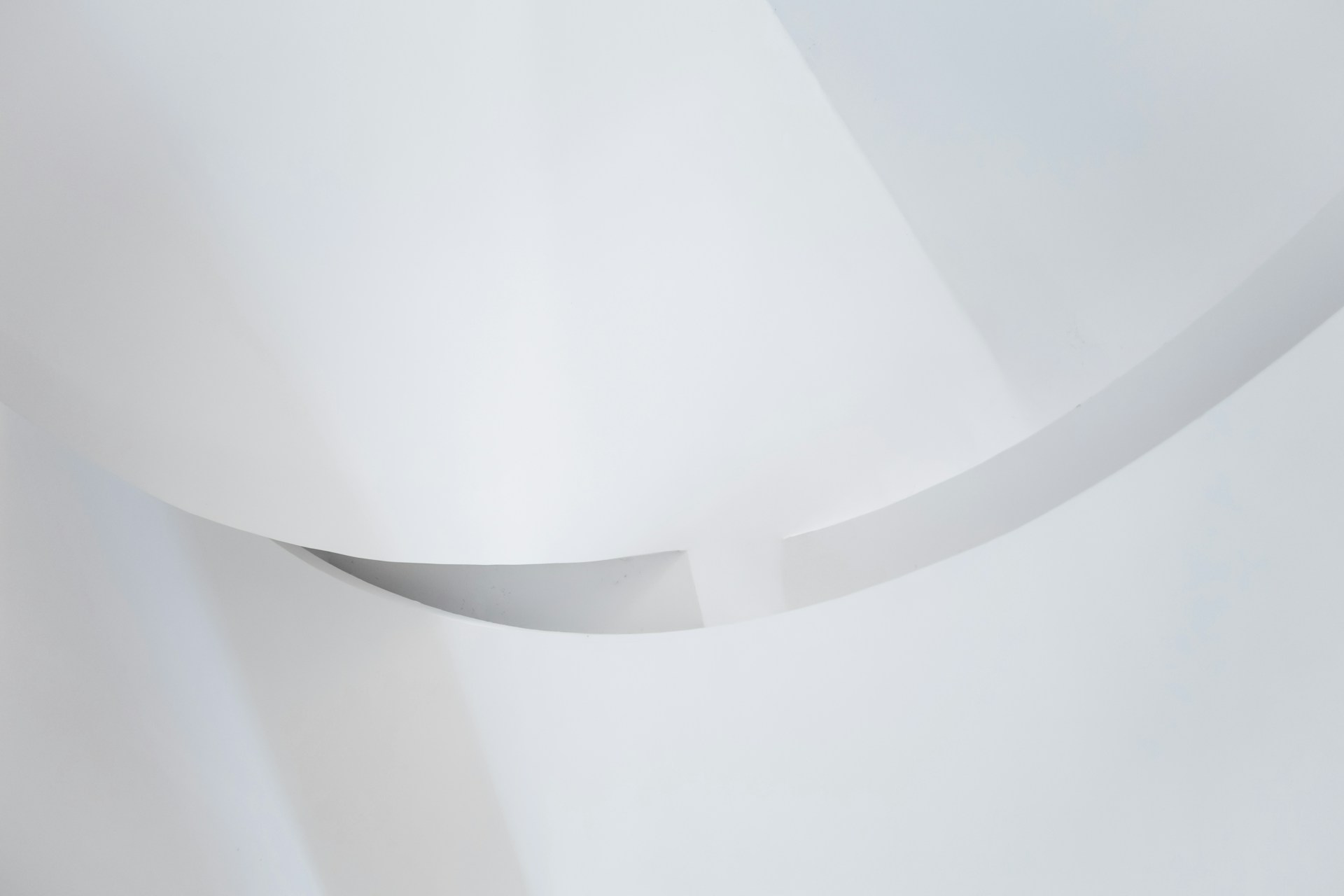
    Álvaro Siza took that gesture and rebuilt it at the scale of a city block. The canopy of the Pavilion of Portugal works like a suspension bridge lying on its side of the sky: steel cables span between two massive porticos, and the cables are encased in a concrete shell just twenty centimeters thick. The concrete does not fight the sag. It accepts it — hangs in the exact curve the paper would choose — and stretches sixty meters across the plaza without a single column underneath.

    The result is a public space with nothing in it. No supports, no interruptions, no furniture of structure. Just shade, air, and at the open end, framed as deliberately as any painting, the Tagus River.

    portugal002

    The entire design brief: a sheet of paper and some bricks. Now make it 1,400 tons, and make it look easy. Photo: Unsplash

    The Trick Is That There Is No Trick

    Here is what I find quietly radical about it. Most spectacular structures advertise their effort. They cantilever, they twist, they bristle with the visible machinery of defying gravity, and the message is always the same: look how hard this was. Siza’s canopy does the opposite. It hangs the way heavy things actually want to hang. The engineering is extraordinary — a catenary of steel dressed in a veil of concrete — but the form is the most honest one available. The building is not defying gravity. It is agreeing with gravity, in public, at enormous scale.

    That is why the husband refused to stand under it, and why he was wrong, and why his instinct was also exactly correct. It does look like it is falling. A sheet of paper between two bricks is falling — permanently, gracefully, held at the moment of sag. The unease is not a flaw in the design. It is the design, felt honestly.

    “The building is not defying gravity. It is agreeing with gravity, in public, at enormous scale.” — Which takes more nerve than defiance ever does. Ask anyone who has tried agreeing with something stronger than they are.

    Turning the City Back Toward the Water

    Siza designed the pavilion around that framed view of the Tagus with a larger purpose in mind. Lisbon was born on that river — fed by it, enriched by it, launched from it — and then spent decades of urban development turning its back on the water: docklands, industry, infrastructure, the usual slow divorce between a port city and its port. Expo ’98 was staged on exactly that kind of forgotten industrial waterfront, and Siza’s contribution was not just a building but an argument: that the first thing a pavilion of Portugal should do is look at the river Portugal sailed from.

    So the canopy frames the water the way you would frame a family portrait. The empty plaza is not unfinished space. It is a viewing device the size of a city square, pointed at the Tagus, holding the view open for anyone who walks in — by accident, sunburned, mid-vacation — and looks up.

    portugal003

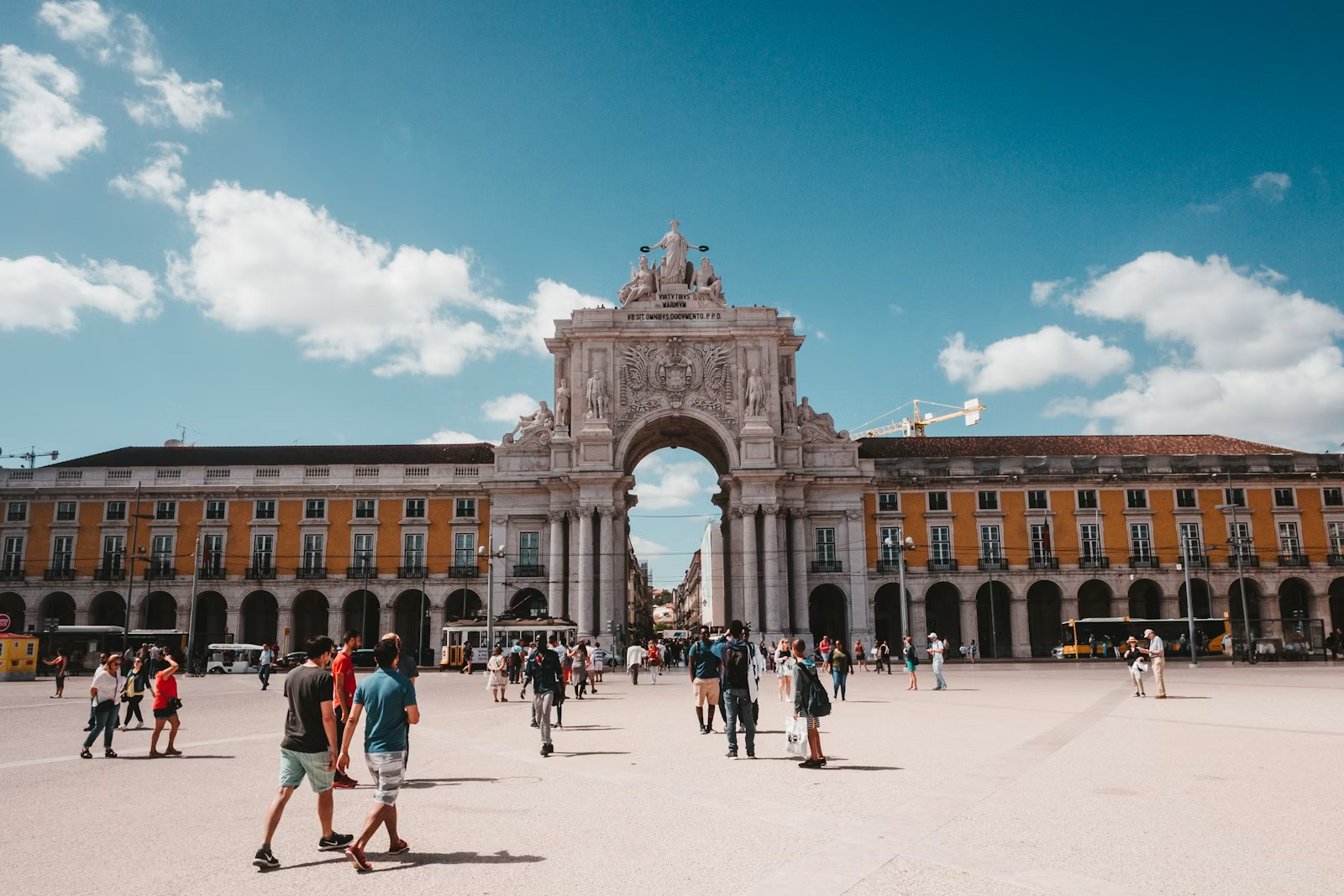
    Lisbon has always known how to open a square toward its river — the Praça do Comércio has done it for centuries. Siza’s pavilion makes the same gesture in one modern breath of concrete. Photo: Unsplash

    The Quiet Master

    None of this is out of character for its architect. Álvaro Siza — Portugal’s most revered architect and a Pritzker Prize laureate — has spent a career building things that refuse to shout. His buildings are white, calm, precise, and stubbornly attentive to where they are; critics have spent decades trying to photograph what makes them great and mostly failing, because what makes them great is how they feel to stand in, not how they look in a frame. Publications like ArchDaily have documented the pavilion extensively, and the photographs are beautiful — and even so, every account eventually admits the same thing: you have to stand under it.

    After Expo ’98 closed, the pavilion stood largely unused for years — a masterpiece with no programme, which says less about the building than about how cities treat quiet things. Louder landmarks get budgets, campaigns, gift shops. The pavilion simply stood there, framing its river, waiting out the decades the way it waits out gravity. Nearly thirty years on, it remains an enduring symbol of visionary engineering and timeless design — and one of architecture’s best-kept secrets, hiding in the open, twenty centimeters thin.

    The islands that never saw the check. Photo: Unsplash

    Back to the Chair

    My client texted her husband from the chair. I know this because she read me his reply: “You’re telling me the falling roof is famous?”

    Not famous, I told her. Great. The two overlap less often than we assume.

    I touched a related thread in a previous piece on Mies van der Rohe, and the perfectionism that hides itself — the idea that the highest form of effort is the kind that leaves no fingerprints. Siza’s canopy belongs to the same family. The years of cable calculations, the formwork, the tonnage — all of it resolved into a single gesture a child could understand: paper, two bricks, gravity. When the work is done well enough, what remains is not the work. What remains is the idea, standing by a river, looking effortless.

    In my line of work the ambition is smaller but the principle is identical: the best result is the one that looks like it simply grew that way. I have spent years learning to hide effort inside simplicity, and I am still not as good at it as a concrete roof in Lisbon. There is no shame in that. Neither is anything else in Europe.

    The Salon California Journal is a space for ideas, culture, and conversation from my chair in Brasschaat, Belgium. I write about beauty, technology, society, and the intersections between them.

  • Lemon

    Lemon

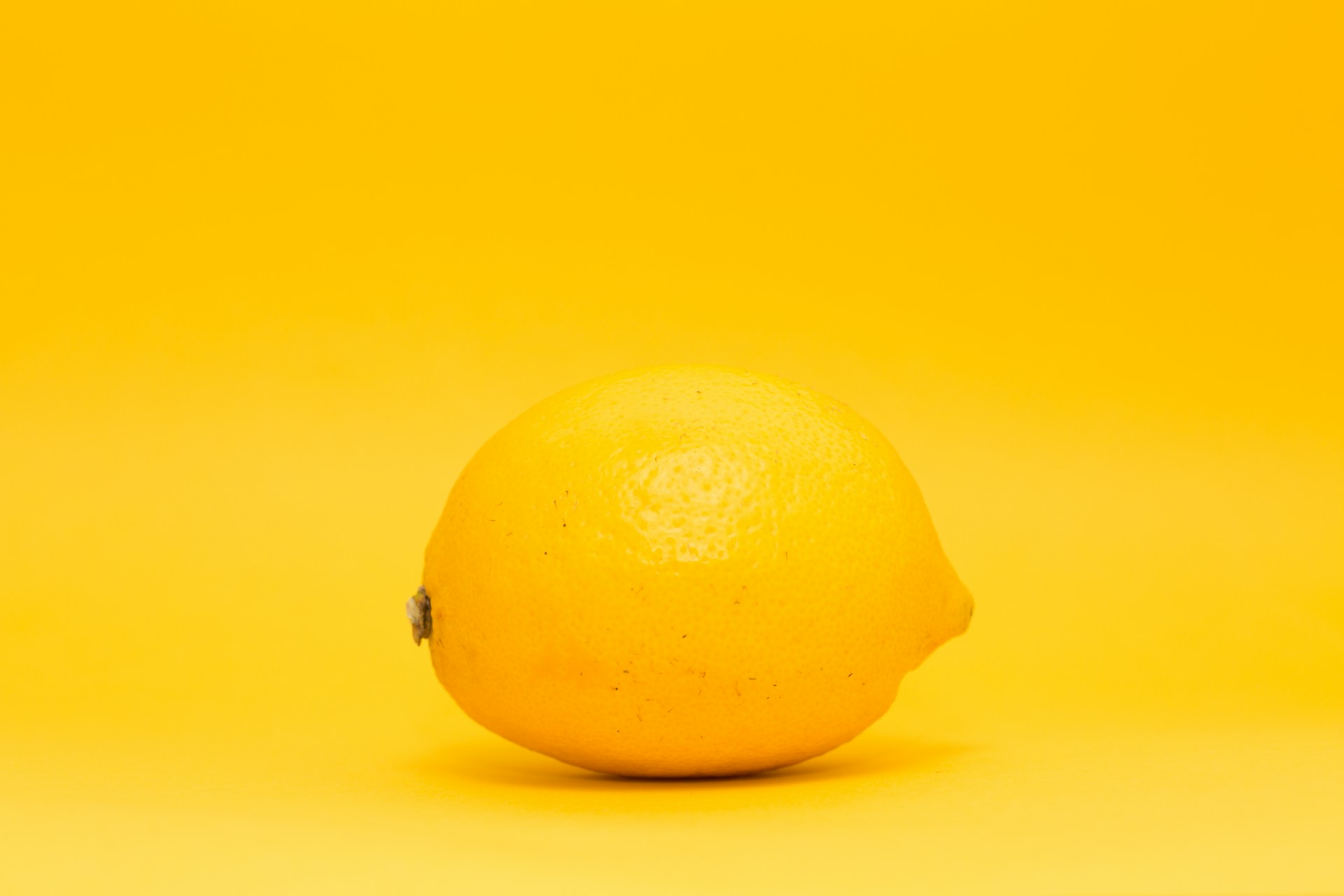
    There Was Never a Lemon. Your Body Believed It Anyway.

    In sixty seconds, a piece of fruit that does not exist can make your mouth water, your jaw tighten, and your throat sting. Which raises an uncomfortable question about everything else you vividly imagine — especially the disasters. Your body is always listening. The only question is what you are telling it.

    A client sat down in the chair last week already exhausted by something that had not happened. A conversation she was going to have to have — with a colleague, the following Monday. She had been rehearsing it for days. “I’ve run it a hundred times,” she said. “Every version ends badly. My heart is pounding right now, just telling you about it.”

    “Can I try something?” I said. “It takes sixty seconds, and it involves a lemon.”

    “A lemon.”

    “Close your eyes. Humour me. You’re standing in your kitchen. On the counter sits a bright yellow, perfectly ripe, juicy lemon. Reach out and pick it up. Feel the cool, waxy skin in the palm of your hand. Now take a knife and slowly slice it in half. Watch the juice burst from the fruit. Smell that sharp citrus scent filling the air. Now take one half… and bite into it as hard as you can. The sour juice floods your tongue. The tingling. Your jaw tightening. That sting at the back of your throat.”

    I watched her face pucker in the mirror.

    “Open your eyes,” I said. “Did your mouth water?”

    “It’s still watering. That’s horrible. Why did you do that to me?”

    “Because there was never a lemon.” [Switches to serious face.] No fruit, no juice, no knife — nothing physically present. And yet her body responded as if it were all real: saliva, jaw, throat, the works. In sixty seconds she had produced physical evidence of something most of us never quite believe about ourselves. Your body does not simply react to what is happening around you. It reacts to the images and stories your mind creates.

    60 seconds — roughly how long the lemon experiment takes to produce a real, measurable response from your body

    0 lemons present. No juice, no scent, no knife — nothing but a picture held in the mind

    1930’s when physiologist Edmund Jacobson showed that merely imagining a movement produces measurable activity in the very muscles that would perform it

    24/7 how often your body is listening to the pictures your mind rehearses — including the ones you would never choose to screen

    lemon002

    The lemon that never existed, and the machine that made it.  Photo: Unsplash

    The Projector and the Screen

    What the lemon demonstrates is not a party trick. It is the basic architecture of being a person. Somewhere in your head a projector runs day and night, and your body is the screen it plays on. The autonomic systems that water your mouth, tense your muscles, and speed your heart do not conduct an independent investigation into whether the lemon exists. They take the picture and respond to the picture.

    This has been measured for nearly a century. In the 1930s, the physiologist Edmund Jacobson attached electrodes to people and asked them merely to imagine movements — and recorded real electrical activity in the corresponding muscles. Nothing moved, and yet everything prepared to. Athletes have built an entire discipline on this: sprinters, skiers, and pianists rehearse performances in vivid mental detail because the rehearsal itself trains the system. The body attends the screening and takes notes.

    lemon003

    Your body watches whatever is playing. Photo: Unsplash

    The Lemons You Bite at Three in the Morning

    Here is where the experiment stops being amusing.

    If your imagination can make your mouth water over a lemon that does not exist, consider what it is doing when you replay worst-case scenarios about your future. The difficult conversation, run a hundred times, every version ending badly. The diagnosis you have not received. The mistake you might make in a meeting that has not been scheduled. Situations you are afraid might happen — and, mostly, never do.

    Your body attends every one of those screenings too. Your heart races. Your muscles tense. Stress hormones are released. The alarm systems that evolved for actual tigers respond to imagined ones with impressive sincerity — the physiology of the stress response does not first check the film against reality. My client’s pounding heart in the chair was not reacting to Monday’s conversation. Monday’s conversation did not exist yet. It was reacting to her hundredth rehearsal of it — a lemon she had been biting into, hard, for days.

    “You’re not just reacting to life. More often than not, you’re reacting to the movie playing inside your own mind.” — And unlike the cinema in town, this one never closes, and you are the only member of the audience.

    A Word of Nuance

    Let me be precise, because precision is the point. Your brain, as a whole, does know the difference between imagination and reality — you do not walk out of a daydream confused about whether you actually bit a lemon. The claim is narrower and better supported: the body’s automatic response systems react to vivid imagery in many of the same ways they react to the real thing. Harvard Health’s overview of the stress response describes how the alarm can be tripped by perceived threats, not just present ones — and a rehearsed catastrophe is a perceived threat with excellent production values. Imagery is not magic, and imagining wealth will not pay your invoices. But chronic rehearsal of fear produces chronic physical stress. That part is not motivational-poster material. It is physiology.

    lemon004

    Same projector. Different film. The body screens whatever the mind schedules. Photo: Unsplash

    The Other Direction

    Now the good news, and it is genuinely good: the projector takes requests.

    If your imagination can create stress, it can also create calm, confidence, and resilience — which is precisely why visualisation is standard equipment in sports psychology, why exposure therapy walks the mind through feared situations until the alarm stops tripping, and why psychologists spend so much time on the stories patients tell themselves. The mechanism is neutral. It renders whatever you rehearse. Rehearse the conversation going badly a hundred times, and your body trains for disaster. Rehearse it going well — the calm voice, the reasonable exchange, the walk out of the room with your shoulders where they belong — and the same machinery starts building that instead.

    The pictures you choose to rehearse matter, because your body is always listening. It cannot hear the difference between a plan and a fear. It only hears which one you play more often.

    The islands that never saw the check. Photo: Unsplash

    Back to the Chair

    My client came back two weeks later. The Monday conversation had happened. “Twenty minutes,” she said. “Completely civil. Slightly boring, honestly. I spent four days living through a hundred versions of it, and reality picked the one I never bothered to imagine.”

    “They usually do,” I said.

    “I keep thinking about the lemon. Every time I catch myself spiralling, I think — is this a real lemon or one of mine?”

    Which is a better summary than I could have written. I touched a related thread in a previous piece on the color your brain invents every time you see it — magenta, the shade that exists nowhere in the physical universe and everywhere in your experience of it. The lemon is the same discovery arriving through the other door. Out there: light, air, and events. In here: color, taste, and fear. An astonishing amount of what feels like the world is being produced, live and without credits, by the person watching it.

    I spend my days behind a chair, listening to people describe things that have not happened yet with remarkable conviction. I have no license to treat any of it. But I do keep lemons in the salon now, in a bowl by the mirror. Not for the water. As a staff reminder — all one of us — about which fruit is real.

    The Salon California Journal is a space for ideas, culture, and conversation from my chair in Brasschaat, Belgium. I write about beauty, technology, society, and the intersections between them.
  • Indonesia

    Indonesia

    He Lit a Cigarette in The Hague. The Empire Ran Out of Answers.

    In 1949, at the conference that would decide the fate of seventy million Indonesians, a Dutch delegate asked Agus Salim to put out his clove cigarette. “This is a respectable place,” he said. What happened next has been retold for seventy-five years — because it answers a question empires have never wanted asked.

    A client came in still carrying on about a dinner party from the weekend. Someone at the table — a man she had met an hour earlier — had corrected her, in front of everyone, about which glass was for which wine. “The way he said it,” she told me. “Not the correction. The way. Like he was doing me a favour.”

    “Ah,” I said. “Etiquette.”

    “I know it’s a small thing.”

    “It’s not a small thing. Manners are rarely about manners. They’re about who gets to decide what counts as respectable — and who has to prove it.”

    She looked up. “That sounds like a story.”

    It is. The best one I know. [Switches to serious face.] It takes place in 1949, in a conference hall in The Hague, and it involves a cigarette, a quiet smile, and possibly the sharpest sentence ever spoken across a negotiating table.

    1945 the year Indonesia proclaimed its independence — four years before the Netherlands would sit down to negotiate its transfer

    1949 the Round Table Conference in The Hague, where sovereignty over the archipelago was finally on the table

    70+ million Indonesians whose future would be shaped by every sentence spoken in that conference hall

    300+ years of Dutch presence in the archipelago — a number that was about to be mentioned at a very inconvenient moment

    Four Years After Independence

    It was 1949. Four years had passed since Indonesia proclaimed its independence, and the Dutch still refused to fully relinquish control over their former colony. After years of revolution, military conflict, and mounting international pressure, the fate of the young republic now rested on negotiations taking place thousands of kilometres away, in The Hague, at the Round Table Conference.

    This was not an ordinary diplomatic gathering. Every sentence spoken, every concession made, every decision reached would shape the future of more than seventy million people. It was here that the Netherlands and the Republic of Indonesia would negotiate the formal transfer of sovereignty — the paperwork of an ending that had, in every way that mattered, already happened.

    The Grand Old Man

    Among Indonesia’s delegates sat one of the country’s most remarkable statesmen: Agus Salim.

    Fluent in numerous languages, respected by foreign diplomats, and renowned for a wit that could be measured in casualties, Salim had earned the nickname “The Grand Old Man” of Indonesian diplomacy. He was not a man easily intimidated by titles, uniforms, or European notions of superiority. His greatest weapon was not force. It was intellect — and the patience to let an opponent walk all the way into a sentence before closing the door behind him.

    The Cigarette

    According to the most famous story associated with the conference, Salim calmly lit a kretek cigarette during a session. The distinctive aroma of tobacco blended with cloves drifted through the hall.

    For the Indonesian delegates, it was an ordinary habit. For some of the Dutch delegates, it was an unacceptable breach of etiquette.

    One of them approached him. “Sir, would you please extinguish your cigarette? This is a respectable place.”

    Salim looked at him with calm curiosity. “What exactly do you mean by ‘respectable’?”

    “This is an important international conference. Smoking is not permitted here.”

    Salim smiled. “Tell me,” he said, “do you know where this cigarette comes from? The tobacco comes from Deli, in Sumatra. The cloves come from Sulawesi. The spices come from Lampung. These are the very commodities that drew European ships across the oceans centuries ago.”

    He paused before continuing.

    “If these products had never existed, would your country have travelled halfway around the world to colonize ours?”

    The room reportedly fell silent.

    indo002

    Not a seasoning rack. A map of motive. These are the commodities that pulled European fleets across two oceans. Photo: Unsplash

    Not a Comment About a Cigarette

    It was not merely a comment about a cigarette. It was a reminder that the wealth of Indonesia had financed empires. The spices, tobacco, coffee, sugar, rubber, tin, oil, and countless other resources extracted from the archipelago had enriched Europe for generations — while Indonesians themselves lived under foreign rule.

    The Dutch delegate, visibly uncomfortable, repeated his objection. “Nevertheless, this is a respectable place. You are still not permitted to smoke.”

    Salim’s reply was devastating precisely because it agreed with him.

    “Indeed, perhaps I am not a respectable man. Perhaps we Indonesians have not been very successful at creating respectable surroundings for you gentlemen. But we have certainly been hospitable. Hospitable enough to allow you to remain in our country for more than three hundred years.”

    He looked directly at the delegation. “Simply recognize our sovereignty. Then you will no longer have to concern yourselves with an unrespectable man such as myself.”

    And then the question that reportedly ended the exchange.

    “Has all of this not taught you gentlemen a sense of shame?” — Agus Salim, as the story is told, to a room that suddenly had nothing to say.

    A Word About True Stories

    Whether every word of this dialogue was spoken exactly as remembered is difficult to establish today. Like many famous historical anecdotes, it has been polished by decades of retelling, and honest historians will tell you the transcripts cannot confirm it line for line. That is worth saying plainly, because the story does not need embellishment to matter. It became part of Indonesia’s national memory because it captures something deeper than literal transcripts ever could: the character of a man who was fearless, articulate, deeply knowledgeable, and entirely unwilling to accept moral lectures from representatives of a colonial power.

    Some stories survive because they happened. Others survive because they are true.

    Respectability and Its Invoices

    The exchange endures because it exposes one of history’s most durable contradictions. European colonial governments spoke of civilization, order, decency, and respectability. They presented themselves as bearers of progress and modernity. Yet behind those ideals stood systems built on military conquest, forced labor, economic extraction, racial hierarchy, and political domination.

    Indonesia was hardly unique. Across Asia, Africa, and the Americas, colonial powers justified expansion with lofty ideals while systematically removing wealth from the territories they controlled. Plantations produced sugar, coffee, tobacco, tea, rubber, cotton, spices, and palm oil. Mines yielded gold, silver, tin, copper, diamonds, and oil. Local economies were reshaped not to serve their own populations but to serve distant imperial capitals — capitals that then wrote etiquette manuals.

    indo003

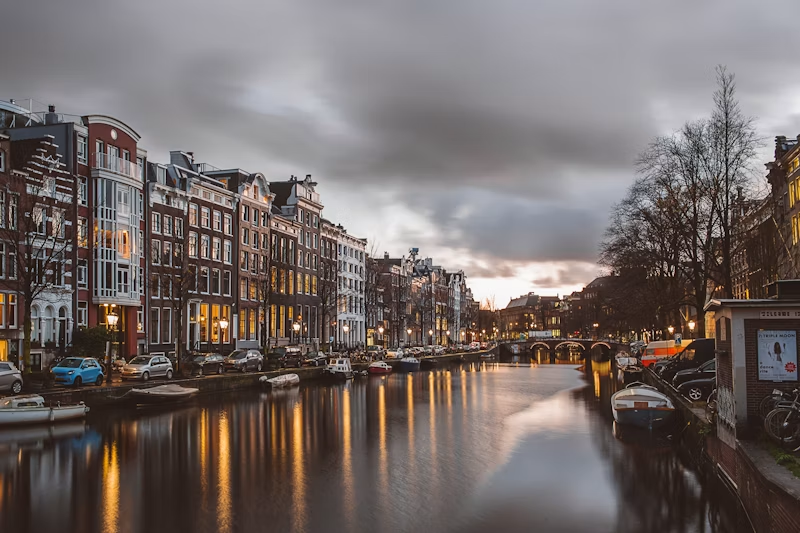
    Canal houses in Amsterdam. For three centuries, the wealth flowed in one direction between them. Photo: Unsplash

    After the Flags Changed

    Formal independence arrived for most colonies during the twentieth century. Yet many historians, economists, and political thinkers argue that political independence did not always bring economic independence. Colonial relationships, they contend, often evolved rather than disappeared: direct rule gave way to financial dependence, unequal trade agreements, foreign corporate influence, debt obligations, and geopolitical pressure. Critics call this neocolonialism — the argument that some nations remained suppliers of raw materials while much of the profit continued to flow abroad.

    Others caution that the picture is more complex, and they have a point too. Domestic governance, corruption, conflict, education, infrastructure, and global economic conditions have all played major roles in shaping the fortunes of post-colonial states. No single explanation accounts for every country’s experience. History rarely offers the satisfaction of one clean villain — only ledgers that were never balanced.

    The Longer Ledger

    The reckoning Salim demanded in a single sentence is now being attempted, slowly, by institutions. The Rijksmuseum in Amsterdam — the Netherlands’ national museum — has in recent years turned its own galleries toward the colonial history and slavery that helped fill them, naming what earlier generations of curators preferred to describe as “trade.” And the World History Encyclopedia documents how the spice routes that reshaped the modern world began with exactly the commodities Salim listed — cloves, nutmeg, pepper — growing on islands their buyers would eventually decide to own. The cigarette was not a metaphor. It was an inventory.

    indo004

    A temple on a lake in Bali. For three centuries, the wealth flowed in one direction between them. Photo: Unsplash

    The Question Under the Question

    Salim’s story continues to resonate because it asks something timeless. Who has the moral authority to lecture others about respectability? Can those who enriched themselves through centuries of domination credibly claim the higher ground by observing the rules of etiquette — rules they wrote, in halls they built, with wealth that was never theirs?

    The Dutch delegate was not wrong that there were rules. He was wrong about what the rules were for. Etiquette, in that room, was not a standard of behaviour. It was a border — the last one the empire still controlled.

    Back to the Chair

    My client was quiet for a moment when the story ended. Then she said, “So the man at the dinner party…”

    “Was not teaching you about wine glasses,” I said. “He was teaching you about the seating arrangement. They’re different subjects.”

    I touched a related thread in a previous piece on who is actually writing the rules that govern our lives — the gap between the people a system says are in charge and the people who quietly are. Etiquette is the oldest version of that gap. Every age has a room, a rule, and someone at the door explaining that this is a respectable place. And every age, if it is lucky, has an Agus Salim — someone who knows exactly what the room is built on, and asks about it politely.

    Sometimes history is distilled into a single unforgettable moment. A cigarette. A quiet smile. A simple question. And a room full of powerful men with no convincing answer.

    Before the year was out, the Netherlands transferred sovereignty. I like to think the smoke had cleared by then. The question, as far as I can tell, never has.

    The Salon California Journal is a space for ideas, culture, and conversation from my chair in Brasschaat, Belgium. I write about beauty, technology, society, and the intersections between them.
  • Magenta Does Not Exist

    Magenta Does Not Exist

    You Are Making It Up Right Now.

    There is a color you see almost every day — on screens, in flowers, in logos — that does not correspond to any wavelength of light. Your brain invents it, every single time. And once you understand how, you will never look at anything the same way again.

    A client arrived last week with a photo on her phone and the expression of someone who had already made the decision and was only informing me of it. The photo was of hair in a shade somewhere between pink and purple — loud, confident, unmissable. “Magenta,” she said. “Can you do it?”

    “I can,” I said. “Although I should tell you something about that color first.”

    “That it’s too much?”

    “That it doesn’t exist.”

    She lowered the phone. “It’s right here on the screen.”

    “And it still doesn’t exist. You’re inventing it right now. So am I. That’s the interesting part.”

    I first learned this in a library in San Diego, in 2007, during my two years of architecture studies — before the move to Belgium ended them. Each student in one project was assigned one of the five senses to explore through architecture. Mine was sight: design a space, or a series of spaces, that would evoke and enhance the experience of seeing. The internet then was thin, and there was certainly no AI waiting to answer every curious question, so I spent hours among the shelves, digging through books on perception, vision, and color. What I found completely changed the way I thought about the world.

    [Switches to serious face.] There is a color you see almost every day that does not correspond to any single wavelength of light. Your brain manufactures it on the spot, every time. And pulling on that thread unravels something much bigger: color itself is not out there in the world at all.

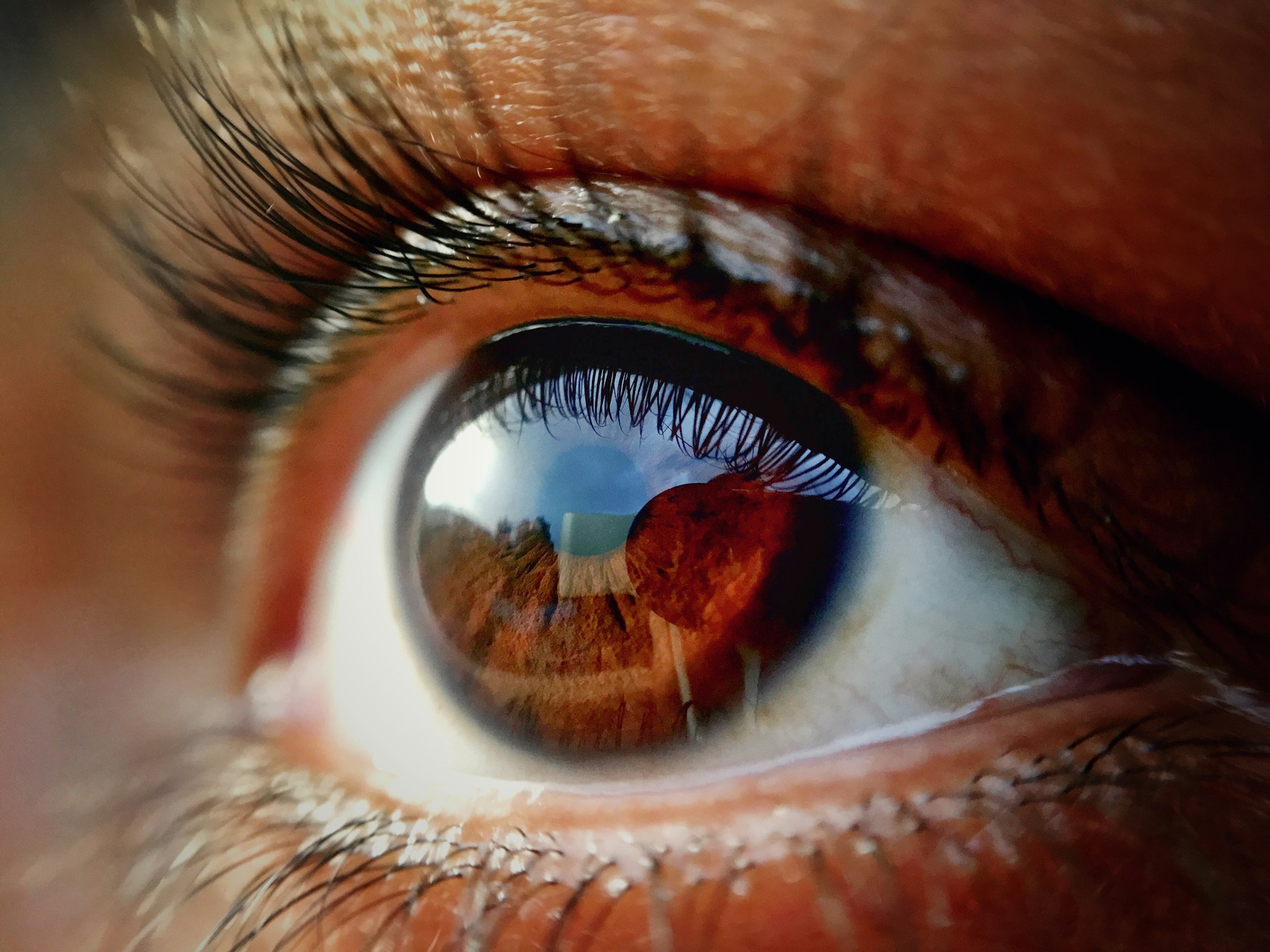
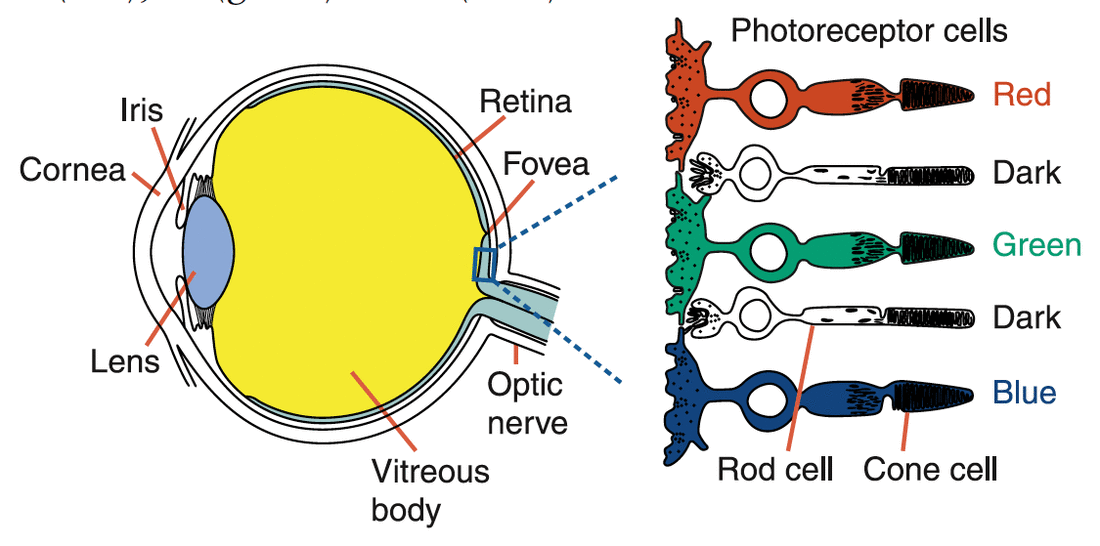
    3 types of cone cells at the back of your retina — roughly tuned to red, green, and blue — from which your brain builds every color you have ever seen

    380–700 nmthe approximate range of wavelengths your eyes can detect — the entire visible spectrum, from violet to deep red

    ~ 1 milliondistinct colors the average human eye can tell apart — some estimates run far higher

    0 wavelengths of light that are magenta — it appears nowhere in the spectrum, and yet you see it constantly

    magenta01

    Light Has No Color

    Let’s start with the broader truth, because it is stranger than the headline.

    Light itself has no color. It is electromagnetic radiation traveling through space at different wavelengths, and those wavelengths are not inherently red, blue, or green. They are just physical properties — numbers, essentially, describing how the wave moves. Calling a wavelength “red” is like calling a radio frequency “jazz.”

    Color only comes into existence when light reaches your eyes. At the back of your retina sit three types of cone cells, each sensitive to a different range of wavelengths — roughly corresponding to red, green, and blue. Three signals. That is all your brain receives. From those three signals it constructs the entire spectrum of color you experience: every sunset, every painting, every questionable hair decision of the 1980s.

    Which means an apple is not actually red. It reflects certain wavelengths of light, your eyes detect them, and your brain interprets them as red. The color isn’t in the apple. It’s in your perception.

    magenta03

    Photos: Unsplash

    Try to Find Magenta in a Rainbow

    Now consider magenta — that vivid pinkish-purple my client was holding up on her phone.

    Try to find it in a rainbow.

    You can’t.

    A rainbow is sunlight split into its component wavelengths, laid out in order: red, orange, yellow, green, blue, violet. Every color in that arc corresponds to a specific wavelength of light. Magenta is not there. Not hiding between two bands, not squeezed against an edge. Absent. Unlike red or green or blue, magenta has no single wavelength of light. It does not exist as one specific color in the visible spectrum.

    So how do you see it?

    magenta03

    The Color Your Brain Invents

    When your eyes receive strong signals for both red and blue, but very little or no green, your brain faces a problem. Red sits at one end of the spectrum. Blue sits near the other. The honest average of the two would be green — the one signal conspicuously missing. So your brain does something remarkable: it invents a completely new perception to fill the gap. It bends the spectrum into a circle, joins the two loose ends, and produces a color that no wavelength of light can make on its own.

    That color is magenta. A diplomatic solution to a sensory dispute — and you see the result on screens, in flowers, in artwork and logos, every day of your life, without the slightest suspicion that your brain is composing it live.

    “The color isn’t in the apple. It’s in your perception.” — Which is also true of the rainbow, the screen you are reading this on, and every head of hair that has ever left my salon.

    Black and White Are Strange Too

    Once you accept that magenta is an invention, the edge cases of color start to look different as well.

    Black is not a color of light. It is what you perceive when there is no visible light reaching your eyes at all — not a signal, but the absence of one. Your brain renders that absence as something you can point at and name, which is quietly absurd if you think about it for too long.

    White is the opposite. When all the visible wavelengths arrive together, your brain does not report a crowd. It blends the entire spectrum into a single clean perception and calls it white. One is everything at once, the other is nothing at all, and your mind serves both to you as if they were just two more shades on the chart.

    The Deep End

    Philosophers have been arguing about where color actually lives — in objects, in light, or in minds — for centuries, and the argument is far from settled. The Stanford Encyclopedia of Philosophydevotes a long entry to the problem of color, and it reads like a detective story in which every suspect has an alibi. On the science side, the National Eye Institute explains how the eye’s photoreceptors turn light into the signals the brain works with. The physics is settled. The philosophy is not. The gap between the two is where magenta lives.

    magenta05

    Photos: Unsplash

    The Universe Isn’t Colorful. You Are.

    So the world around you is not filled with colors waiting to be discovered. It is filled with light — colorless, patient, indifferent light — and your brain translates that light into the rich, saturated experience you call reality. Every color you have ever seen was rendered privately, for an audience of one, inside your own head.

    Color is not a property of objects. It is an experience created inside your mind.

    “In a very real sense, the universe isn’t colorful. You are.” — The conclusion I carried out of a San Diego library in 2007, and have never managed to put down since.

    That library project, by the way, asked me to design a space that would enhance the experience of seeing. I remember sitting there realising that the real assignment had reversed itself: the space I was supposed to be studying was behind the eyes, not in front of them. Architecture could shape the light. Only the visitor could supply the color. Nineteen years later, I have still not found a better description of what design actually is.

    Back to the Chair

    The client went through with the magenta, in case you were wondering. It suited her. She sat in the chair afterwards, turning her head slowly in the mirror, admiring a color that exists nowhere in the physical universe, and said, “So no one has ever actually seen this.”

    “Everyone who looks at you will build it themselves,” I said. “Personally. On the spot.”

    “That,” she said, “is the best thing anyone has ever told me about a hair color.”

    I touched a related thread in a previous piece on the spotlight effect and the audience your mind invents — the discovery that a surprising amount of what feels like the outside world is manufactured on the inside. Color turns out to be the most literal case of all. The light is real. The wavelengths are real. The magenta is yours.

    Somewhere in a library in San Diego there is probably still a shelf of books on perception with my fingerprints on them. I never finished the degree. The assignment, apparently, finished me — because nineteen years later, a client shows me a phone and I am right back among those shelves. I did the only sensible thing available. I mixed the color that doesn’t exist, and charged for it as if it did.

    The Salon California Journal is a space for ideas, culture, and conversation from my chair in Brasschaat, Belgium. I write about beauty, technology, society, and the intersections between them.

  • History has been silent for centuries

    History has been silent for centuries

    Stop What You Are Doing. They Are Reading the Unreadable.

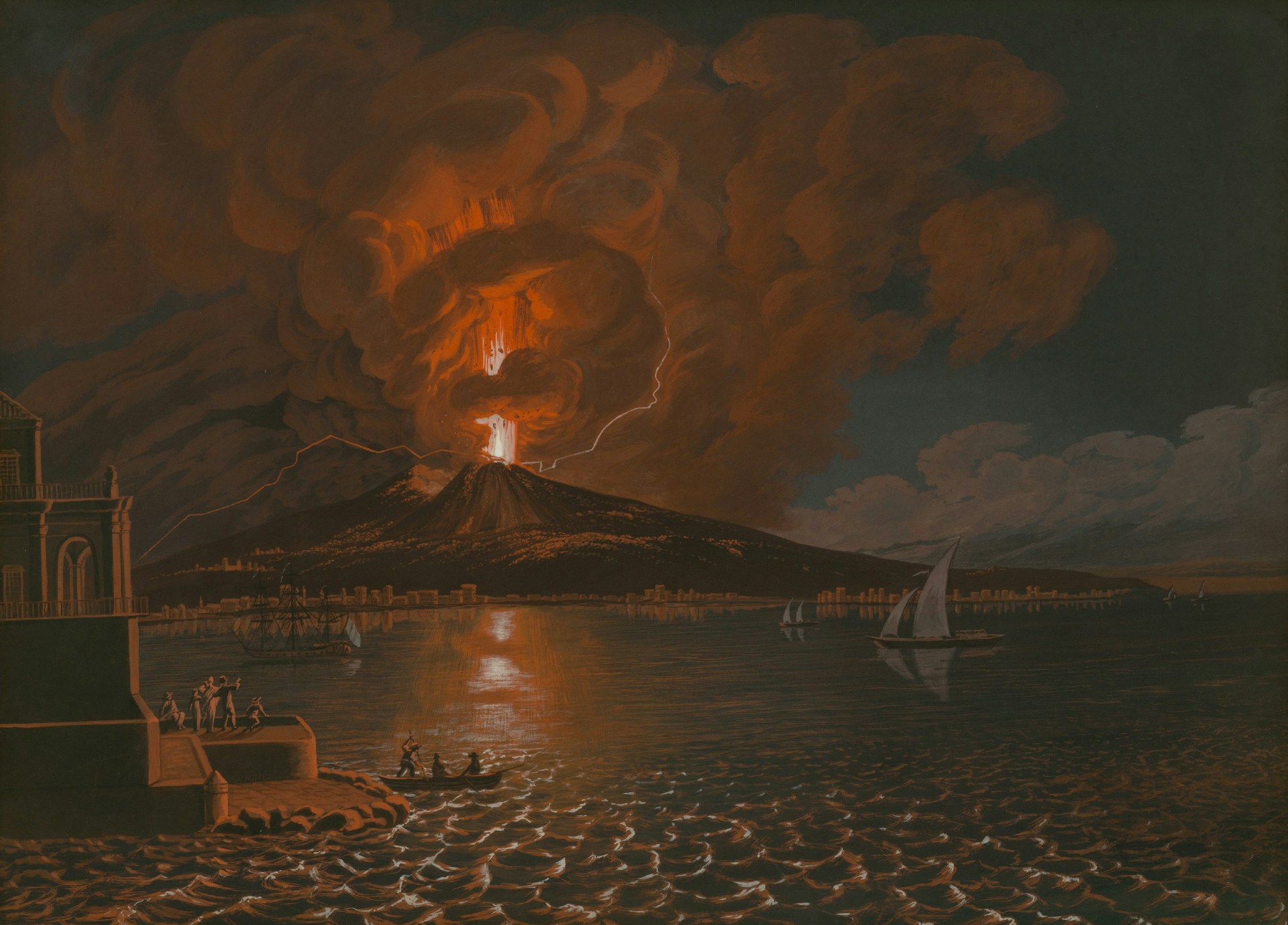
    Almost two thousand years ago, Mount Vesuvius buried an entire library. The scrolls were baked into fragile cylinders of charcoal. Their contents seemed lost forever. Until now. And the real story reaches far beyond the technology that unlocked them.

    A client mentioned it between sections, phone face-down on her knee, the way people mention things they have been thinking about since the morning. “Did you see the story about the ancient scrolls? The AI reading them? From Pompeii?”

    “Herculaneum,” I said. “The town next door. And yes.”

    “Isn’t that extraordinary? That technology can just… do that?”

    “What strikes me most isn’t the AI part,” I said.

    She looked at me in the mirror. “No?”

    “The AI is just the key. What matters is the room the key opens.”

    [Switches to serious face.] Stop what you are doing. This may become one of the greatest archaeological breakthroughs of the century. And it has only just begun.

    79 AD  the year Mount Vesuvius erupted, burying the library of Herculaneum beneath volcanic ash

    ~1,800 papyrus scrolls and fragments recovered from the Villa of the Papyri — baked into charcoal for two thousand years

    300 BC when Zeno of Citium founded Stoicism — one generation after Alexander had connected the ancient world

    0 the number of these scrolls anyone believed could ever be read again — until very recently

    volcano

    The Library That Would Not Burn

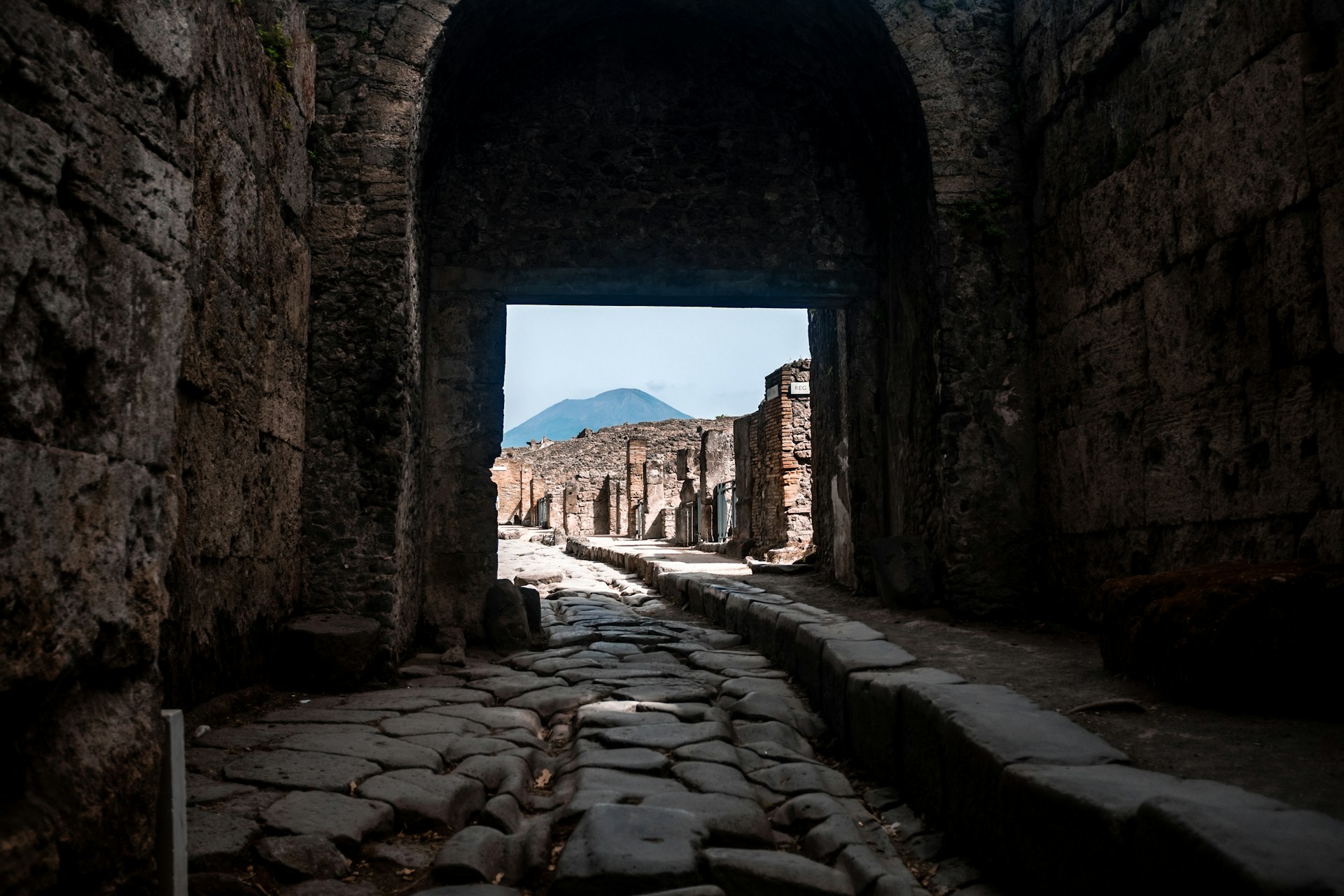
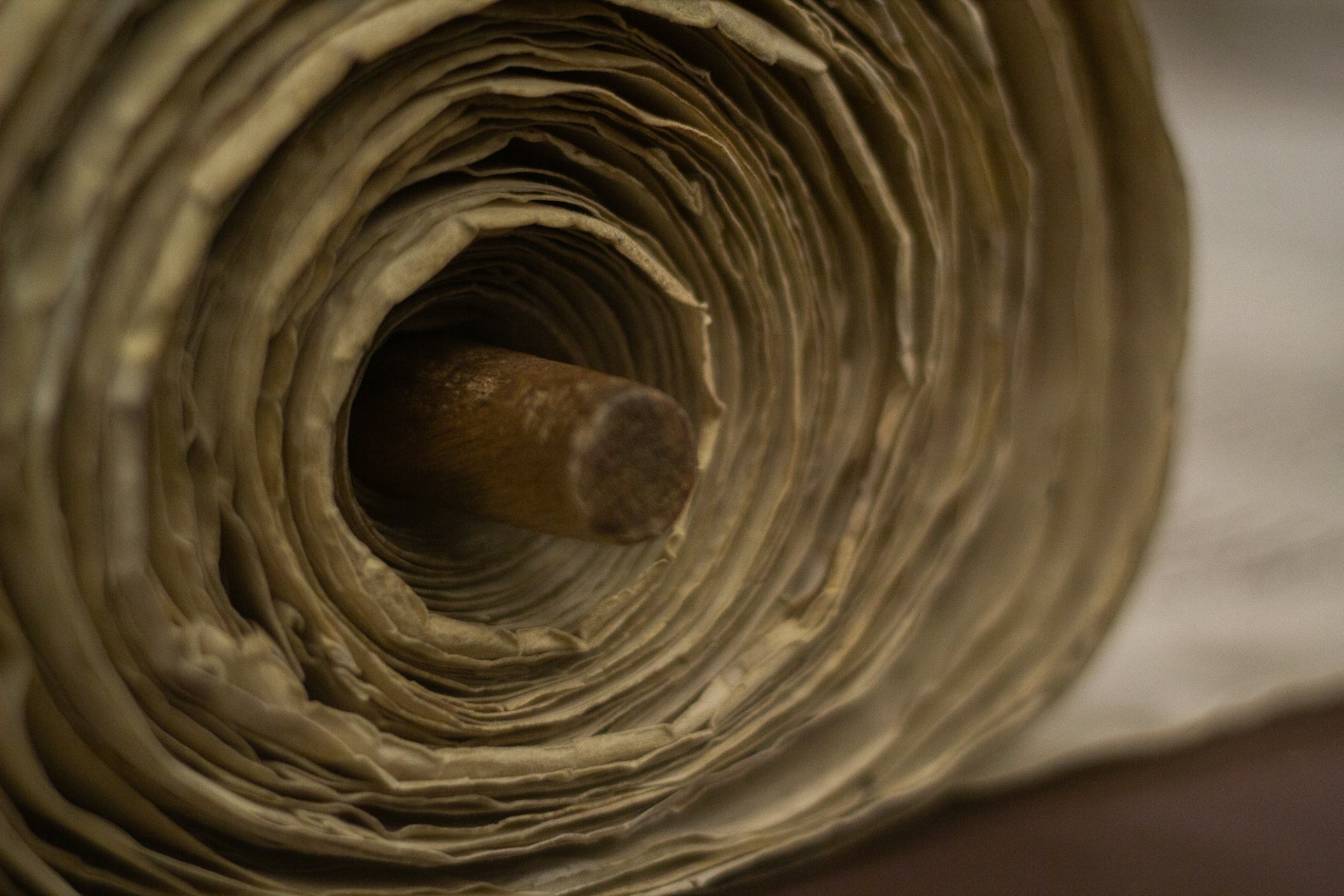
    Almost two thousand years ago, Mount Vesuvius erupted. Pompeii is the name everyone remembers. Herculaneum, the smaller town nearby, was buried differently — not under ash but under a surge of superheated volcanic material that came so fast it sealed the city almost intact. Inside one Roman villa, now called the Villa of the Papyri, lay an entire library. Hundreds of papyrus scrolls were baked into fragile, blackened cylinders of charcoal. The heat had not destroyed them. It had mummified them.

    For twenty centuries, they remained sealed. Unrolling them meant destroying them. Scholars had tried. The scrolls crumbled at the touch. Their contents seemed lost forever.

    Until now.

    The Key and the Room

    Using artificial intelligence and advanced X-ray imaging, researchers have done what many believed was impossible. They have begun reading the unreadable. The Vesuvius Challenge — a competition that brought together computer scientists, papyrologists, and imaging specialists — trained AI models to detect the faint traces of ancient ink on carbonized papyrus without touching the scrolls at all. The words were read from the inside out, through layers of charred material that no human hand could safely separate.

    “The AI is just the key. What matters is the room the key opens.” — And the room, it turns out, connects to many other rooms that were never supposed to exist.

    The first recovered text belongs to the Epicurean philosopher Philodemus, opening a door to works that have been silent for nearly two millennia. And if that sounds like a niche academic achievement, consider this: the Villa of the Papyri held roughly 1,800 scrolls. Most have not yet been read. Most are still waiting. If artificial intelligence can unlock one library, it may eventually unlock hundreds of lost works once thought gone forever.

    Yet the real story reaches far beyond AI. The technology is astonishing. What the technology is recovering is more astonishing still.

    The Ancient Mediterranean Was a Conversation

    These scrolls come from a civilisation we casually call Greek or Roman. But the ancient Mediterranean was never divided into isolated cultures the way a schoolroom map might suggest. It was a network of ideas stretching from Greece and Egypt to Persia, Mesopotamia, and India — connected by trade routes, military campaigns, diplomatic missions, and the restless movement of scholars, priests, and philosophers across borders that did not yet exist in the form we imagine them.

    Look at the age in which Stoicism emerged. Only one generation earlier, Alexander the Great had shattered the Persian Empire, creating a vast intellectual crossroads that ran from the Aegean Sea to the edge of India. Philosophers, merchants, priests, and scholars moved across that connected space, carrying ideas with them. The world that produced Stoic philosophy was not a Greek world sealed from outside influence. It was a world in active, ongoing conversation with everything that surrounded it.

    ancient-mediter-conv

    Egypt did not exist in isolation. Neither did Greece, Persia, or Rome. The ancient world was a network, and the ideas moved with the people. Photos: Unsplash

    The Founders of Stoicism Were Not Greek

    This matters, because when you look at Stoicism itself, the evidence of that network is written directly into the biographies of its founders.

    Zeno of Citium, who established Stoicism around 300 BC, was a Phoenician from Cyprus. Chrysippus, the philosopher who systematised Stoic doctrine and built it into the rigorous school we now study, came from Cilicia — what is now southern Turkey. Another leading Stoic thinker became known, simply and revealingly, as “the Babylonian.”

    These are not incidental details. The school of thought that gave us the Logos — the belief that the universe is governed by a rational and divine order — was founded by men who came from the edges of the Greek-speaking world and carried with them the philosophical inheritance of cultures that had been thinking about cosmic order for centuries before Greece arrived.

    According to the Stanford Encyclopedia of Philosophy, Stoicism’s defining commitment was to living in accordance with nature and reason — to aligning oneself with the rational structure they believed governed everything. That is a profoundly Greek formulation. It is also not only a Greek formulation.

    The Logos and Asha

    At the centre of Stoicism stands the Logos: the rational order that runs through the universe, the principle by which everything coheres. The Stoics inherited this idea from Heraclitus, but they developed it inside a region that had spent centuries in contact with Persian thought.

    Zoroastrianism, one of the world’s oldest continuously practised religions, spoke of Asha: the cosmic order that sustains truth, justice, and the structure of existence itself. To live well, in Zoroastrian ethics, meant aligning your thoughts, your words, and your actions with that universal order — with truth as the animating force of a well-lived life.

    The parallels are difficult to ignore. The Stoics taught that virtue comes from living according to nature and reason. Zoroastrian ethics taught that goodness comes from living in harmony with cosmic truth. Both traditions viewed personal morality as participation in a larger order that governs the universe. Both imagined the good person not as someone who conquers the world but as someone who aligns themselves with the structure that was already there.

    Fire and Renewal

    The parallels extend further. The Stoics described a universe periodically consumed and renewed by fire — a great conflagration from which order reasserts itself. Zoroastrian tradition speaks of Frashokereti, the final renewal of creation through a purifying fire. The Stoics imagined humanity as citizens of one universal community governed by reason. Persian thought had long emphasised a moral order that embraced all people under a single cosmic law. None of this means Stoicism copied Persian religion. World History Encyclopedia has documented extensively how ideas across the ancient world moved, crossed, and transformed one another in ways that cannot be reduced to straight lines of influence. Ideas rarely travel in straight lines. They meet, collide, evolve, and return in new forms.

    “The ancient Mediterranean was a conversation, not a collection of isolated civilisations.” — Which is what makes the recovery of every scroll from Herculaneum an event that belongs to all of us.

    scroll

    The library that waited. The detective work of recovery. Images belong to the same story. Photo: Unsplash

    What Could Still Be Found

    That is why these newly recovered scrolls matter so much beyond the technology that read them. Every text brought back from the ashes has the potential to reveal forgotten arguments, lost debates, and hidden connections between civilisations. What survived inside Herculaneum is not only the voice of Rome or Greece. It is the voice of an interconnected ancient world where Greek, Egyptian, Persian, Babylonian, and many other traditions shaped one another across centuries of contact.

    The Villa of the Papyri may not be the only such place. Archaeological surveys have suggested that sections of it remain unexcavated. What else was stored in those rooms? Whose voice has been waiting, sealed in charcoal, for the technology to arrive that could read it without destroying it?

    For the first time in history, we can read books that no human eyes have seen for nearly two thousand years. History has been silent for centuries. Now, it is beginning to speak again.

    Back to the Chair

    My client left quiet again. The good kind of quiet — the kind where something has landed and is still settling. On her way out she said, “I thought it was just a technology story. A nice one. But it’s not really about the technology, is it.”

    “No,” I said. “It never was.”

    What interests me most about the Herculaneum discovery is not what it tells us about what we lost. It is what it tells us about what we assumed. We assumed the ancient world was simpler than it was — more divided, more local, more isolated. We built a mental map of separate civilisations in separate boxes. The scrolls, even before they are fully read, already complicate that map. The people who wrote them were connected in ways we have only begun to trace.

    I touched a related thread in a previous piece on who is actually writing the rules that govern our lives — the gap between who we think is in charge and who, quietly, actually is. The ancient world had the same gap. The founders of the philosophy that shaped Roman law, Christian theology, and the Enlightenment were Phoenicians, Cilicians, and Babylonians. The dominant civilisation absorbed the contribution and filed it under its own name. That is not an accusation. It is simply how history tends to work when the archive is incomplete.

    The archive is becoming less incomplete. That is the story.

    The Salon California Journal is a space for ideas, culture, and conversation from my chair in Brasschaat, Belgium. I write about beauty, technology, society, and the intersections between them.
  • Democracy

    Democracy

    Democracy: Code Has a Deeply Authoritarian Streak. Shocking, I Know.

    A client’s new car wouldn’t let her go five over the limit, even at 2am on an empty road. It just beeped. There was no arguing with it. Neither, it turns out, is there much arguing with most of the software running our lives.

    A client was in the chair last week, irritated about her new car. “It won’t let me go five over the limit, even on an empty freeway at two in the morning,” she said. “It just… refuses. Beeps at me like I’m a child.”

    “What happens if you ignore the beeping?” I asked.

    “Nothing, really. The limiter just kicks back in. There’s no arguing with it.”

    I thought about my engineering days for a moment. “That’s not a bug,” I said. “That’s the whole point. Someone designed it to behave exactly that way.”

    She frowned. “Designed it to be annoying?”

    “Designed it to be authoritarian,” I said. “There’s a difference. Well — sometimes.”

    [Switches to serious face.] One problem here is that code has a deeply authoritarian streak. Shocking, I know.

    If your car says, “This is the speed limit,” and that rule is hard coded, that is the end of the discussion. No leeway. No context. No emergency. No negotiation. No “fine, I’ll pay the ticket.” The machine has spoken. Apparently silicon now does what kings used to do, only with cleaner branding.

    2 reasons code and democracy seem to be moving in opposite directions

    0 votes most citizens cast on the rules a piece of software enforces on them

    130+ countries with no comprehensive law governing algorithmic decision-making

    1 word that should make you suspicious every time a tech company uses it: “inevitable”

    Not Accidental

    I do not think it is accidental that democracy is struggling at the same time digital technology is rising. There are two reasons.

    First, code tends to be authoritarian. Software loves rigid rules. It hates ambiguity, nuance, and human mess, unless someone goes out of their way to build those things in. So the real question is not simply what the code does, but who writes it.

    “The machine has spoken. Apparently silicon now does what kings used to do, only with cleaner branding.” — The observation that made my client stop being annoyed and start being unsettled.

    Who Is Making These Rules?

    And who is making these rules? Usually not your elected representatives. More often, it is a handful of well-paid engineers in Silicon Valley deciding what billions of people can do, see, or access. Democracy used to mean voting for the people who made the rules. Now the rules arrive as software updates.

    AlgorithmWatch, a research organisation that tracks exactly this shift, has spent years documenting how automated decision-making systems — in credit scoring, hiring, policing, content moderation — quietly assume governmental functions without ever passing through anything resembling a legislature. Nobody campaigned for the job. Nobody can be voted out of it.

    The Second Reason: Surveillance

    Second, AI threatens democracy through surveillance.

    The AI systems we are building need vast amounts of data, endless streams of it, and much of that data is personal. Personal data becomes dangerous when citizens have little power over it, while corporations and governments hold plenty. That imbalance matters. Give institutions detailed knowledge about everyone, while keeping citizens in the dark, and you do not get freedom. You get control, wrapped in convenience.

    The Imbalance, Documented

    Access Now, a digital rights organisation operating across more than 25 countries, has tracked a consistent pattern: surveillance infrastructure built for one stated purpose — fraud prevention, public health, counterterrorism — routinely expands into general-purpose population monitoring once it exists. The capability rarely gets removed once installed. Researchers at Harvard’s Berkman Klein Center describe this as a one-way ratchet: surveillance powers granted during a crisis are almost never returned once the crisis passes.

    democracy002

    Control, wrapped in convenience, stored on racks like these. Photo: Unsplash

    Technology Is Not Destiny

    Most importantly, technology is not destiny. It is design.

    We are building these systems. That means we choose what they become. So when someone in tech says, “Relax, this is inevitable,” I would challenge that. “Inevitable” often means, “We already built it and would prefer fewer ethical questions.”

    “’Inevitable’ often means, ‘We already built it and would prefer fewer ethical questions.’” — A useful translation for the next time someone uses the word in a pitch meeting.

    The Truly Strange Part

    Yes, we should ask if AI could become conscious one day. That is a serious question.

    But the more urgent question is simpler. Should we design these systems this way at all? Should we keep building machines that deliberately blur the line between simulation and consciousness — systems that speak, emote, and perform sentience so well that people forget it may all be mimicry?

    And then comes the truly strange part. We are no longer talking only about imitation. Some people want to go further — from mimicking consciousness to creating the real thing.

    Because apparently humanity looked at all its existing relationship problems and decided, “You know what would help? Conscious machines.”

    democracy003

    One of these is performing an expression. Increasingly, that’s the part we’re being asked to stop noticing. Photo: Unsplash

    Back to the Chair

    My client left with a haircut and, she said, a newfound urge to read the manual for her car — not because she expected to find anything reassuring in it, but because she wanted to know exactly which decisions had already been made on her behalf before she ever sat in the driver’s seat.

    I could see both sides of this divide — the engineering side that writes the rules, and the chair where people sit and live inside them — to notice how rarely anyone in the first group is required to explain themselves to anyone in the second. That used to be called accountability. It used to require a vote.

    I followed a related thread in our piece on what AI clears space for and what it quietly forecloses, and another in the house nobody is fixing — institutions left running on autopilot long after the people meant to maintain them stopped paying attention. Code is just the fastest-moving version of that pattern. Nobody voted for the speed limiter. Nobody voted for the algorithm either. Both arrived the same way: quietly, as an update, with the explanation that this was simply how things had to be now.

    It wasn’t. It never is. Someone just decided it would be easier if we stopped asking.

    The Salon California Journal is a space for ideas, culture, and conversation from my chair in Brasschaat, Belgium. I write about beauty, technology, society, and the intersections between them.

  • No Tax under 30

    No Tax under 30

    No Tax Under 30: Math, That Rude Little Tyrant, and the $46 Trillion Question

    A client watched a third of his first paycheck disappear and went pale, like he’d just read a death certificate. So here is a radical thought. What if we stopped taxing people in their twenties?

    A client in his early twenties checked his banking app in the chair last week, went pale, and read the number out loud like it was a death certificate.

    “They took a third,” he said. “A third.”

    “Congratulations,” I said. “You’ve just discovered taxation.”

    “That’s not helpful.”

    “If I ran things,” I said, “you’d keep every cent of that until you turned thirty.”

    He looked at me like I’d just told him the moon was made of cheese, in a good way. “Go on,” he said.

    [Switches to serious face.] So here is a radical thought. What if we stopped taxing people in their twenties? Simpler still: under 30, no tax.

    Immediately someone clutches their pearls and says, “But wouldn’t that incentivise young people not to go to university and instead get jobs?”

    Yes. That is called an incentive. Glad we are keeping up.

    $514T approximate global wealth in 2025 (UBS Global Wealth Report)

    $46.26 Trillion what a flat 9% tax on that wealth would raise per year

    30 – 60  the proposed taxable window — peak earning years

    0%  the proposed rate under 30, and again after 60

    The Sacred Cow

    And before people faint, let’s address the sacred cow: university.

    We treat university as if it is a universal human right, somewhere between clean water and oxygen. Everyone must go. Everyone must get a degree. Apparently the dream is for half the population to graduate and then compete for jobs that did not require degrees twenty years ago.

    Brilliant system.

    Here is the uncomfortable truth. University is, in many cases, a luxury item. And luxury items stop being luxurious when everyone has one. If 50 percent of people go to university, that does not scream equality to me. It screams credential inflation. Congratulations — you spent three years and a small fortune to qualify for an entry-level job answering emails.

    “Congratulations, you spent three years and a small fortune to qualify for an entry level job answering emails.” — The line my client read twice before laughing, a little uncomfortably.

    University is the third stage of education. It should be selective, purposeful, and ideally useful. Researchers at Georgetown’s Center on Education and the Workforce have tracked exactly this drift for years — degree requirements creeping into roles that never structurally needed one, while the wage premium attached to many of those same degrees quietly erodes. The credential keeps costing more. It does not keep delivering more.

    No-Tax002

    A credential that costs more every year and signals less every year it does. Photo: Unsplash

    Free, But Only If It Keeps Civilisation Running

    And yes, I would make it free — but only for subjects that actually keep civilisation from collapsing.

    Study something that grows corn, builds bridges, keeps the lights on, or cures disease. Agriculture, engineering, medicine, physics, technology — call it STEM. Free.

    That seems like a fair deal. Society pays for what society needs.

    If you are in the younger generation and academics is your path, excellent. Go study. Become useful. We need smart people.

    But if university is not for you, also fine. Go work. Build something. Learn a trade. Start a business. Earn money and keep it.

    Keep all of it.

    No-Tax003

    Grows corn, builds bridges, keeps the lights on, cures disease. Free. Photo: Unsplash

    No Tax Under 30

    No tax under 30. Imagine that. Young people accumulating capital instead of debt. Revolutionary.

    Then perhaps taxation happens mainly between 30 and 60, when people tend to be at peak earning power.

    And maybe after 60, no tax again.

    Fantasy Politics

    Why?

    Because at some point we need to stop doing fantasy politics.

    Every election sounds like a children’s birthday party. Yes, yes, yes, we will pay everyone’s pension forever. Free this, subsidised that, endless benefits for all.

    Wonderful.

    Tiny issue: we do not have enough young people paying into the system to fund pensions forever.

    Math, that rude little tyrant, keeps ruining political speeches.

    The Tyrant, Quantified

    The IMF has repeatedly flagged ageing populations and shrinking worker-to-retiree ratios as one of the most structurally underpriced risks in advanced economies — not a future hypothetical, but a current trajectory. Every pay-as-you-go pension system was built on the assumption of a population pyramid, more young workers than retirees, indefinitely. That pyramid is inverting almost everywhere it was once assumed permanent. No campaign promise changes the denominator.

    The Real Tragedy

    Just as food for thought: global wealth in 2025 was approximately $514 trillion. Flat tax that at only 9 percent and you get $46.26 trillion.

    Forty six trillion dollars.

    Just imagine what that could solve. Poverty. Hunger. Healthcare. Infrastructure. Education.

    Many of humanity’s grand crises could be dramatically reduced.

    The tragedy is not lack of wealth.

    It is that we live in a civilisation astonishingly good at producing wealth and almost artistically talented at concentrating it into fewer hands, then acting baffled when the rest get angry.

    Back to the Chair

    My client left with a haircut and the same third of his paycheck gone, because I run a salon in Brasschaat, not a finance ministry. He asked, on his way out, whether any of this had a real chance of happening.

    “Probably not,” I said. “Doesn’t mean the maths is wrong.”

    I followed a related thread in our piece on growth, limits, and the invoice nobody wants to read — the same arithmetic, really, wearing a different line item. Pensions, tuition, payslips. Different receipts, same civilisation, remarkably consistent at the one talent nobody campaigns on: turning collective wealth into a small number of very comfortable private bank accounts, then expressing genuine surprise at the resulting mood in the room.

    Math, that rude little tyrant, is still waiting for someone to argue with it directly instead of around it.

    The Salon California Journal is a space for ideas, culture, and conversation from my chair in Brasschaat, Belgium. I write about beauty, technology, society, and the intersections between them.

  • What would I do ?

    What would I do ?

    What Would I Do? Fixing Education Starts With Paying Teachers Properly

    A teacher in my chair was doing dentist-appointment math on a twelve-year career. If I were put in charge of education, the first thing I would do is simple. I would pay teachers properly.

    A teacher was in the chair last week, marking papers on her phone between sections because that’s apparently what evenings look like now. She mentioned, almost in passing, that she’s been teaching for twelve years and still calculates whether she can afford the dentist before booking an appointment.

    “Twelve years,” I said. “And you’re doing maths about a dentist appointment.”

    “Welcome to teaching,” she said, not looking up from the screen.

    “If I were in charge of education,” I said, “I know exactly where I’d start.”

    She looked up. “Go on. Surprise me.”

    [Switches to serious face.] If I were put in charge of education, the first thing I would do is simple. I would pay teachers properly.

    My mission would be to make teaching one of the most respected and sought-after professions in society. I would want the brightest, most ambitious young people to dream of becoming teachers, not only lawyers, doctors, or investment bankers. Strange, isn’t it, that we trust teachers to shape every future profession, yet often pay them as if their work were an afterthought.

    44 countries where teacher pay sits below the average graduate salary (UNESCO)

    5 yrs of rigorous training proposed, in exchange for a genuinely stable career

    #1 factor most consistently linked to student outcomes: teacher quality and wellbeing

    2,400+ years since Ancient Greece treated teaching as one of the highest callings

    What Teaching Once Was

    I would want to restore teaching to what it once was. In Ancient Greece, education was seen as one of the highest callings — a noble pursuit tied to the formation of character, wisdom, and citizenship. Somewhere along the way, we forgot that.

    what-would002

    A profession once tied to wisdom and citizenship, not an afterthought in a budget line. Photo: Unsplash

    Make It Difficult to Enter

    I would work hard to rebrand the profession, and I would also make it difficult to enter. Becoming a teacher should require rigorous training, perhaps five years of serious preparation. But in return, I would guarantee something rare in modern life: a stable, respected career that people would want to stay in for decades, perhaps for life.

    According to data tracked by UNESCO, dozens of countries pay teachers below the average graduate salary in their own economies — a structural signal, repeated in every recruitment cycle, that the profession is not where ambition is supposed to go. The Varkey Foundation’s Global Teacher Status Index has spent years measuring exactly this gap between how much societies say they value teachers and how they actually treat them — and the gap, in most countries surveyed, is not small.

    “Strange, isn’t it, that we trust teachers to shape every future profession, yet often pay them as if their work were an afterthought.” — The sentence that made the teacher in the chair finally put her phone down.

    It Starts With the Humanity of the Teacher

    I would invest heavily in teacher wellbeing. Better salaries, continuous training, personal development, free gym access, free therapy — whatever helps them maintain strong mental and emotional health. Because the research is clear. The more you invest in teachers, the better children perform, not only academically but as human beings. They develop sharper critical thinking, stronger empathy, and a genuine love of learning.

    It starts with the humanity of the teacher.

    Research from the Learning Policy Institute consistently finds that teacher attrition — the steady loss of experienced teachers to burnout and better-paying work — costs school systems far more than the raises that would have prevented it, once you account for recruitment, training, and the lost continuity of an experienced teacher walking out the door. The expensive choice and the cheap-looking choice are, infuriatingly, often the same decision pointed in opposite directions.

    Truth Over Convenience

    Of course, I would also overhaul the curriculum. Every textbook and teaching material would be reviewed and grounded in truth, evidence, and science, not shaped by political convenience, government agendas, or the old habit of teaching whatever helps those in power sleep better at night.

    Facts should be accurate. Data should be current. Knowledge should serve understanding, not indoctrination.

    I would also push for more systems-based learning — teaching students how things connect rather than forcing them to memorise isolated facts for exams they will forget by summer.

    what-would003

    Different talents, equally legitimate — neither one a detour from the “real” subject. Photo: Unsplash

    Redesign Assessment

    And yes, I would completely redesign assessment.

    Our current model treats students like factory products moving down the same conveyor belt at the same speed, then acts surprised when many feel broken. Education should not be one size fits all. Students should move forward according to their strengths, talents, and aptitude in the areas where they excel.

    Some shine in mathematics. Some in language. Some in design, music, engineering, or human relations. A good education system recognises this instead of punishing difference.

    what-would004

    Photo: Unsplash

    But Before All of That

    Teachers first. Because if you want better students, you start by valuing the people standing at the front of the classroom. Every curriculum reform, every assessment redesign, every push toward systems-based learning depends entirely on having teachers with the time, training, and stability to deliver it well. Pay and respect are not a reward for the rest of the plan working. They are the precondition for it.

    Back to the Chair

    The teacher left with a fresh cut and, she said, “something to think about that isn’t a lesson plan, for once.” I told her I wasn’t in charge of education, and likely never would be, so none of this was about to become policy on her behalf.

    “Doesn’t mean you’re wrong, though,” she said, on her way out.

    I touched a related thread in our piece on why school often feels like a drive-thru — the standardised menu, the factory-model assessment, the conveyor belt nobody asked to be placed on. That piece was about the system children are served. This one is about the person serving it, and the fact that we built an entire structure assuming her humanity was optional overhead rather than the actual mechanism by which any of the rest of it works.

    If you want better students, you start by valuing the people standing at the front of the classroom.

    Everything else is just curriculum.

    The Salon California Journal is a space for ideas, culture, and conversation from my chair in Brasschaat, Belgium. I write about beauty, technology, society, and the intersections between them.

  • Mies van der Rohe Was Not a Minimalist

    Mies van der Rohe Was Not a Minimalist

    He Was a Perfectionist Who Made It Look That Way.

    A client called my salon “so clean, so minimal.” Which got me thinking. We have been told that Mies van der Rohe was a minimalist. He was not. He was a perfectionist who made complexity disappear so thoroughly that simplicity became the illusion.

    A client sat in the chair last week and looked around the salon with the calm expression of someone who had just walked into a room they immediately understood. “It’s so clean,” she said. “So minimal. How do you keep it this way?”

    “With great effort,” I said.

    She laughed. “That sounds like a very philosophical answer.”

    “It’s a very practical one. Clean costs more than messy. Every surface you see is a decision. Empty space is the most expensive thing in a room.”

    She looked at me differently. “Are you an interior designer on the side?”

    “No,” I said. “But I spent two years studying architecture in San Diego — before a move to Belgium made it impossible to continue.”

    “That’s a very specific answer for a hairdresser,” she said.

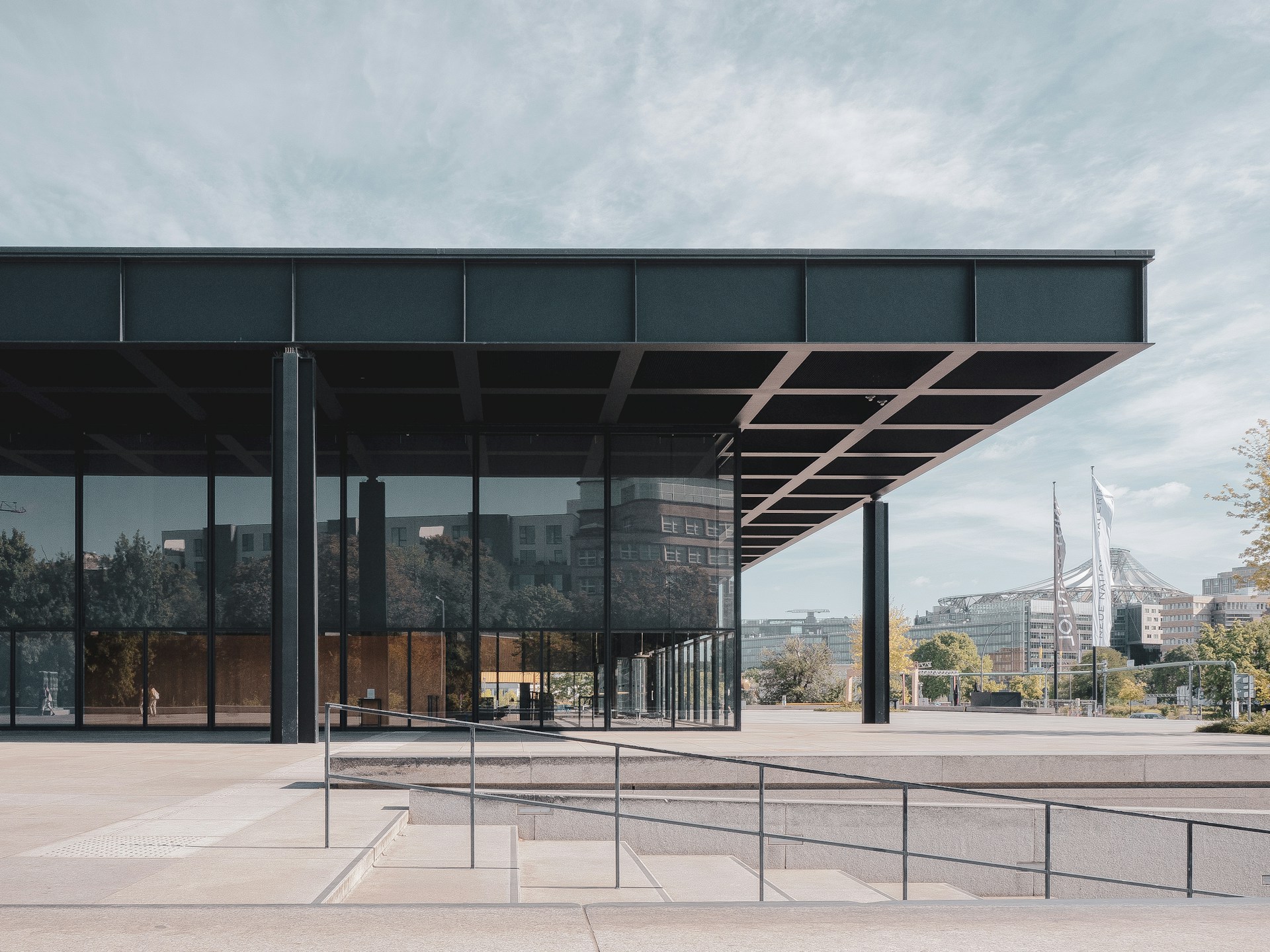
    [Switches to serious face.] We have been told that Mies van der Rohe was a minimalist. He was not. He was a perfectionist who made complexity disappear so completely that the result looked effortless. That distinction matters. Minimalism, in the popular sense, is about subtraction — removing things until what remains is simple. What Mies did was different. He concealed complexity with such control that simplicity became the illusion.

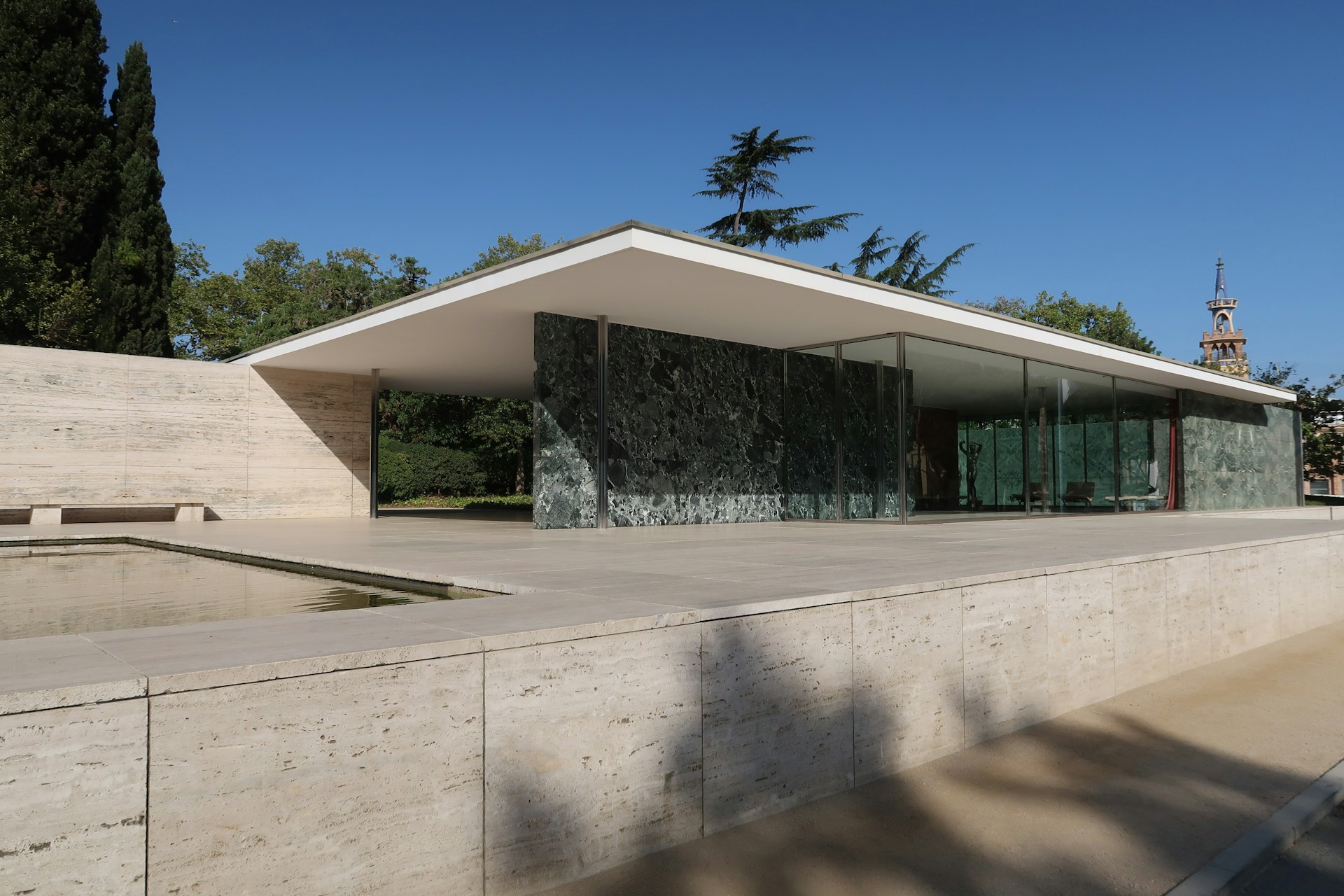
    1929 the year the Barcelona Pavilion was built — demolished the following year, reconstructed half a century later

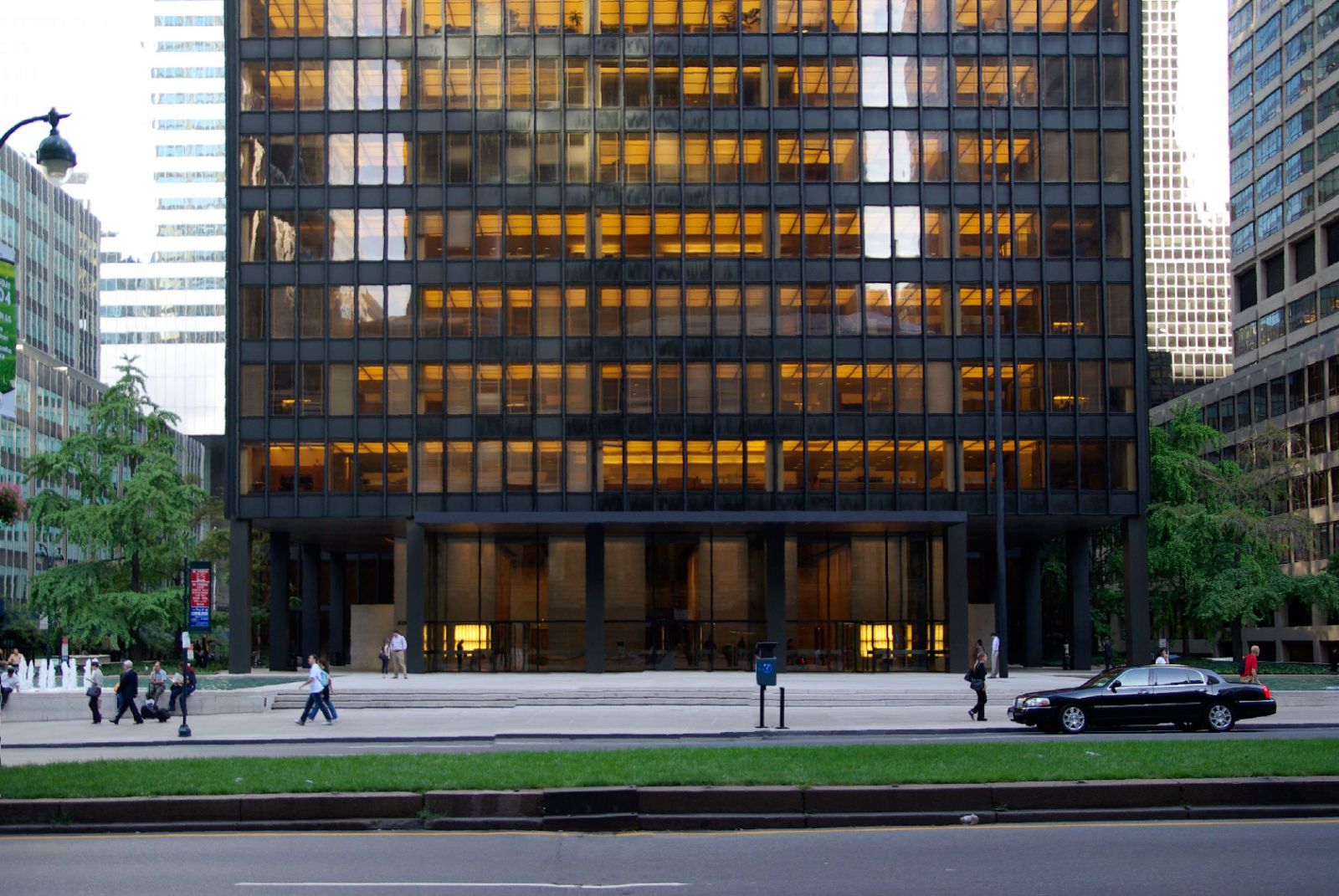
    1958 the year the Seagram Building was completed on Park Avenue, New York

    90 ft  the distance the Seagram Building is set back from Park Avenue — premium street frontage deliberately given back to the city

    3 primary materials in the Barcelona Pavilion — marble, glass, and steel — placed with obsessive, relentless precision

    mies-pavilion

    The Barcelona Pavilion

    In 1929, Mies van der Rohe built the German Pavilion for the International Exposition in Barcelona. The building was not designed to display objects. It was designed to be the object. There was almost nothing in it. A reflecting pool. Walls of green Tinian marble and Roman-tinted glass. A low, flat roof hovering over the space with no apparent effort. A pair of chairs — now so famous they have become a design cliché, which is not their fault.

    The building used three materials. That sounds simple. What sounds simple is never simple.

    The marble was sourced for specific reasons — colour, grain, reflective quality. The glass was tinted precisely. The steel columns, those elegant cross-shaped sections holding up the roof, were not left as raw structure. They were wrapped in chrome-plated steel panels — sheathed in mirror-polished skin. Every joint, every transition between materials, every threshold between inside and outside was resolved to a point where the resolution itself became invisible.

    “We have been told that Mies van der Rohe was a minimalist. He was not. He was a perfectionist who made complexity disappear.” — The distinction that explains why his buildings feel inevitable and everything trying to imitate them feels thin.

    The Fundació Mies van der Rohe in Barcelona maintains the reconstructed Pavilion — rebuilt in 1986 from the original drawings after it was demolished in 1930, just one year after it opened. That it needed to be reconstructed from drawings tells you something. The building was so far ahead of its moment that the world did not yet know how to keep it.

    The Seagram Building

    The Seagram Building

    In 1958, Mies completed what many consider the finest office tower ever built: the Seagram Building on Park Avenue in New York, designed with Philip Johnson. Bronze-toned glass and steel, set back ninety feet from the street on a granite plaza. That setback was not a regulatory requirement. It was a choice — an expensive choice, at a moment when real estate in midtown Manhattan was among the most valuable land on earth. Mies gave that space back to the city. He paid for restraint with money that the client chose to spend on absence.

    The building’s facades are curtain walls of amber-tinted glass held in a bronze-finished steel frame. The I-beams running up the exterior are not structural — they are decorative mullions added to give the facade rhythm and depth. Mies used what looked like exposed structure to communicate honest construction, while the actual steel frame is fireproofed and hidden behind it. It is a very sophisticated kind of honesty: the fiction tells you the truth about how the building would like to be understood.

    interior-simple

    Simplicity Is Expensive

    Here is what the word “minimalist” gets wrong when applied to Mies. Minimalism implies that things were left out because leaving things out was the goal. With Mies, things were included — every decision, every joint, every material — and then resolved to such a degree that they became invisible. That is not subtraction. That is control raised to the point where it no longer shows.

    His famous phrase was “less is more.” It is almost always quoted as a design philosophy about removing things. It is almost never understood as what it actually is: a description of effort. Less visible means more work. Less apparent means more thought. Less showing means more done.

    The Archive

    The Art Institute of Chicago holds the largest collection of Mies van der Rohe’s architectural drawings and documents in the world — tens of thousands of items spanning his entire career. What is striking about the working drawings for the Seagram Building is not their elegance, though they are elegant. It is how many there are. The building that looks like pure simplicity required, on paper, the documentation of ten thousand decisions. That is the part no one mentions when they call it minimalism. MoMA holds further drawings, models, and documentation of his work as part of its permanent collection — a record of someone working through each problem with the patience of someone who does not believe in shortcuts.

    What This Has to Do With Hair

    More than you would think.

    A good haircut is one where people cannot tell exactly what was done. They know something changed — they feel it, the weight is right, the shape sits correctly — but they cannot locate the specific decisions that produced the effect. That is not an accident. That is the goal. The visible technique is the failed technique. What you are trying to achieve is the result without the signature of effort left behind in it.

    Mies understood this better than almost anyone in the history of architecture. He spent decades learning how to remove his own fingerprints from his buildings — how to make the work look like it had always been there, inevitable, as if the space could not have been otherwise.

    “The visible technique is the failed technique. What you are trying to achieve is the result without the signature of effort left behind in it.” — True of Mies van der Rohe. Also, with some adjustments, true of a good haircut.

    “Less is more” is not a design principle. It is a discipline. It costs more to do less well than to do more badly. The empty wall is harder than the full one. The quiet room is harder than the cluttered room. The single chair placed exactly right is harder than twenty chairs placed approximately.

    This is also why imitations of Mies fail consistently. You can copy the vocabulary — the flat roof, the exposed steel, the open plan — and produce something that looks, from a photograph, vaguely like his work. You cannot copy the resolution. The joints give you away. The thresholds give you away. The details that Mies spent months deciding and you spent an afternoon approximating give you away every time.

    Back to the Chair

    My client left looking, she said, “at everything differently.” She meant the salon, I think. Maybe also the street outside. The way things are arranged when you realise someone arranged them on purpose — and then worked until the arrangement stopped looking like a decision.

    That is what Mies gave to the people who walk through his buildings. Not the feeling that you are inside something designed. The feeling that you have arrived somewhere that simply is. The architecture disappears into its own intention so completely that what remains is the space — and in the space, the person standing in it.

    It took forty years of work to learn how to do that. Probably more.

    I touched the same thread in our piece on what it means to originate something rather than imitate it — the gap between the appearance of a thing and the labour that produced that appearance. Mies is the clearest example I know of someone who spent a career making that gap invisible. Which is why people call him a minimalist. He would have considered that a partial reading.

    Architecture starts, he said, when you carefully put two bricks together. Most people who quote that line admire the modesty of the statement. What they miss is the word “carefully.”

    The Salon California Journal is a space for ideas, culture, and conversation from my chair in Brasschaat, Belgium. I write about beauty, technology, society, and the intersections between them.