
Spotlight Effect
Nobody Is Watching You (And That Should Feel Better Than It Does)
A planet full of people auditioning for an audience that never showed up. A brief psychological update that might save you several hours of replaying conversations in your head.
A client came in last week carrying the distinct energy of someone who had survived an ordeal. She had gotten a haircut elsewhere the previous Friday — shorter than intended, apparently, and at an angle she had not approved — and had spent the entire weekend convinced that every person who looked in her direction was thinking about it.
“I could feel people staring at it in the supermarket,” she said.
“Did anyone say anything?” I asked.
She thought about it. “No.”
“Did anyone look up from their phones?”
“…Also no.”
“Did anyone in the supermarket appear to be thinking about anything other than their own shopping?”
She was quiet for a moment. “One man did stare at me for quite a long time,” she said. “But I think he was reading the label on the cereal behind my head.”
I kept cutting. “Psychologists have a name for what you experienced,” I said. “It’s called the spotlight effect.”
[Switches to serious face.] Let me tell you a strange psychological trick about people. Most of us spend an absurd amount of time worrying about what other people think of us. You post something online, then casually pretend not to care while checking who liked it every seven minutes. Very relaxed. Very secure.
2000 the year Cornell psychologist Thomas Gilovich first documented the spotlight effect in research
50% how much less people notice your appearance than you estimate, on average
7 min approximate interval at which a person checks social media after posting something they’re nervous about
0 people in the supermarket who were thinking about the haircut

The Detective in Your Head
You replay conversations in your head like a detective working a cold case.
Why did I say that?
Why did I laugh like that?
Why am I like this?
Sometimes you even change your behaviour to avoid judgment. You edit your words, soften your opinions, trim parts of yourself to fit the room. Social survival, with light self-erasure.
And somewhere in all of this, you develop a deep and sincere conviction that other people are watching you the way you are watching yourself — with the full intensity of a person who has access to all the footage, including the embarrassing bits.
The illusion is convincing because it feels so obvious. Of course you are the main character of your own experience. Of course you notice when something feels off about how you looked or sounded. The leap — the one that turns personal awareness into social terror — is assuming everyone else noticed too.
Here Is the Punchline
Psychologists call it the spotlight effect: the illusion that everyone is paying close attention to you. The name comes from research by Thomas Gilovich and colleagues at Cornell University, who asked participants to wear an embarrassing T-shirt into a room and estimate how many people noticed. Participants consistently overestimated by roughly double. The real number was dramatically lower. The spotlight they felt burning on them was, in the judgment of everyone else in the room, not particularly bright.
They are not watching. Most people are far too busy worrying about themselves. They are thinking about how they looked, what they said, whether they sounded unintelligent, or why they just waved at someone who was waving at the person standing directly behind them.
They have their own chaos. Their own awkward moments. Their own 2 a.m. humiliation archive, filed under things I said in 2019 that I am still not over.
“A planet full of people auditioning for an audience that never showed up.” — The sentence that made the client in the chair put her phone face-down on the armrest.

The audience you imagined was watching you. They were, in fact, thinking about themselves. Photos: Unsplash
The Insecure Narcissism Nobody Talks About
That is the real irony. While you think everyone is watching you and judging your every move, most people are trapped in exactly the same dynamic — except their version is aimed at themselves. We are all walking around convinced we are being observed, while hardly observing anyone.
There is a particular species of self-consciousness that presents as humility — I just don’t want to embarrass myself — but is actually a form of quiet narcissism in reverse. It places you at the centre of everyone else’s attention, in a universe where, as it turns out, everyone else has already put themselves there instead. Research published through The Conversation on social cognition has documented this pattern across cultures: the tendency to overestimate our own salience in other people’s awareness is not a personality flaw. It is simply a feature of how human attention works when turned inward.
We are, structurally, more aware of our own experience than of anyone else’s. This makes us chronically unreliable narrators of how visible we are.
The original spotlight effect study by Gilovich, Medvec, and Savitsky (2000) became one of the most replicated findings in social psychology. Follow-up research extended it in several directions: people overestimate how much others notice their nervousness, their mistakes, their clothing, their facial expressions, and even their good days. According to Verywell Mind, the spotlight effect tends to peak in social anxiety, where the perceived audience becomes not just present but critical — turning what is already an illusion into a particularly unkind one.
A Warehouse Full of Anxious People
Once you really understand the spotlight effect, something changes.
You stop performing. You stop negotiating with imaginary critics. You stop rehearsing the post-conversation analysis before the conversation has even ended. Because the spotlight was never on you.
It was just a warehouse full of anxious people, each clutching a flashlight, accidentally blinding themselves.
This does not mean other people never judge you. They do — occasionally, briefly, and then mostly forget about it because they have their own cereal label to read. What it means is that the gap between how much attention you think you are receiving and how much you are actually receiving is almost always wider than you believe. Considerably wider. And narrowing that gap is not a matter of becoming more confident. It is a matter of becoming more accurate.

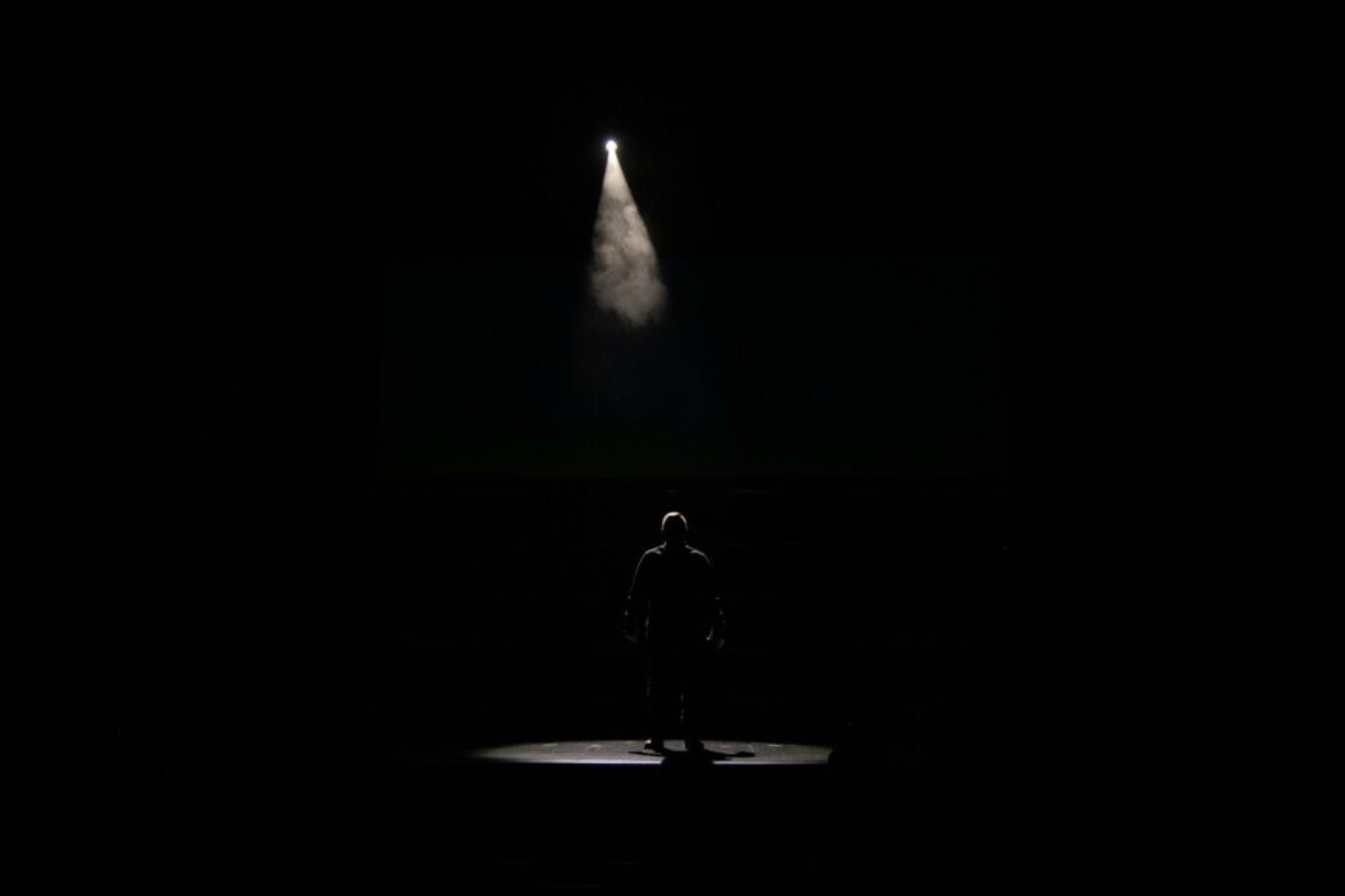
What it looks like when the imaginary audience stops mattering. Photo: Unsplash
Back to the Chair
The client left with a haircut that fixed the angle from the previous week. She stood at the mirror for a long moment before saying, with some surprise, that it looked completely normal.
“Of course it does,” I said. “It always did. Nobody in the supermarket ever saw the problem because nobody in the supermarket was looking.”
She smiled the particular smile of someone who had just been handed back a weekend they had spent unnecessarily.
I come from a place where the stakes of being observed were somewhat more concrete — where standing out had consequences that went well beyond social discomfort. Which may be why the version of it that plays out here — the low-stakes, high-anxiety monitoring of imaginary audiences — reads, from the outside, as a particularly exhausting way to spend a perfectly good Saturday.
I touched a related thread in our piece on the skills quietly disappearing in a distracted age — specifically the difficulty of simply being present, without performing, without checking, without conducting a running internal audit of how you are being perceived. The spotlight effect is, in a way, the psychological tax on that difficulty. We have built lives of unprecedented self-documentation and social visibility, and then discovered, somewhat to our surprise, that it has made us more self-conscious, not less.
The good news remains what it always was. The audience is not there. It never was. The flashlights are all pointed inward.
You can put yours down whenever you like.
The Salon California Journal is a space for ideas, culture, and conversation from my chair in Brasschaat, Belgium. I write about beauty, technology, society, and the intersections between them.