A Conversation That Started Over a Paper Map
People talk constantly about what technology has given us. Far less attention goes to what it quietly took in exchange. A client in my chair gave me the first item on the list without meaning to.
A woman in her sixties was in the chair last week, weighing whether to drive to Ghent to see her son or wait for him to come to her. She mentioned, almost as an aside, that she would need to print directions, because her phone “does something strange” in certain areas and she no longer trusted herself to find the way without it.
I asked, half-joking, whether she still remembered how to read a paper map.
She paused. Properly paused — the particular pause of someone searching for something they had always assumed would simply be there when needed.
“I think so,” she said. “I haven’t tried in maybe fifteen years.”
[Switches to serious face.] Neither of us made anything of it in the moment. But I kept thinking about that pause for the rest of the day, and most of the week after. People talk constantly about what technology has given us. Far less attention goes to what it quietly took in exchange. So I started keeping a list. It got longer than I expected.
90%+of smartphone owners rely on GPS for unfamiliar routes
1 phone number the average adult can now recall from memory
8 sec. commonly cited average human attention span today
2x faster spread rate of false claims versus true ones online
What We Traded for Convenience
Before GPS, people understood distance, direction, and landmarks. They knew where they were, where they were going, and roughly how to get there using nothing but attention and memory. Today, many people cannot read a paper map without turning it around several times like a contestant on a game show that nobody auditioned for. If the battery dies, so does the sense of direction. Researchers at McGill University have found that heavy reliance on GPS is associated with measurably reduced activity in the hippocampus — the part of the brain responsible for spatial memory and navigation. We have gained turn-by-turn guidance and quietly lost the ability to guide ourselves.
Not long ago, people carried dozens of phone numbers in their heads — family, friends, work, emergencies. Now most of us know exactly one number, and even that is sometimes negotiable. A widely cited study by Kaspersky Lab described this phenomenon as “digital amnesia”: the habit of outsourcing memory to a device so completely that the underlying skill simply stops being exercised. Smartphones have become external hard drives for our memories. Convenient, certainly. Though it is difficult to exercise a muscle you never use.
The Vanishing Handwritten World
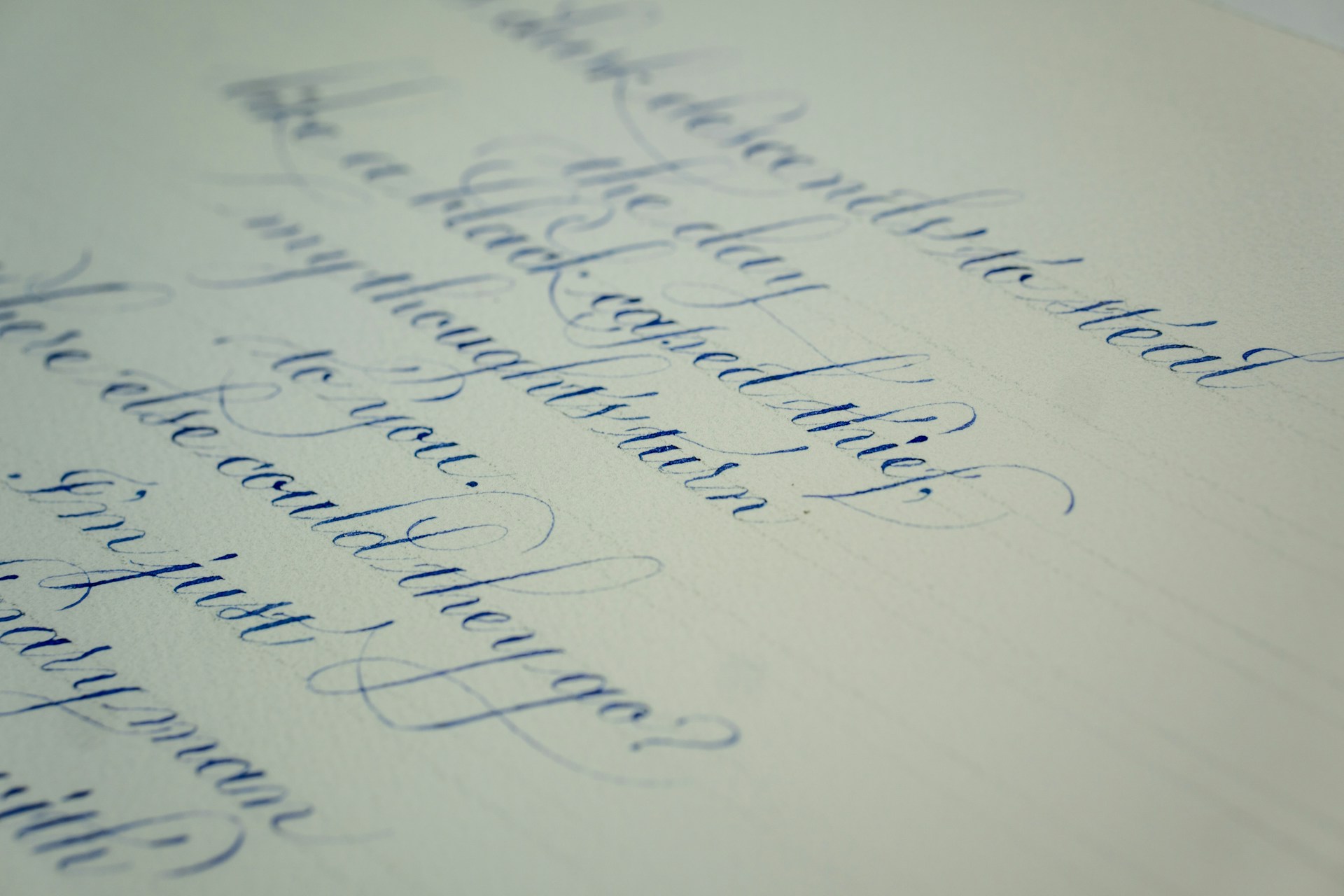
Many schools no longer teach cursive. Typing has replaced pen and paper, and some students now struggle to read handwriting that earlier generations would have considered entirely ordinary — including, on occasion, their own grandparents’ birthday cards. For centuries, handwriting was a mark of identity, instantly recognisable, impossible to fake convincingly. Today, personality arrives in the form of a font menu.
Books once demanded hours of attention, and people gave it willingly. Now many grow restless if a video takes longer than thirty seconds to reach the point. Constant notifications, short videos, and endless scrolling train the brain to expect immediate rewards on a fairly aggressive schedule. Deep concentration — the kind a long novel or a difficult chapter requires — is slowly becoming a specialist skill, like upholstery or beekeeping.
“Technology saves effort. Sometimes it saves us from exercising abilities we still need — right up until the moment we discover we no longer have them.”
Photos: Unsplash
When Things Break, We Replace Them
There was a time when broken things were repaired. Shoes were resoled. Appliances were opened up and inspected. Furniture was restored rather than replaced. Today, many products seem designed by engineers who regard screwdrivers as a personal insult — sealed units, proprietary parts, warranties that evaporate the moment a casing is opened. When something breaks, replacing it is often easier, and sometimes cheaper, than fixing it. As a result, practical repair skills are becoming rare, and the planet is quietly accumulating the consequences. The Repair Association has spent years documenting how manufacturers actively design against repairability — and pushing for laws that would make fixing your own belongings a right rather than a small act of rebellion.
The Conversations We Are Forgetting How to Have
Text messages have replaced a great many real conversations. Eye contact, body language, listening, and reading social cues all improve through practice — and, like any skill, they weaken when neglected. Many people now have hundreds of digital connections and fewer and fewer opportunities to develop the kind of social confidence that only comes from sitting across from another human being and managing the silence without reaching for a phone.
Access to information has exploded in the same period. The habit of questioning it has not kept pace. Headlines are shared, opinions are repeated, and claims travel around the globe before anyone thinks to ask whether they are true. Researchers at MIT found that false news spreads roughly six times faster than true news on social platforms — not because people are foolish, but because novelty and outrage are simply more shareable than accuracy. Information has become abundant. Scepticism appears to be operating on reduced hours.

What Happens When the System Fails
Building a fire. Growing food. Finding clean water. Basic first aid. For most of human history these were simply ordinary skills — the kind everyone had because everyone needed them. Today many people depend entirely on systems they neither control nor understand. Everything works beautifully right up until the moment it doesn’t, at which point a great many of us discover that our backup plan was assuming the system would fix itself.
Before calculators occupied every pocket, people estimated totals, percentages, and change in their heads, quickly and more or less accurately. Now many calculations are outsourced before the brain receives so much as an invitation to participate. Technology saves effort. Sometimes it saves us from exercising abilities we still need.
The One Nobody ListsNo scrolling. No notifications. No background noise. Just silence. For many people, that description sounds less like peace and more like solitary confinement. Yet reflection requires stillness. Some of our best ideas, hardest truths, and most honest conversations happen when there is nobody else in the room. Ironically, in an age of constant connection, spending time with our own thoughts has quietly become one of the least practiced skills of all — and arguably the one we can least afford to lose.
Back to the Chair
None of these abilities disappeared overnight. They are fading gradually, the way most important things do — replaced by convenience, automation, and a thousand small decisions that each made perfect sense on their own.
Progress is not the villain here. Most of these inventions have improved life in countless real and measurable ways, and I would not trade my phone for a paper map on a daily basis any more than the woman in my chair would. I come from a place where some of these skills were not optional — where finding your way, fixing what broke, and sitting with your own thoughts were simply what living required. Which may be why I notice their absence here a little more readily than someone who has never had to rely on them.
We have followed a similar thread in our piece on technology and human connection — the question of what gets quietly displaced when something more convenient arrives to take its place. The pattern repeats. The new thing is rarely the problem. The problem is what we stop doing once the new thing is there to do it for us.
The woman in the chair left with clean, freshly cut hair and a folded paper map I had no business handing her, except that I happened to have one. Whether she used it, I cannot say. But I like to imagine her unfolding it in the car, turning it the right way up on the first try, and remembering that she always knew how.
The question is not what technology can do for us. The question is what we stop doing for ourselves once it does.
The Salon California Journal is a space for ideas, culture, and conversation from my chair in Brasschaat, Belgium. I write about beauty, technology, society, and the intersections between them.
Leave a Reply