History has been silent for centuries
Stop What You Are Doing. They Are Reading the Unreadable.
Almost two thousand years ago, Mount Vesuvius buried an entire library. The scrolls were baked into fragile cylinders of charcoal. Their contents seemed lost forever. Until now. And the real story reaches far beyond the technology that unlocked them.
A client mentioned it between sections, phone face-down on her knee, the way people mention things they have been thinking about since the morning. “Did you see the story about the ancient scrolls? The AI reading them? From Pompeii?”
“Herculaneum,” I said. “The town next door. And yes.”
“Isn’t that extraordinary? That technology can just… do that?”
“What strikes me most isn’t the AI part,” I said.
She looked at me in the mirror. “No?”
“The AI is just the key. What matters is the room the key opens.”
[Switches to serious face.] Stop what you are doing. This may become one of the greatest archaeological breakthroughs of the century. And it has only just begun.
79 AD the year Mount Vesuvius erupted, burying the library of Herculaneum beneath volcanic ash
~1,800 papyrus scrolls and fragments recovered from the Villa of the Papyri — baked into charcoal for two thousand years
300 BC when Zeno of Citium founded Stoicism — one generation after Alexander had connected the ancient world
0 the number of these scrolls anyone believed could ever be read again — until very recently
The Library That Would Not Burn
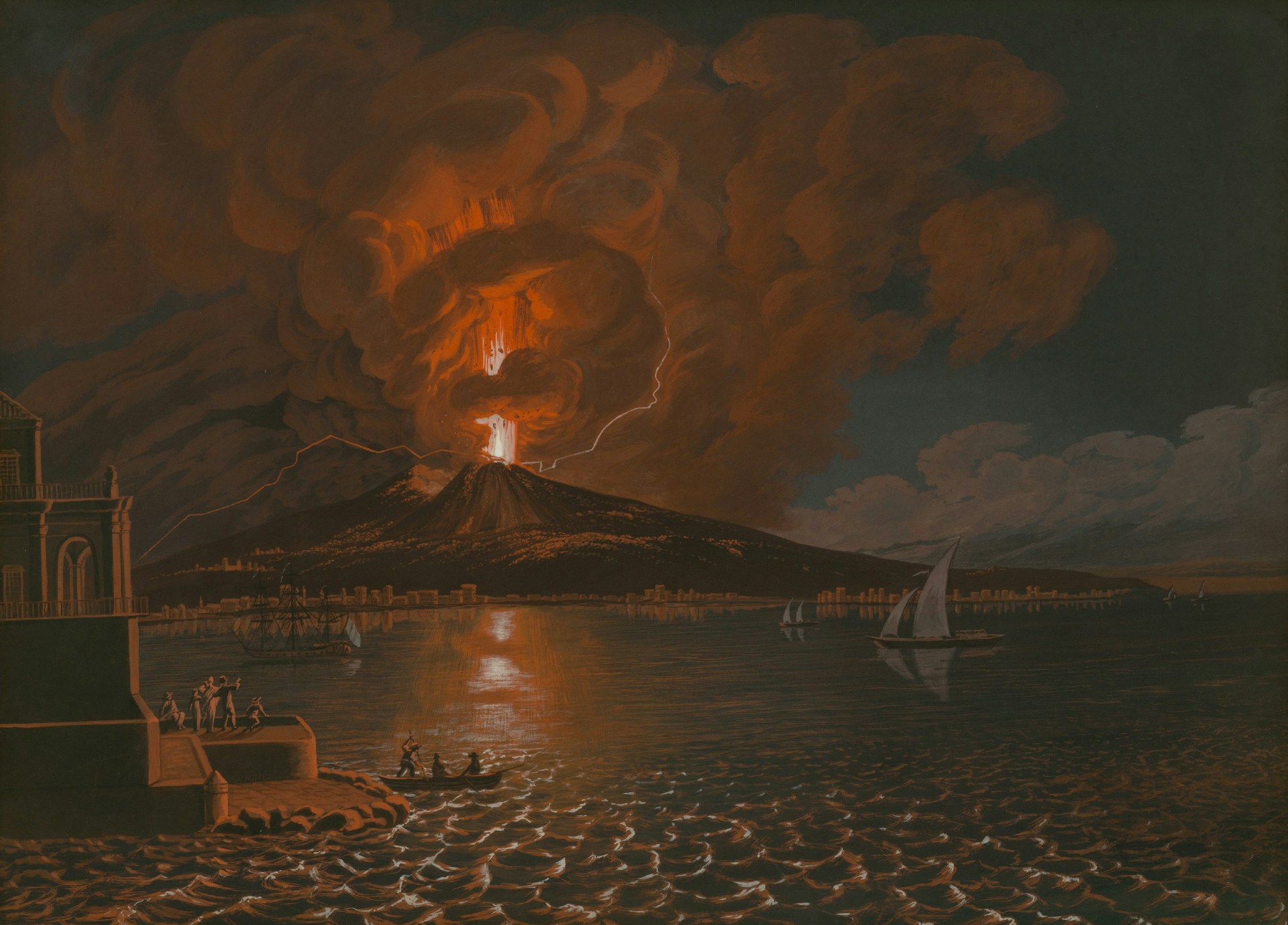
Almost two thousand years ago, Mount Vesuvius erupted. Pompeii is the name everyone remembers. Herculaneum, the smaller town nearby, was buried differently — not under ash but under a surge of superheated volcanic material that came so fast it sealed the city almost intact. Inside one Roman villa, now called the Villa of the Papyri, lay an entire library. Hundreds of papyrus scrolls were baked into fragile, blackened cylinders of charcoal. The heat had not destroyed them. It had mummified them.
For twenty centuries, they remained sealed. Unrolling them meant destroying them. Scholars had tried. The scrolls crumbled at the touch. Their contents seemed lost forever.
Until now.
The Key and the Room
Using artificial intelligence and advanced X-ray imaging, researchers have done what many believed was impossible. They have begun reading the unreadable. The Vesuvius Challenge — a competition that brought together computer scientists, papyrologists, and imaging specialists — trained AI models to detect the faint traces of ancient ink on carbonized papyrus without touching the scrolls at all. The words were read from the inside out, through layers of charred material that no human hand could safely separate.
“The AI is just the key. What matters is the room the key opens.” — And the room, it turns out, connects to many other rooms that were never supposed to exist.
The first recovered text belongs to the Epicurean philosopher Philodemus, opening a door to works that have been silent for nearly two millennia. And if that sounds like a niche academic achievement, consider this: the Villa of the Papyri held roughly 1,800 scrolls. Most have not yet been read. Most are still waiting. If artificial intelligence can unlock one library, it may eventually unlock hundreds of lost works once thought gone forever.
Yet the real story reaches far beyond AI. The technology is astonishing. What the technology is recovering is more astonishing still.
The Ancient Mediterranean Was a Conversation
These scrolls come from a civilisation we casually call Greek or Roman. But the ancient Mediterranean was never divided into isolated cultures the way a schoolroom map might suggest. It was a network of ideas stretching from Greece and Egypt to Persia, Mesopotamia, and India — connected by trade routes, military campaigns, diplomatic missions, and the restless movement of scholars, priests, and philosophers across borders that did not yet exist in the form we imagine them.
Look at the age in which Stoicism emerged. Only one generation earlier, Alexander the Great had shattered the Persian Empire, creating a vast intellectual crossroads that ran from the Aegean Sea to the edge of India. Philosophers, merchants, priests, and scholars moved across that connected space, carrying ideas with them. The world that produced Stoic philosophy was not a Greek world sealed from outside influence. It was a world in active, ongoing conversation with everything that surrounded it.
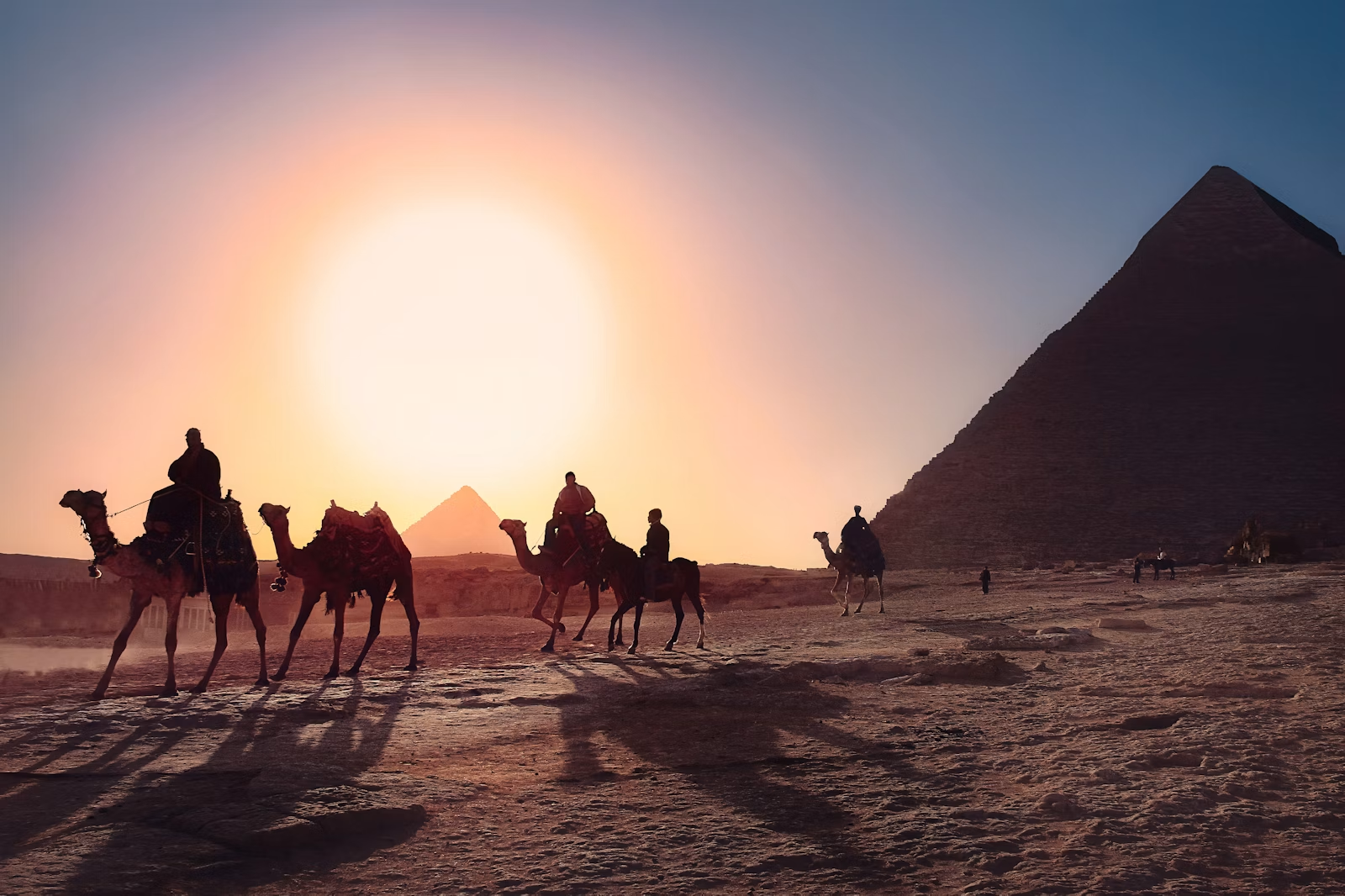
Egypt did not exist in isolation. Neither did Greece, Persia, or Rome. The ancient world was a network, and the ideas moved with the people. Photos: Unsplash
The Founders of Stoicism Were Not Greek
This matters, because when you look at Stoicism itself, the evidence of that network is written directly into the biographies of its founders.
Zeno of Citium, who established Stoicism around 300 BC, was a Phoenician from Cyprus. Chrysippus, the philosopher who systematised Stoic doctrine and built it into the rigorous school we now study, came from Cilicia — what is now southern Turkey. Another leading Stoic thinker became known, simply and revealingly, as “the Babylonian.”
These are not incidental details. The school of thought that gave us the Logos — the belief that the universe is governed by a rational and divine order — was founded by men who came from the edges of the Greek-speaking world and carried with them the philosophical inheritance of cultures that had been thinking about cosmic order for centuries before Greece arrived.
According to the Stanford Encyclopedia of Philosophy, Stoicism’s defining commitment was to living in accordance with nature and reason — to aligning oneself with the rational structure they believed governed everything. That is a profoundly Greek formulation. It is also not only a Greek formulation.
The Logos and Asha
At the centre of Stoicism stands the Logos: the rational order that runs through the universe, the principle by which everything coheres. The Stoics inherited this idea from Heraclitus, but they developed it inside a region that had spent centuries in contact with Persian thought.
Zoroastrianism, one of the world’s oldest continuously practised religions, spoke of Asha: the cosmic order that sustains truth, justice, and the structure of existence itself. To live well, in Zoroastrian ethics, meant aligning your thoughts, your words, and your actions with that universal order — with truth as the animating force of a well-lived life.
The parallels are difficult to ignore. The Stoics taught that virtue comes from living according to nature and reason. Zoroastrian ethics taught that goodness comes from living in harmony with cosmic truth. Both traditions viewed personal morality as participation in a larger order that governs the universe. Both imagined the good person not as someone who conquers the world but as someone who aligns themselves with the structure that was already there.
Fire and Renewal
The parallels extend further. The Stoics described a universe periodically consumed and renewed by fire — a great conflagration from which order reasserts itself. Zoroastrian tradition speaks of Frashokereti, the final renewal of creation through a purifying fire. The Stoics imagined humanity as citizens of one universal community governed by reason. Persian thought had long emphasised a moral order that embraced all people under a single cosmic law. None of this means Stoicism copied Persian religion. World History Encyclopedia has documented extensively how ideas across the ancient world moved, crossed, and transformed one another in ways that cannot be reduced to straight lines of influence. Ideas rarely travel in straight lines. They meet, collide, evolve, and return in new forms.
“The ancient Mediterranean was a conversation, not a collection of isolated civilisations.” — Which is what makes the recovery of every scroll from Herculaneum an event that belongs to all of us.
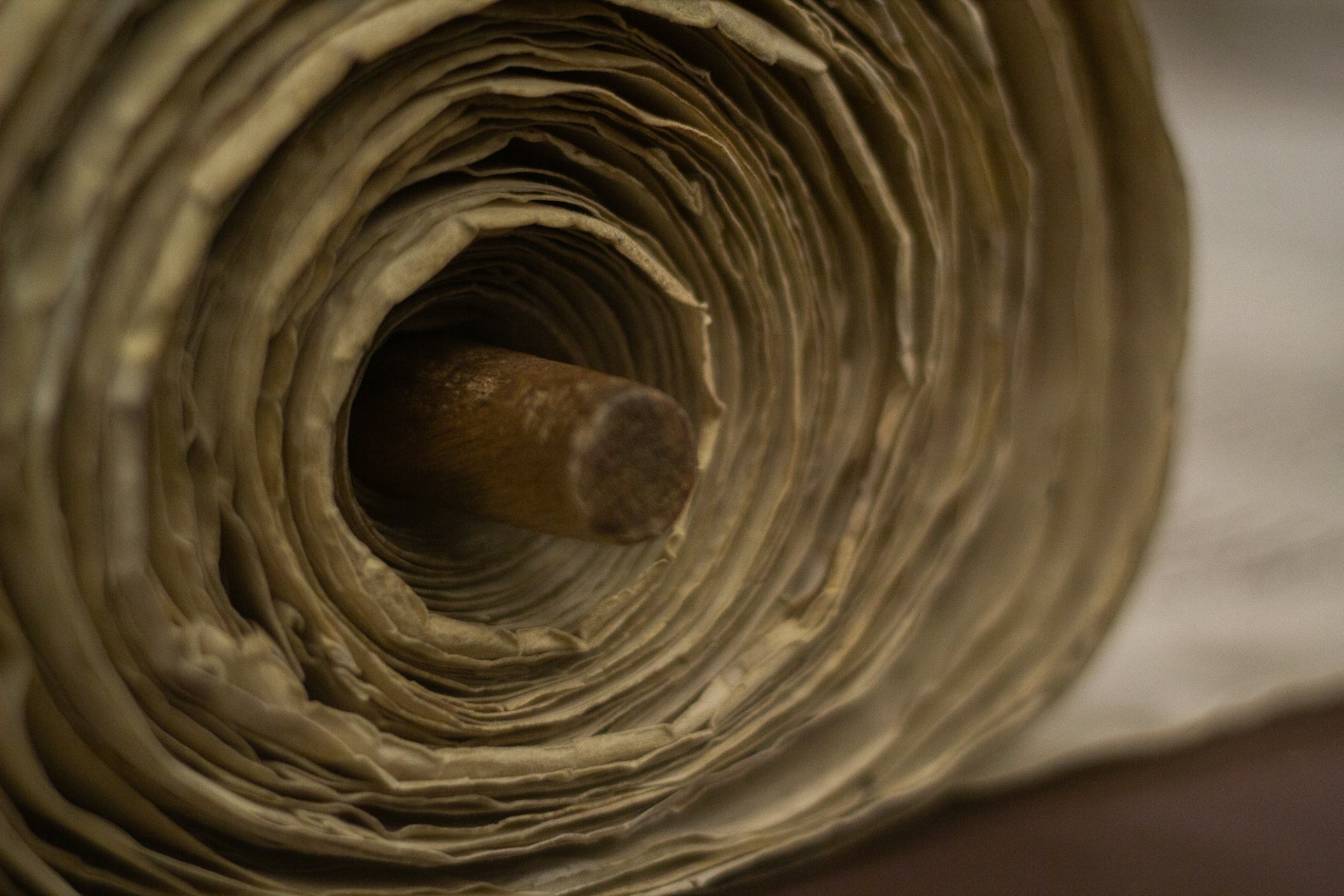
The library that waited. The detective work of recovery. Images belong to the same story. Photo: Unsplash
What Could Still Be Found
That is why these newly recovered scrolls matter so much beyond the technology that read them. Every text brought back from the ashes has the potential to reveal forgotten arguments, lost debates, and hidden connections between civilisations. What survived inside Herculaneum is not only the voice of Rome or Greece. It is the voice of an interconnected ancient world where Greek, Egyptian, Persian, Babylonian, and many other traditions shaped one another across centuries of contact.
The Villa of the Papyri may not be the only such place. Archaeological surveys have suggested that sections of it remain unexcavated. What else was stored in those rooms? Whose voice has been waiting, sealed in charcoal, for the technology to arrive that could read it without destroying it?
For the first time in history, we can read books that no human eyes have seen for nearly two thousand years. History has been silent for centuries. Now, it is beginning to speak again.
Back to the Chair
My client left quiet again. The good kind of quiet — the kind where something has landed and is still settling. On her way out she said, “I thought it was just a technology story. A nice one. But it’s not really about the technology, is it.”
“No,” I said. “It never was.”
What interests me most about the Herculaneum discovery is not what it tells us about what we lost. It is what it tells us about what we assumed. We assumed the ancient world was simpler than it was — more divided, more local, more isolated. We built a mental map of separate civilisations in separate boxes. The scrolls, even before they are fully read, already complicate that map. The people who wrote them were connected in ways we have only begun to trace.
I touched a related thread in a previous piece on who is actually writing the rules that govern our lives — the gap between who we think is in charge and who, quietly, actually is. The ancient world had the same gap. The founders of the philosophy that shaped Roman law, Christian theology, and the Enlightenment were Phoenicians, Cilicians, and Babylonians. The dominant civilisation absorbed the contribution and filed it under its own name. That is not an accusation. It is simply how history tends to work when the archive is incomplete.
The archive is becoming less incomplete. That is the story.
The Salon California Journal is a space for ideas, culture, and conversation from my chair in Brasschaat, Belgium. I write about beauty, technology, society, and the intersections between them.