
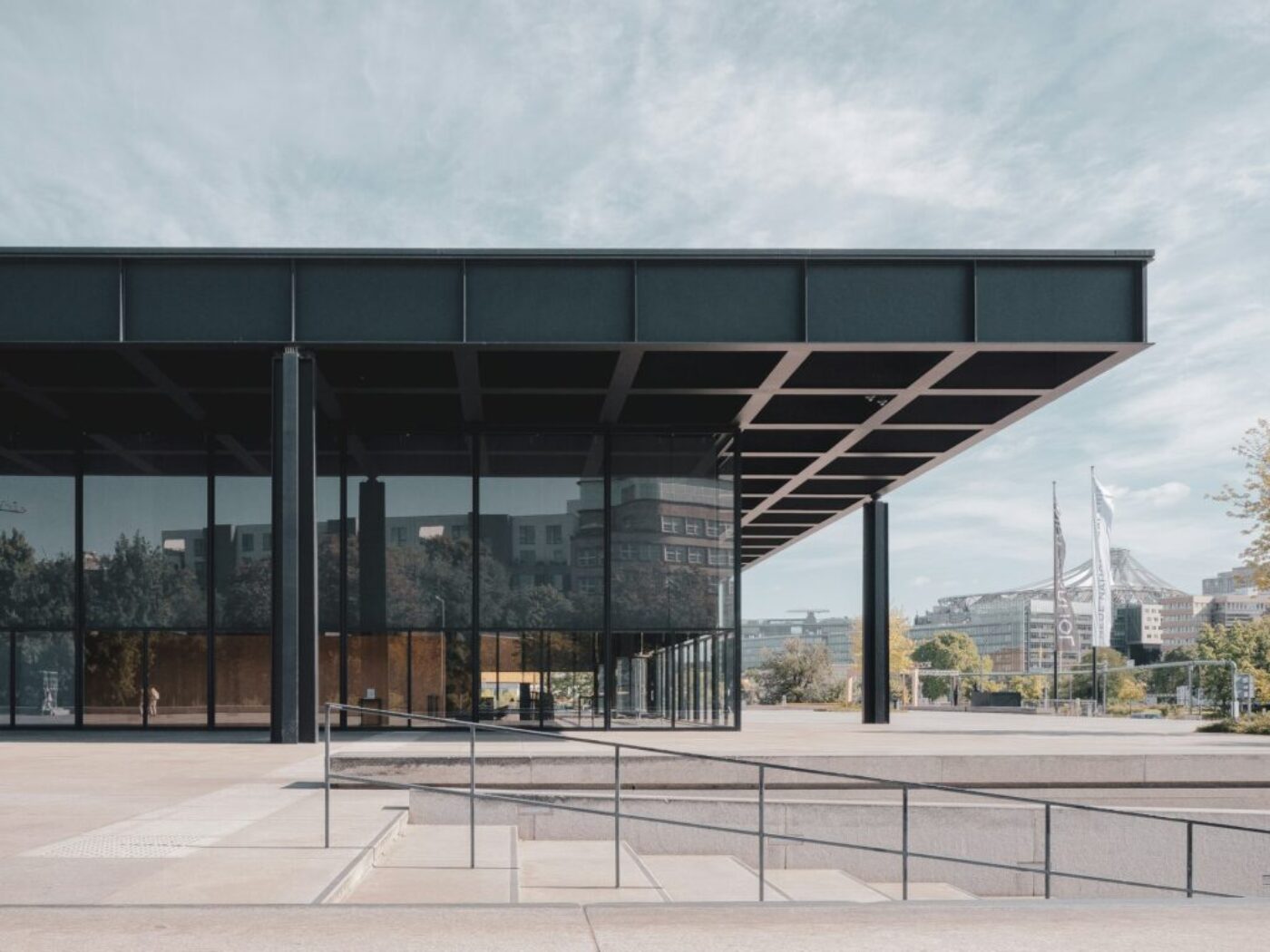
Mies van der Rohe Was Not a Minimalist
He Was a Perfectionist Who Made It Look That Way.
A client called my salon “so clean, so minimal.” Which got me thinking. We have been told that Mies van der Rohe was a minimalist. He was not. He was a perfectionist who made complexity disappear so thoroughly that simplicity became the illusion.
A client sat in the chair last week and looked around the salon with the calm expression of someone who had just walked into a room they immediately understood. “It’s so clean,” she said. “So minimal. How do you keep it this way?”
“With great effort,” I said.
She laughed. “That sounds like a very philosophical answer.”
“It’s a very practical one. Clean costs more than messy. Every surface you see is a decision. Empty space is the most expensive thing in a room.”
She looked at me differently. “Are you an interior designer on the side?”
“No,” I said. “But I spent two years studying architecture in San Diego — before a move to Belgium made it impossible to continue.”
“That’s a very specific answer for a hairdresser,” she said.
[Switches to serious face.] We have been told that Mies van der Rohe was a minimalist. He was not. He was a perfectionist who made complexity disappear so completely that the result looked effortless. That distinction matters. Minimalism, in the popular sense, is about subtraction — removing things until what remains is simple. What Mies did was different. He concealed complexity with such control that simplicity became the illusion.
1929 the year the Barcelona Pavilion was built — demolished the following year, reconstructed half a century later
1958 the year the Seagram Building was completed on Park Avenue, New York
90 ft the distance the Seagram Building is set back from Park Avenue — premium street frontage deliberately given back to the city
3 primary materials in the Barcelona Pavilion — marble, glass, and steel — placed with obsessive, relentless precision
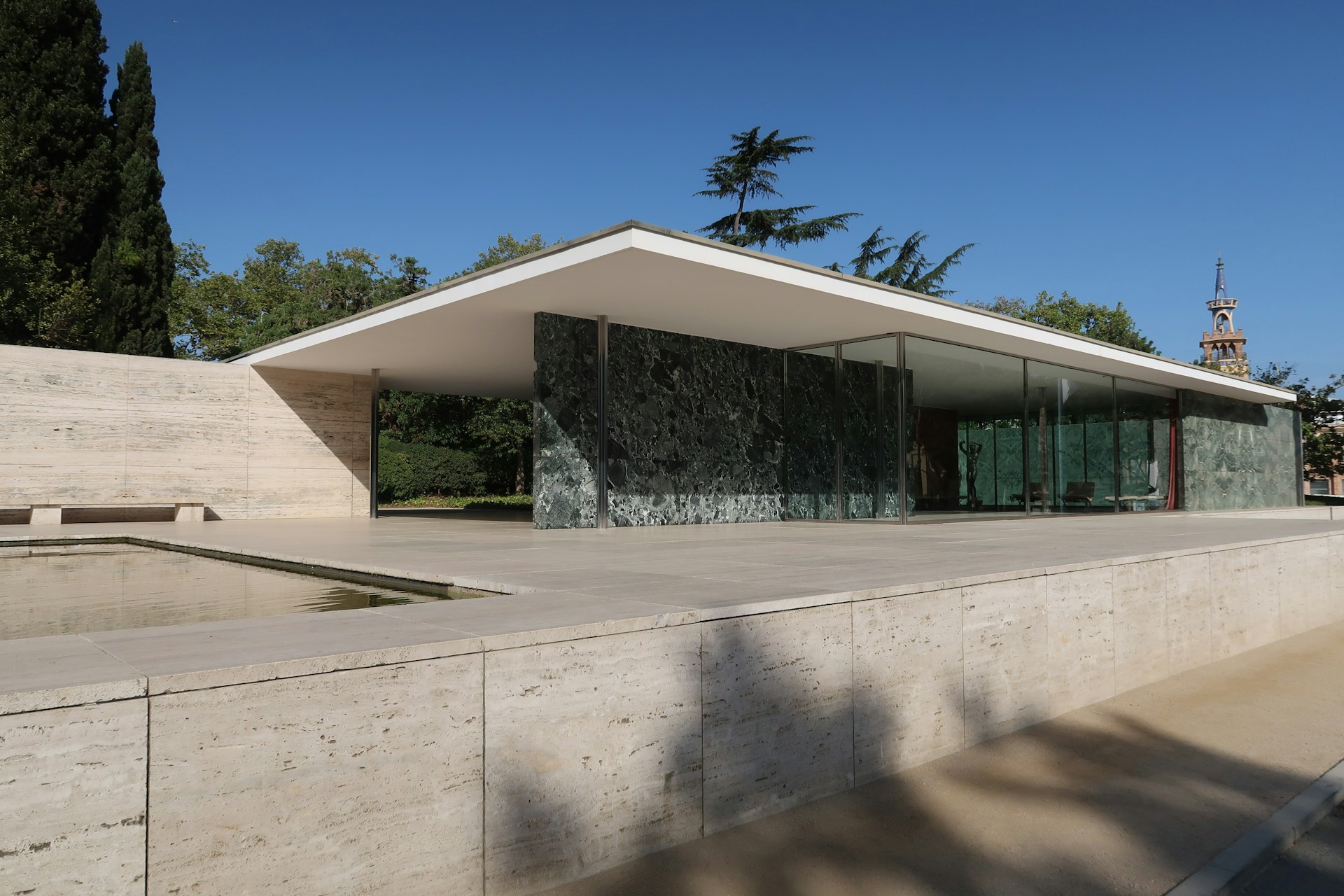
The Barcelona Pavilion
In 1929, Mies van der Rohe built the German Pavilion for the International Exposition in Barcelona. The building was not designed to display objects. It was designed to be the object. There was almost nothing in it. A reflecting pool. Walls of green Tinian marble and Roman-tinted glass. A low, flat roof hovering over the space with no apparent effort. A pair of chairs — now so famous they have become a design cliché, which is not their fault.
The building used three materials. That sounds simple. What sounds simple is never simple.
The marble was sourced for specific reasons — colour, grain, reflective quality. The glass was tinted precisely. The steel columns, those elegant cross-shaped sections holding up the roof, were not left as raw structure. They were wrapped in chrome-plated steel panels — sheathed in mirror-polished skin. Every joint, every transition between materials, every threshold between inside and outside was resolved to a point where the resolution itself became invisible.
“We have been told that Mies van der Rohe was a minimalist. He was not. He was a perfectionist who made complexity disappear.” — The distinction that explains why his buildings feel inevitable and everything trying to imitate them feels thin.
The Fundació Mies van der Rohe in Barcelona maintains the reconstructed Pavilion — rebuilt in 1986 from the original drawings after it was demolished in 1930, just one year after it opened. That it needed to be reconstructed from drawings tells you something. The building was so far ahead of its moment that the world did not yet know how to keep it.
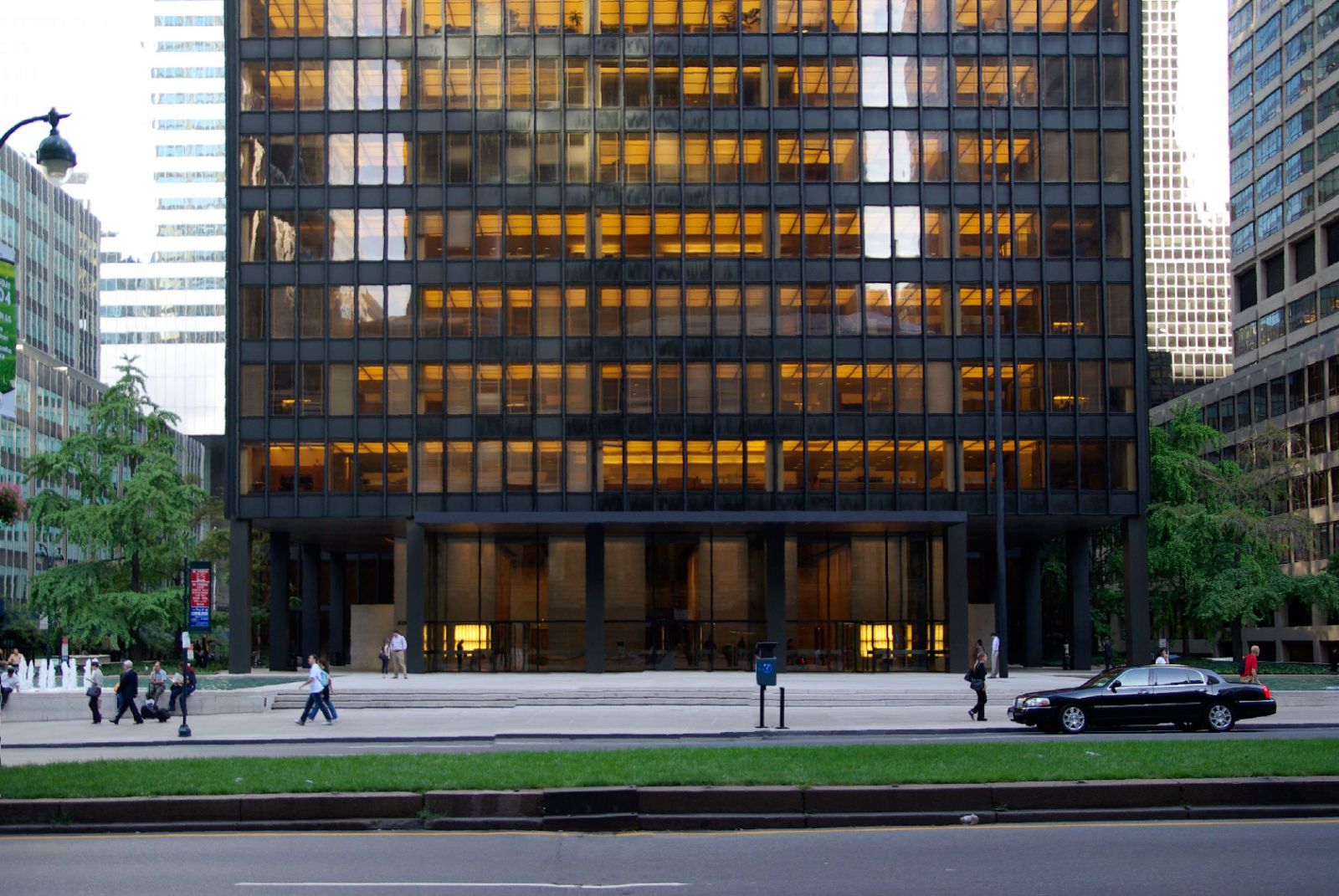
The Seagram Building
In 1958, Mies completed what many consider the finest office tower ever built: the Seagram Building on Park Avenue in New York, designed with Philip Johnson. Bronze-toned glass and steel, set back ninety feet from the street on a granite plaza. That setback was not a regulatory requirement. It was a choice — an expensive choice, at a moment when real estate in midtown Manhattan was among the most valuable land on earth. Mies gave that space back to the city. He paid for restraint with money that the client chose to spend on absence.
The building’s facades are curtain walls of amber-tinted glass held in a bronze-finished steel frame. The I-beams running up the exterior are not structural — they are decorative mullions added to give the facade rhythm and depth. Mies used what looked like exposed structure to communicate honest construction, while the actual steel frame is fireproofed and hidden behind it. It is a very sophisticated kind of honesty: the fiction tells you the truth about how the building would like to be understood.

Simplicity Is Expensive
Here is what the word “minimalist” gets wrong when applied to Mies. Minimalism implies that things were left out because leaving things out was the goal. With Mies, things were included — every decision, every joint, every material — and then resolved to such a degree that they became invisible. That is not subtraction. That is control raised to the point where it no longer shows.
His famous phrase was “less is more.” It is almost always quoted as a design philosophy about removing things. It is almost never understood as what it actually is: a description of effort. Less visible means more work. Less apparent means more thought. Less showing means more done.
The Archive
The Art Institute of Chicago holds the largest collection of Mies van der Rohe’s architectural drawings and documents in the world — tens of thousands of items spanning his entire career. What is striking about the working drawings for the Seagram Building is not their elegance, though they are elegant. It is how many there are. The building that looks like pure simplicity required, on paper, the documentation of ten thousand decisions. That is the part no one mentions when they call it minimalism. MoMA holds further drawings, models, and documentation of his work as part of its permanent collection — a record of someone working through each problem with the patience of someone who does not believe in shortcuts.
What This Has to Do With Hair
More than you would think.
A good haircut is one where people cannot tell exactly what was done. They know something changed — they feel it, the weight is right, the shape sits correctly — but they cannot locate the specific decisions that produced the effect. That is not an accident. That is the goal. The visible technique is the failed technique. What you are trying to achieve is the result without the signature of effort left behind in it.
Mies understood this better than almost anyone in the history of architecture. He spent decades learning how to remove his own fingerprints from his buildings — how to make the work look like it had always been there, inevitable, as if the space could not have been otherwise.
“The visible technique is the failed technique. What you are trying to achieve is the result without the signature of effort left behind in it.” — True of Mies van der Rohe. Also, with some adjustments, true of a good haircut.
“Less is more” is not a design principle. It is a discipline. It costs more to do less well than to do more badly. The empty wall is harder than the full one. The quiet room is harder than the cluttered room. The single chair placed exactly right is harder than twenty chairs placed approximately.
This is also why imitations of Mies fail consistently. You can copy the vocabulary — the flat roof, the exposed steel, the open plan — and produce something that looks, from a photograph, vaguely like his work. You cannot copy the resolution. The joints give you away. The thresholds give you away. The details that Mies spent months deciding and you spent an afternoon approximating give you away every time.
Back to the Chair
My client left looking, she said, “at everything differently.” She meant the salon, I think. Maybe also the street outside. The way things are arranged when you realise someone arranged them on purpose — and then worked until the arrangement stopped looking like a decision.
That is what Mies gave to the people who walk through his buildings. Not the feeling that you are inside something designed. The feeling that you have arrived somewhere that simply is. The architecture disappears into its own intention so completely that what remains is the space — and in the space, the person standing in it.
It took forty years of work to learn how to do that. Probably more.
I touched the same thread in our piece on what it means to originate something rather than imitate it — the gap between the appearance of a thing and the labour that produced that appearance. Mies is the clearest example I know of someone who spent a career making that gap invisible. Which is why people call him a minimalist. He would have considered that a partial reading.
Architecture starts, he said, when you carefully put two bricks together. Most people who quote that line admire the modesty of the statement. What they miss is the word “carefully.”
The Salon California Journal is a space for ideas, culture, and conversation from my chair in Brasschaat, Belgium. I write about beauty, technology, society, and the intersections between them.