
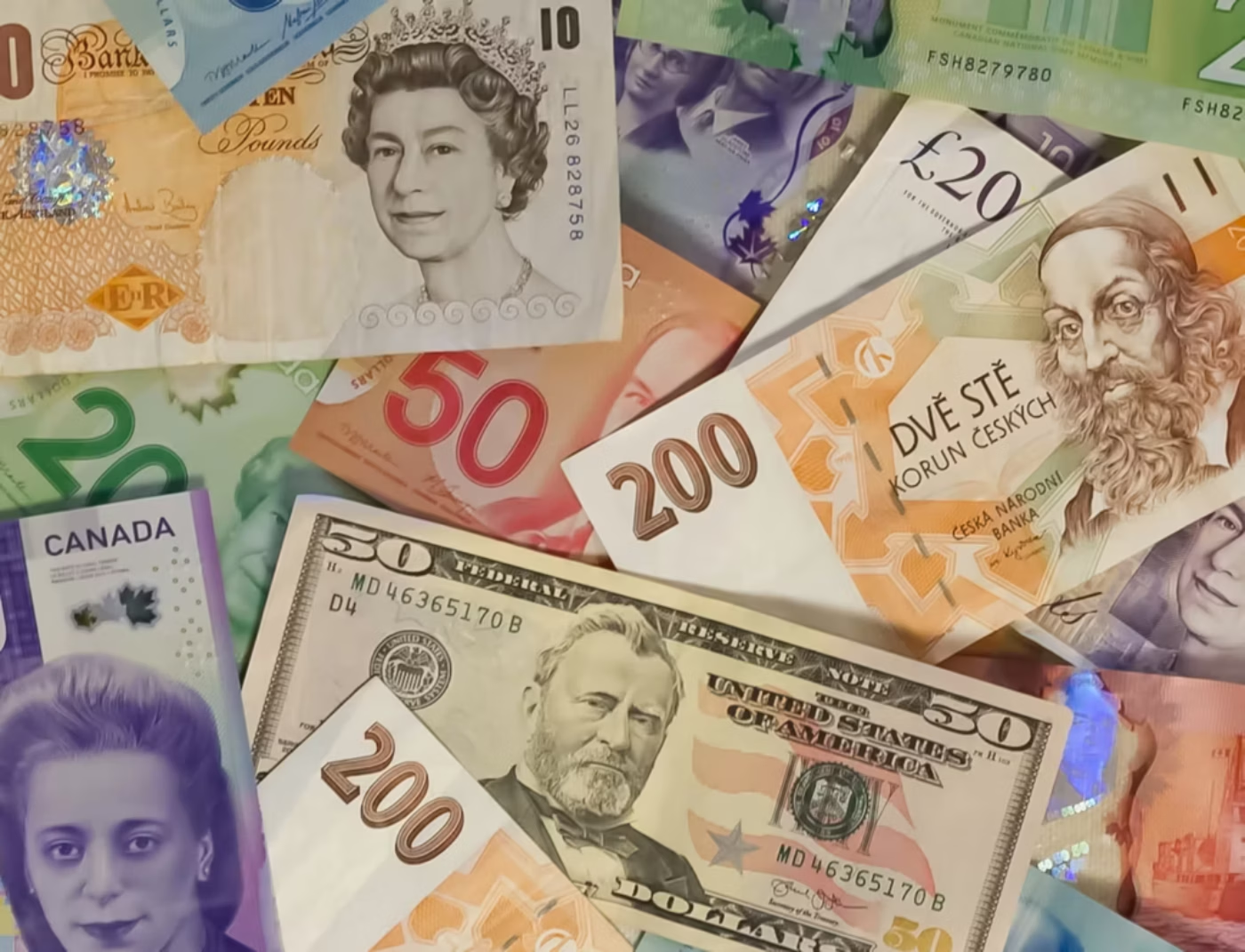
Cash
Germany Has Quietly Said Enough: Cash, Control, and the Digital Euro
A client came back from Munich baffled that half the restaurants wouldn’t take her card. By the end of the haircut, she understood exactly why — and so, mostly, did I.
A client came in last week fresh off a trip to Munich, still mildly outraged. “I went to four restaurants,” she said, “and three of them didn’t take cards. Cash only. In Germany. The most efficient country in Europe.”
I kept cutting. “Did you find that surprising?”
“I found it insane,” she said. “It’s 2026.”
“Did the restaurants seem to be struggling because of it?”
She paused. “No, actually. They seemed fine. Busier than the place that did take cards, if anything.”
[Switches to serious face.] Germany has quietly said, enough.
While much of the world sprints toward central bank digital currencies, sold as convenience wrapped in progress, Europe’s economic engine is tapping the brakes. And for good reason.
60% +of daily transactions in Germany still happen with physical banknotes
2026 year the ECB’s digital euro project faces its next major decision point
130+ countries worldwide currently exploring or piloting a CBDC
0 passwords, signals, or updates a banknote has ever required to function
Cash Is Still King
In Germany, cash is still king. Over 60 percent of daily transactions still happen with physical banknotes. In an age obsessed with frictionless payments and cheerful surveillance, that feels almost rebellious.
The Deutsche Bundesbank tracks this habit closely, and the pattern has held remarkably steady even as contactless payment became trivially easy almost everywhere else on the continent. Germans are not technologically behind — this is one of the most digitally capable economies in Europe. The persistence of cash here is a choice, repeated daily, by millions of people who could easily do otherwise.
A Quiet Resistance
Now, as the European Central Bank pushes the digital euro, a quiet resistance is growing. Businesses, small companies, and ordinary citizens are returning to cash, partly as habit, partly as protest. They do not love the idea of every euro spent becoming another data point in someone else’s database.
Why do Germans, among Europe’s most technologically capable societies, resist digital money?
Because history leaves scars, and some nations remember theirs better than others.
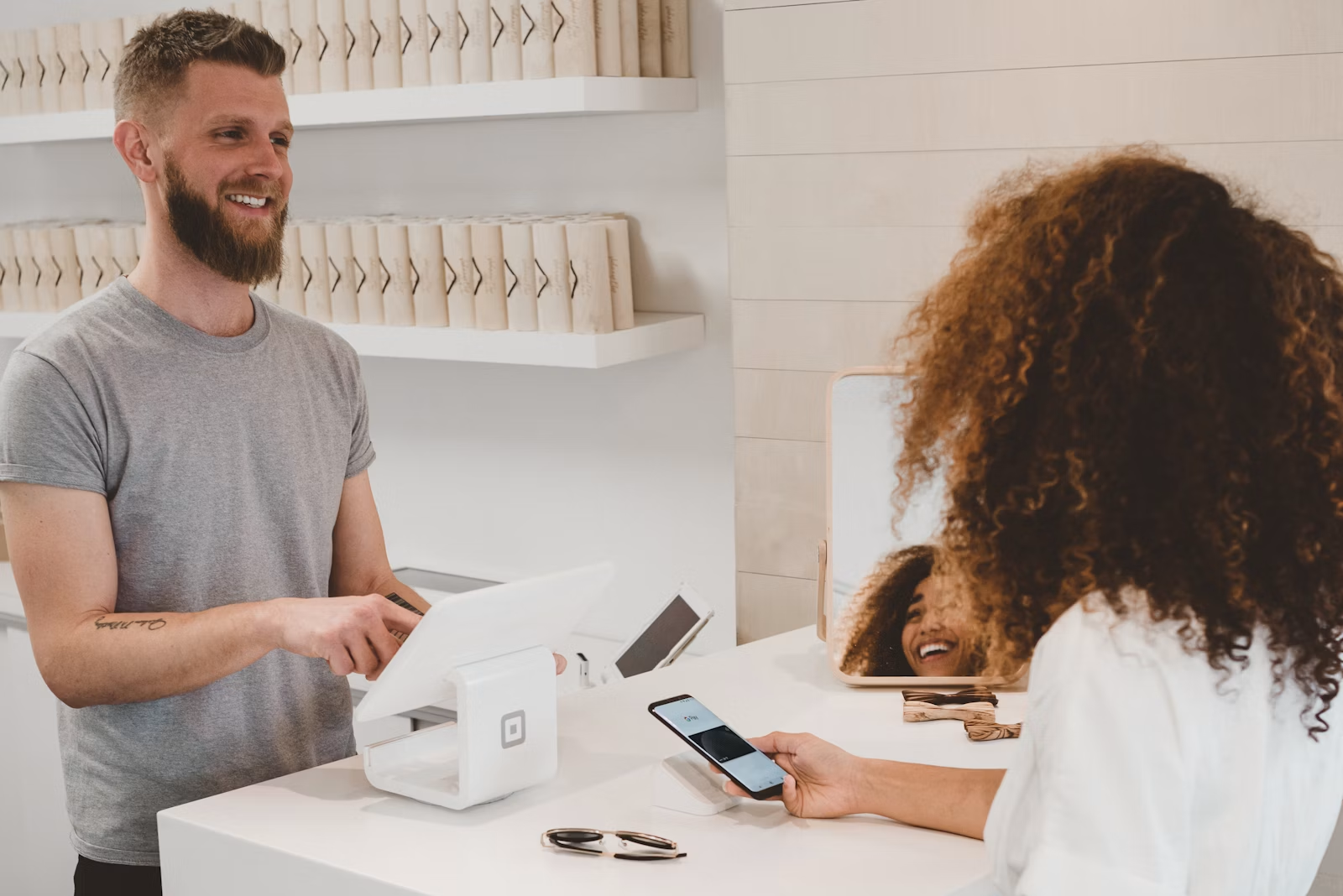
Convenient, certainly. The question that’s actually being asked is what convenience costs. Photo: Unsplash
History Leaves Scars
Germany has lived through systems where control reached deep into private life. They understand what many still dismiss: a system where authorities can monitor, restrict, or even disable your access to money with a keystroke is not pure progress. It can also become a leash with a sleek interface.
This is not paranoia dressed up as policy. It is a population that has, within living memory, watched ordinary financial and personal records become instruments of control rather than mere administration — and decided, collectively and without much need for explanation to one another, that the next version of that system deserves more scrutiny than enthusiasm.
“A system where authorities can monitor, restrict, or even disable your access to money with a keystroke is not pure progress. It can also become a leash with a sleek interface.” — The sentence that made my client stop scrolling through her Munich photos.
Cash Does Not Crash
They also grasp something unfashionably practical. Cash does not crash.
When the internet fails, when servers go down, when power grids wobble, paper money still works. No password. No signal. No update required.
The debate is no longer about convenience. It is about power.
Where This Is Actually Heading
The Atlantic Council’s CBDC Tracker currently counts well over a hundred countries researching, piloting, or launching central bank digital currencies — a near-universal experiment with very little public debate about the privacy architecture underneath it. The European Central Bank insists the digital euro would be designed with privacy safeguards comparable to cash for low-value transactions. Whether that promise survives contact with a future government under fiscal or political pressure is precisely the question Germany’s caution is built around.
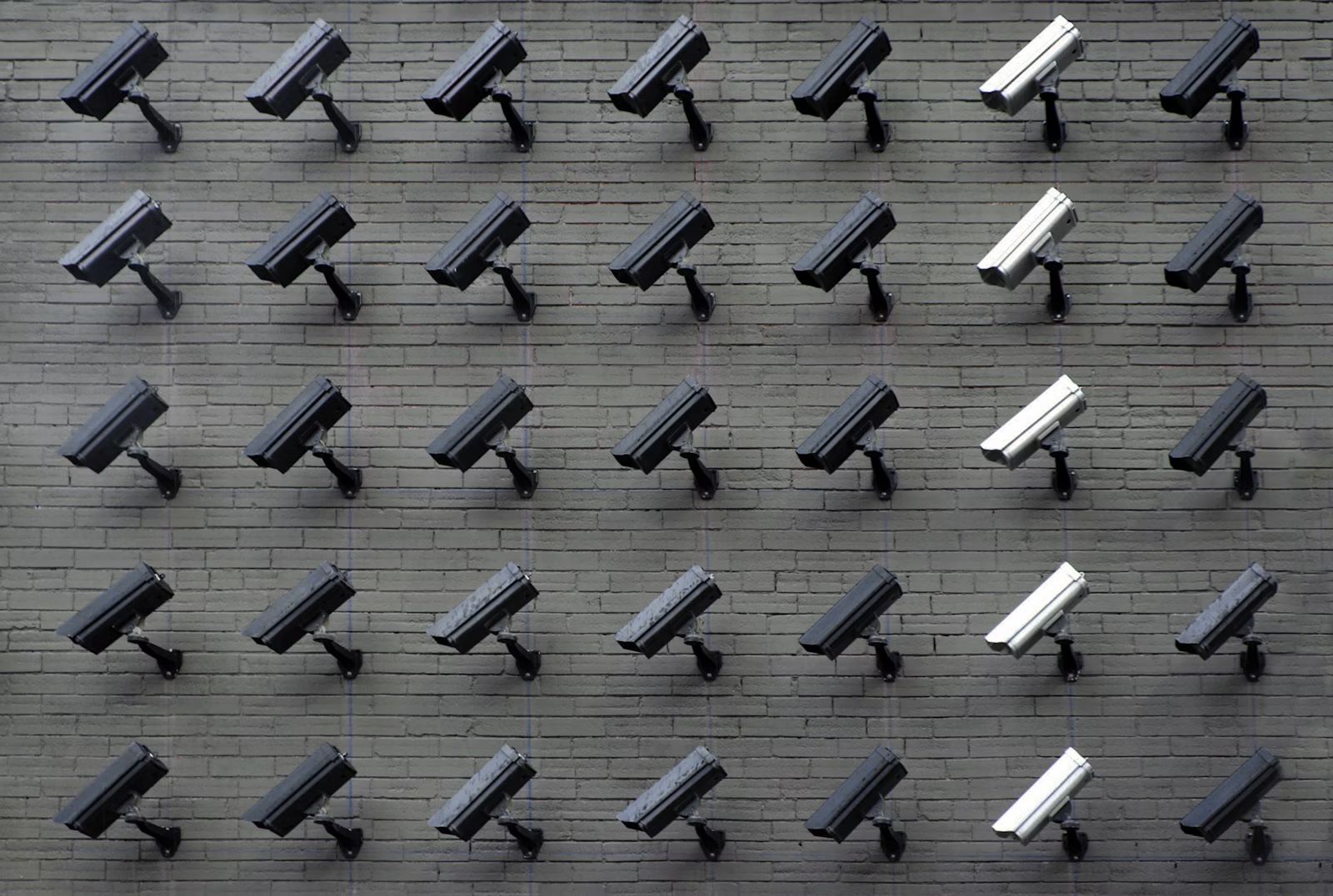
The thing the product was never actually built to deliver. Photo: Unsplash
The World Is Splitting in Two
The world is splitting in two. On one side, digital efficiency and centralised control. On the other, physical autonomy and resistance.
This shift could shape the future of the euro, influence the adoption of Bitcoin, and change how you protect your wealth.
Over the next two years, one truth may become painfully clear.
The one holding the information often holds the power.
Back to the Chair
My client left with her haircut and, I think, a slightly different read on her own annoyance. “So they’re not behind,” she said at the door. “They’re just… not falling for it.”
“That’s one way to put it,” I said.
I’ve watched payment systems change shape more than once across four decades behind the chair — Boston, California, Belgium — and the pitch is always the same: faster, cheaper, easier, inevitable. Cash has been declared dead by enthusiastic forecasters roughly once a decade since I started cutting hair, and it has, every single time, declined to cooperate with the obituary.
I touched a related thread in our piece on how little of what we do is actually private anymore — the gap between what a system promises and what it eventually does once the incentives shift. A digital euro promising privacy today is making a promise about itself. A government holding the keystroke that can freeze it is making a promise about its own future restraint. History tends to be a more reliable narrator of the second promise than the first.
Cash, for what it’s worth, has never once asked anyone to trust it. It just sits in the drawer, working, regardless of who’s currently in charge of believing in it.
The Salon California Journal is a space for ideas, culture, and conversation from my chair in Brasschaat, Belgium. I write about beauty, technology, society, and the intersections between them.