Author: Jean-Philippe

  • Cash

    Cash

    Germany Has Quietly Said Enough: Cash, Control, and the Digital Euro

    A client came back from Munich baffled that half the restaurants wouldn’t take her card. By the end of the haircut, she understood exactly why — and so, mostly, did I.

    A client came in last week fresh off a trip to Munich, still mildly outraged. “I went to four restaurants,” she said, “and three of them didn’t take cards. Cash only. In Germany. The most efficient country in Europe.”

    I kept cutting. “Did you find that surprising?”

    “I found it insane,” she said. “It’s 2026.”

    “Did the restaurants seem to be struggling because of it?”

    She paused. “No, actually. They seemed fine. Busier than the place that did take cards, if anything.”

    [Switches to serious face.] Germany has quietly said, enough.

    While much of the world sprints toward central bank digital currencies, sold as convenience wrapped in progress, Europe’s economic engine is tapping the brakes. And for good reason.


    60% +of daily transactions in Germany still happen with physical banknotes

    2026 year the ECB’s digital euro project faces its next major decision point

    130+ countries worldwide currently exploring or piloting a CBDC

    0 passwords, signals, or updates a banknote has ever required to function

    Cash Is Still King

    In Germany, cash is still king. Over 60 percent of daily transactions still happen with physical banknotes. In an age obsessed with frictionless payments and cheerful surveillance, that feels almost rebellious.

    The Deutsche Bundesbank tracks this habit closely, and the pattern has held remarkably steady even as contactless payment became trivially easy almost everywhere else on the continent. Germans are not technologically behind — this is one of the most digitally capable economies in Europe. The persistence of cash here is a choice, repeated daily, by millions of people who could easily do otherwise.

    A Quiet Resistance

    Now, as the European Central Bank pushes the digital euro, a quiet resistance is growing. Businesses, small companies, and ordinary citizens are returning to cash, partly as habit, partly as protest. They do not love the idea of every euro spent becoming another data point in someone else’s database.

    Why do Germans, among Europe’s most technologically capable societies, resist digital money?

    Because history leaves scars, and some nations remember theirs better than others.

    Cash002

    Convenient, certainly. The question that’s actually being asked is what convenience costs. Photo: Unsplash

    History Leaves Scars

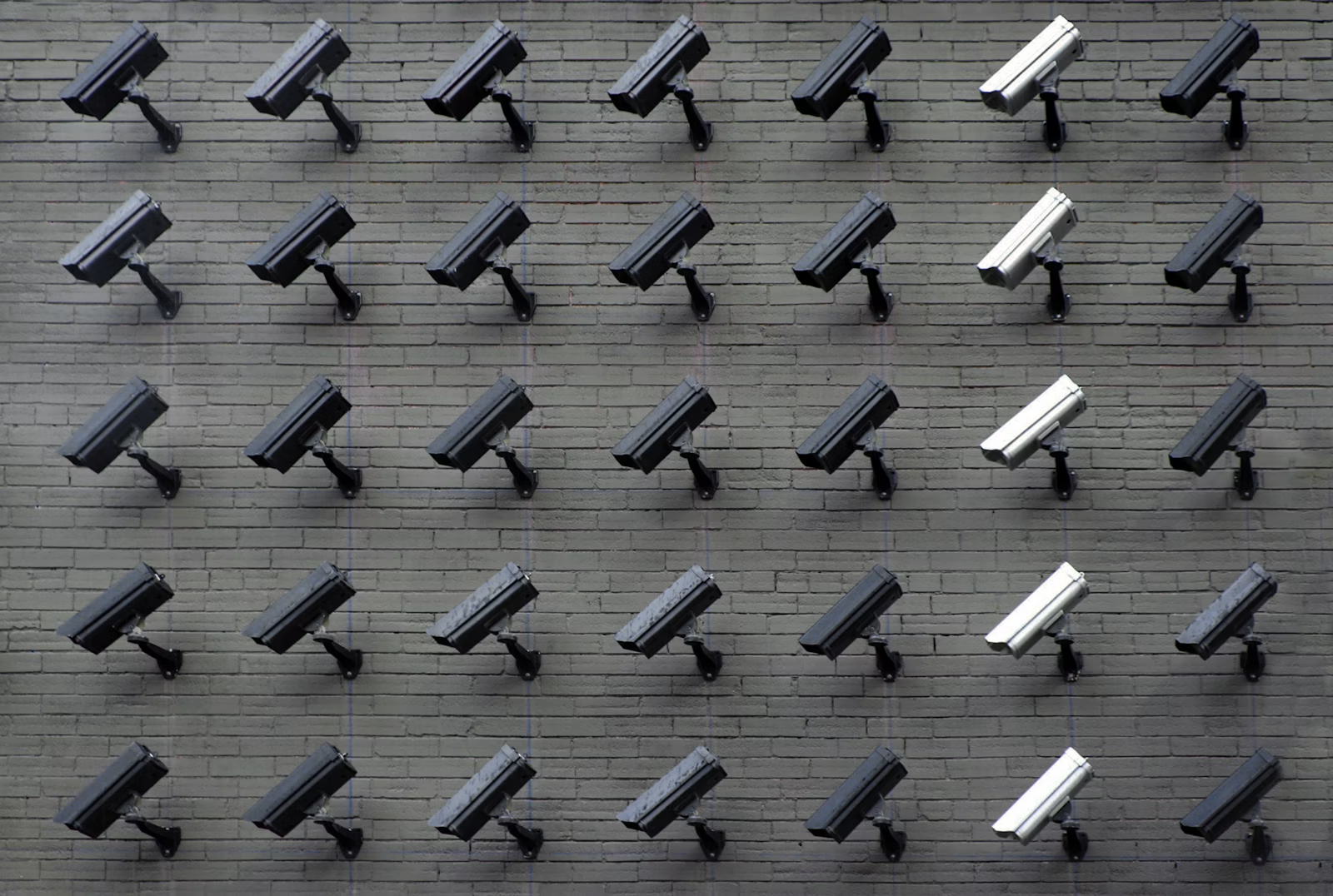
    Germany has lived through systems where control reached deep into private life. They understand what many still dismiss: a system where authorities can monitor, restrict, or even disable your access to money with a keystroke is not pure progress. It can also become a leash with a sleek interface.

    This is not paranoia dressed up as policy. It is a population that has, within living memory, watched ordinary financial and personal records become instruments of control rather than mere administration — and decided, collectively and without much need for explanation to one another, that the next version of that system deserves more scrutiny than enthusiasm.

    “A system where authorities can monitor, restrict, or even disable your access to money with a keystroke is not pure progress. It can also become a leash with a sleek interface.” — The sentence that made my client stop scrolling through her Munich photos.

    Cash Does Not Crash

    They also grasp something unfashionably practical. Cash does not crash.

    When the internet fails, when servers go down, when power grids wobble, paper money still works. No password. No signal. No update required.

    The debate is no longer about convenience. It is about power.

    Where This Is Actually Heading

    The Atlantic Council’s CBDC Tracker currently counts well over a hundred countries researching, piloting, or launching central bank digital currencies — a near-universal experiment with very little public debate about the privacy architecture underneath it. The European Central Bank insists the digital euro would be designed with privacy safeguards comparable to cash for low-value transactions. Whether that promise survives contact with a future government under fiscal or political pressure is precisely the question Germany’s caution is built around.
    Cash003

    The thing the product was never actually built to deliver. Photo: Unsplash

    The World Is Splitting in Two

    The world is splitting in two. On one side, digital efficiency and centralised control. On the other, physical autonomy and resistance.

    This shift could shape the future of the euro, influence the adoption of Bitcoin, and change how you protect your wealth.

    Over the next two years, one truth may become painfully clear.

    The one holding the information often holds the power.

    Back to the Chair

    My client left with her haircut and, I think, a slightly different read on her own annoyance. “So they’re not behind,” she said at the door. “They’re just… not falling for it.”

    “That’s one way to put it,” I said.

    I’ve watched payment systems change shape more than once across four decades behind the chair — Boston, California, Belgium — and the pitch is always the same: faster, cheaper, easier, inevitable. Cash has been declared dead by enthusiastic forecasters roughly once a decade since I started cutting hair, and it has, every single time, declined to cooperate with the obituary.

    I touched a related thread in our piece on how little of what we do is actually private anymore — the gap between what a system promises and what it eventually does once the incentives shift. A digital euro promising privacy today is making a promise about itself. A government holding the keystroke that can freeze it is making a promise about its own future restraint. History tends to be a more reliable narrator of the second promise than the first.

    Cash, for what it’s worth, has never once asked anyone to trust it. It just sits in the drawer, working, regardless of who’s currently in charge of believing in it.

    The Salon California Journal is a space for ideas, culture, and conversation from my chair in Brasschaat, Belgium. I write about beauty, technology, society, and the intersections between them.


  • Social Media

    Social Media

    Not One of My Friends Has Children: A Client’s Vent About Social Media, Dating Apps, and the Bill We’re Now Paying

    “How hard do you have to stress a mammal before it stops reproducing?” He didn’t wait for the cape before he started venting. By the end, neither of us had a comfortable answer.

    A client was in the chair last week, around thirty, and barely waited for the cape before he started venting.

    “Not one of my friends has children,” he said. “Not one.”

    I kept cutting. “How many friends?”

    “Fifteen, maybe twenty if you count the ones I only see at weddings. Which have also mostly stopped happening, by the way.”

    He went on for a while after that. By the time he left, I had heard more about dating apps, algorithms, and mammalian reproduction than I expected to hear before lunch — most of it, frankly, hard to argue with.

    “Pause on that for a second,” he said at one point. “Do you realise how badly you have to stress a mammal before it stops reproducing? Give most mammals food, safety, and a halfway decent environment, and nature takes care of the rest. Humans, apparently, built Wi-Fi and talked ourselves out of it.”

    “And it’s not local,” he added. “It’s everywhere. West, East, rich countries, poor countries. The pattern repeats.”

    [Switches to serious face.] He is not wrong about the pattern, and he is not wrong about the timing of his own generation, either. He is old enough to remember the promise technology made about connection, and young enough to be living with the bill.

    ↓ fertility rates declining across nearly every region tracked by the UN, rich and poor alike

    5B+ people now active on social media platforms worldwide

    1 metric most dating apps are actually built to optimise: retention, not matches

    ∞  scroll — the design pattern with no natural stopping point

    They Don’t Really Go Out Anymore

    Something has broken, especially among younger people, he said. Kids don’t dance anymore. They go out, but they don’t really go out. They perform presence. They curate existence. Every moment feels like an audition for an invisible panel of judges.

    Imagine being eighteen and wanting to approach someone you like. You walk over, say the wrong thing, stumble over a sentence, act awkward for ten seconds — and suddenly you’re content. Recorded. Uploaded. Shared. Mocked by strangers before breakfast.

    Of course people hesitate.

    social-media002

    Photos: Unsplash

    That Would Be Terrible for Business

    So when you ask why this is happening, his answer was simple. Technology. Social media. Artificial intelligence. Algorithms.

    And no — dating algorithms are not trying to help you find the love of your life. That would be terrible for business.

    Dating apps optimise for one thing: retention. They want you swiping tomorrow, next week, next month. The perfect match is not the product. Your attention is.

    “Dating apps optimize for one thing, retention. The perfect match is not the product. Your attention is.” — The client, somewhere around the point I stopped trimming and started listening properly.

    We quietly outsourced dating, intimacy, and large parts of human courtship to a small number of publicly traded companies, all without much public debate. We handed over our social norms to profit-driven systems and then acted surprised when the results felt transactional. Investigations by outlets like The Markup, which specialises in examining how algorithms actually behave rather than how companies describe them, have repeatedly found that engagement-optimised platforms are designed around exactly this incentive — the metric that gets reported to investors is time spent, not relationships formed.

    social-media003

    What presence used to look like, before it needed an audience. Photo: Unsplash

    Tools Shape Behaviour

    As a society, we treated technology like a neutral tool. It isn’t.

    Tools shape behaviour. Platforms shape culture. Algorithms shape desire.

    For decades we were promised that if we simply let technology scale unchecked, it would deliver democracy, freedom, happiness, and economic growth.

    Well — where is it?

    The Numbers Behind the Vent

    Fertility rates have fallen below replacement level across most high-income countries and a growing number of middle-income ones, according to data tracked by the UN’s World Population Prospects. The decline is not confined to wealthy nations or any single culture — it spans East and West, religious and secular societies, places with generous parental leave and places with none. Researchers debate the exact weight of any single cause, but the timeline lines up uncomfortably well with the rise of smartphone-mediated dating and socialising. Correlation is not proof. It is, at minimum, a question worth sitting with.

    social-media004

    The thing the product was never actually built to deliver. Photo: Unsplash

    Back to the Chair

    He left lighter than he arrived, which is usually how it goes when someone gets to say the whole thing out loud to a person who isn’t about to post a reaction to it.

    I’ve cut hair across four decades now — Boston, California, Belgium — long enough to have watched several versions of “technology will finally deliver the good life” arrive, get believed, and quietly fail to show up. Each version had its true believers. Each one left a slightly different kind of bill on the table for the generation that came next. His generation’s bill happens to be denominated in swipes, screen time, and an unusually empty wedding calendar.

    I touched a related thread in our piece on what actually predicts whether a relationship works — the finding, consistently, that compatibility, communication, and shared values matter more than almost anything else. None of those three things are what a retention-optimised algorithm is built to surface. They take time, proximity, and a willingness to be mocked for ten awkward seconds without an audience. The apps were never going to deliver that. It was never the business they were in.

    He’s right to be unsettled. The question isn’t really about phones, or apps, or even fertility rates, in the end.

    It’s about how badly you have to stress a mammal before it stops wanting to reproduce — and what it says about the environment we built, that so many of us seem to be finding out.

    The Salon California Journal is a space for ideas, culture, and conversation from my chair in Brasschaat, Belgium. I write about beauty, technology, society, and the intersections between them.

  • Happy 250th, America

    Happy 250th, America

    Happy 250th, America: Let’s Roll the Tape

    America just turned 250. Big birthday. Big fireworks. Before we light the candles and congratulate ourselves — let’s roll the tape.

    A client noticed the small California flag I keep behind the chair. She’s asked about it before, but this week was different. “You must be watching all the 250th celebrations,” she said. “What do you make of it? From here?”

    “From here,” I said, “you get a better view.”

    She looked at me in the mirror. “Of what?”

    “Of the whole thing. The part they show on television, and the part they tend to leave out.”

    [Switches to serious face.] America just turned 250. Big birthday. Big fireworks. Before we light the candles and congratulate ourselves, let’s roll the tape.

    250 years since the Declaration of Independence  and the arguments it started

    600,000+ Americans who died in the Civil War, eighty years after the founding

    120,000 Japanese Americans sent to internment camps  not for what they did, but for who they were

    1969 the year humanity walked on the Moon, while still struggling to live together on this planet

    1776. July 4. The Declaration of Independence proclaims that all men are created equal. At the same time, slavery remains legal and profitable across the colonies. Equality, apparently, arrived with terms and conditions.

    1838. The Trail of Tears forces thousands of Native Americans from their land in a deadly march west.

    1861. The Civil War begins. The central issue: slavery. The nation goes to war over the question of who counts as free.

    1865. The war ends after more than 600,000 deaths. Days later, President Abraham Lincoln, the man who preserved the Union and ended slavery, is assassinated.

    1877. A political compromise ends Reconstruction and clears the way for nearly a century of Jim Crow segregation. Progress takes one step forward, then politely holds the door open for the past.

    1920. Women win the right to vote. White women, that is. Many Black women in the South still face barriers that keep them from the ballot box for decades.

    1921. A white mob destroys the thriving Black community of Tulsa, Oklahoma, known as Black Wall Street. Hundreds are killed, and an entire neighbourhood is erased.

    1929. The stock market crashes. Millions lose their jobs, their savings, and their homes. Wall Street sneezes, the country catches pneumonia.

    1941. Japan attacks Pearl Harbor. America enters the Second World War.

    1942. Over 120,000 Japanese Americans are sent to internment camps — not for what they did, but for who they were.

    1945. The United States drops atomic bombs on Hiroshima and Nagasaki. More than 200,000 people die, most of them civilians. Victory arrives carrying an unbearable price.

    1955. Fourteen-year-old Emmett Till is brutally murdered in Mississippi. His death shocks the nation and fuels the Civil Rights Movement.

    1963. Four African American girls are killed when white supremacists bomb the 16th Street Baptist Church in Alabama. Months later, President John F. Kennedy is assassinated in Dallas.

    1964. The Civil Rights Act outlaws segregation, at least on paper. Changing laws proves easier than changing minds.

    1965. Peaceful marchers demanding voting rights are beaten by police in Selma on what becomes known as Bloody Sunday. Months later, the Voting Rights Act becomes law.

    1968. Martin Luther King Jr. is assassinated while fighting for equality. Two months later, Robert F. Kennedy is assassinated as well.

    1969. Neil Armstrong and Buzz Aldrin become the first humans to walk on the Moon. Humanity reaches another world while still struggling to live together on this one.

    4th-002

    Another world reached in 1969. This one still a work in progress. Photo: Unsplash / NASA

    1974. President Richard Nixon resigns rather than face impeachment over the Watergate scandal. Even the cover-up needed a cover-up.

    2001. September 11. Nearly 3,000 people are killed in terrorist attacks. Two decades of war follow.

    2003. The United States invades Iraq over weapons of mass destruction that are never found.

    2008. The housing market collapses, wiping out millions of jobs and homes. In the same year, America elects its first Black president, Barack Obama. One chapter closes in foreclosure, another opens in hope.

    2020. George Floyd is murdered by police. Millions fill the streets demanding justice.

    2021. A mob storms the Capitol in an attempt to overturn a presidential election they lost. The peaceful transfer of power suddenly requires a reminder.

    4th-003

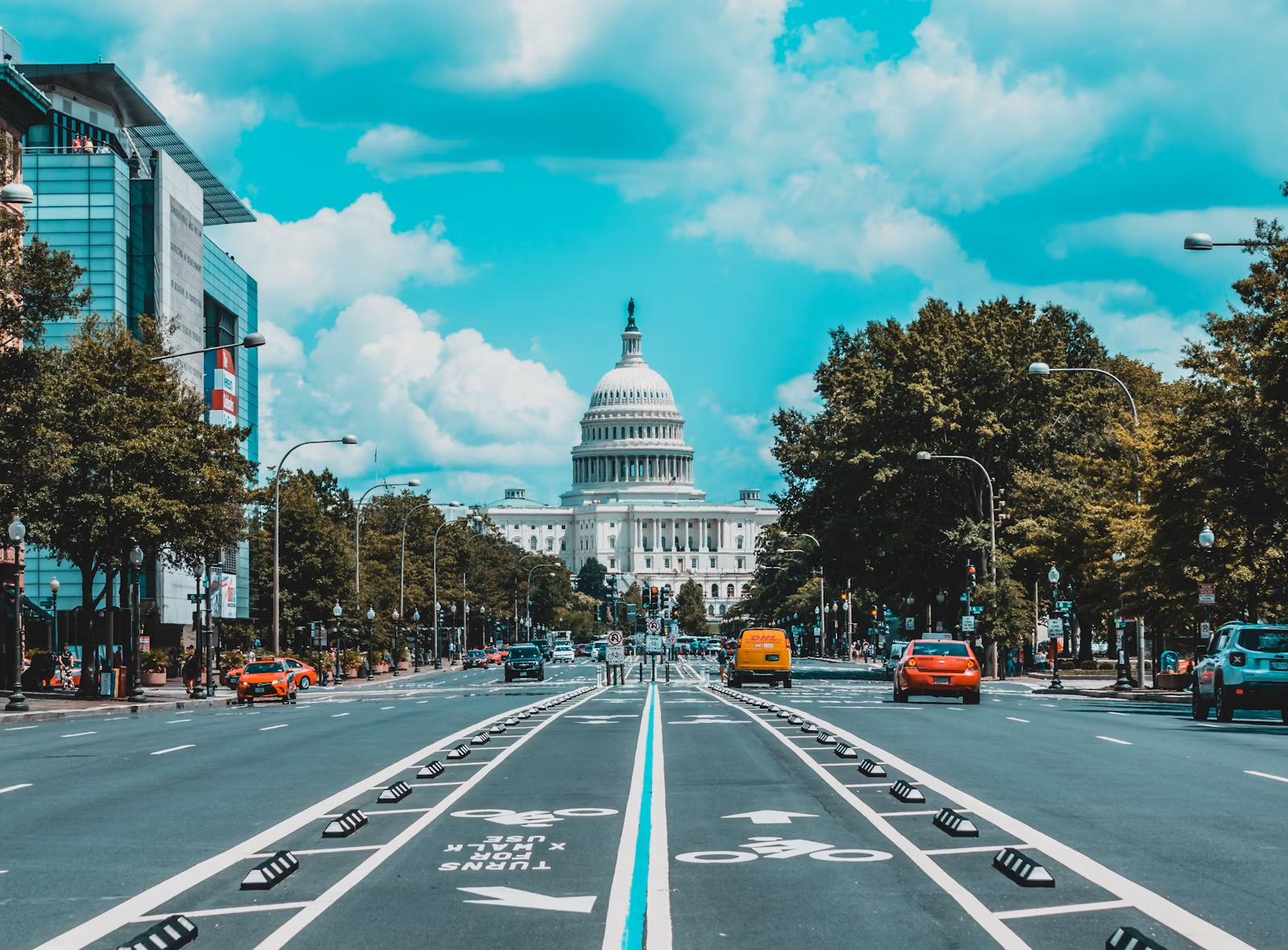
    The building at the end of the avenue. Still standing. Photo: Unsplash

    Today. Mass deportations dominate the headlines. Rights continue to be contested and rolled back. The arguments have changed. The divisions remain remarkably familiar.

    “Two hundred and fifty years. Genuine progress. Extraordinary achievements. Spectacular failures. A nation that has spent a quarter of a millennium arguing with itself, often at full volume.” — And somehow still going. Happy Birthday, America.

    Two hundred and fifty years. Genuine progress. Extraordinary achievements. Spectacular failures. A nation that has spent a quarter of a millennium arguing with itself, often at full volume.

    That is not an insult. For a country built on a document that promised everything and delivered it slowly, partially, painfully, and never quite completely — the arguing is the point. The Library of Congress holds the archive of every generation that tried to close the gap between what was promised and what was delivered. They did not always succeed. They did not stop trying.

    Happy Birthday, America.

    Back to the Chair

    My client left quiet — which, in my experience, is not the same as leaving sad. I’ve cut hair in California long enough to know that Americans absorb hard things differently than they get credit for. They argue loudly, mourn publicly, and then, usually, get back up. It’s annoying and admirable in roughly equal measure.

    Watching from Belgium, from a distance I chose freely, I think what surprises Europeans most about America is not the darkness in the tape — history is dark everywhere — but the insistence on narrating it out loud. The commission reports, the public trials, the documentaries, the memorials. Other countries bury theirs more quietly. America tends to put a plaque on it.

    That is not nothing. That is, in fact, quite a lot.

    Two hundred and fifty years. Still arguing. Still going.

    The Salon California Journal is a space for ideas, culture, and conversation from my chair in Brasschaat, Belgium. I write about beauty, technology, society, and the intersections between them.

  • Human Mind

    Human Mind

    By 2030, AI Files Patents: A Salon Conversation About the One Thing Machines Can’t Originate

    A design student asked if AI was going to replace him. I told him about the calculator. He was not immediately reassured. Fair enough — neither was I, the first time.

    A young man was in the chair last week, a design student about to graduate, asking the kind of question that already contains the answer the person is afraid of.

    “Do you think AI is going to replace us?” he said. “Like, actually replace us?”

    I thought about my engineering degree for a moment — a detail I don’t bring up often, mostly because nobody believes a man holding scissors studied electrical engineering at university, and explaining it usually takes longer than the haircut.

    “I sat through lectures convinced the calculator had already ended my career before it started,” I said. “Spoiler: it hadn’t.”

    He looked unconvinced, in the specific way the anxious look when offered reassurance instead of evidence. “Different scale, though,” he said.

    “Maybe,” I admitted. “Let’s actually think it through.”

    [Switches to serious face.] By 2030, AI files patents. By 2035, it directs films. By 2040, it runs companies.

    Sit with that for a moment.

    Most people, hearing this, reach for the exit. The ones who don’t — who get curious instead of careful — are the ones this era is being built for.


    2030 projected year AI systems begin filing patents independently

    40%  of employers expect AI to change required skills within five years

    3rd  major automation wave in 200 years — mechanisation, computing, now AI

    0  machines, so far, that have chosen a target worth optimising toward

    The Calculator Didn’t Retire the Mathematician

    History keeps offering the same lesson, and we keep forgetting it.

    The calculator didn’t retire the mathematician; it handed him a rocket. The camera didn’t bury the painter; it handed her a century of cinema. Every time a machine absorbed a task, the human behind it didn’t shrink. They expanded.

    I watched a smaller version of this panic in real time, in a lecture hall, decades ago. An entire room of engineering students convinced that computational tools would make the slower, more laborious parts of our training obsolete — and they were right, those parts did become obsolete. What nobody predicted accurately was what would fill the space left behind. Not less engineering. More of it, aimed at problems the previous generation didn’t have the bandwidth to attempt by hand.

    Human-Mind002

    The part of the process no model has figured out how to schedule. Photos: Unsplash

    What AI Clears Space For

    So what does AI clear space for now? The thing it cannot replicate: a mind at full stretch.

    The idea that arrives at 2 a.m. uninvited. The instinct in a meeting that the data cannot locate. The leap nobody else saw coming. These aren’t soft skills. They’re the only skills a machine genuinely cannot mass-produce.

    AI can write. It cannot wonder. It can calculate. It cannot dream. It can optimise endlessly toward a target — but it cannot choose the target that matters. That has always been a human job.

    “AI can write. It cannot wonder. It can calculate. It cannot dream. It can optimize endlessly toward a target — but it cannot choose the target that matters.” — The part of the conversation where the student finally put his phone down.

    Thinking Alongside It

    The decision, then, isn’t whether to compete with AI. It’s whether to think alongside it or be replaced by the people who will.

    This distinction matters more than it sounds. Competing with a system built to process more data faster than any human brain is a contest with a predetermined loser. Thinking alongside it — using it to clear the repetitive, mechanical, first-draft work out of the way so that attention can go toward the part only a human can do — is a different proposition entirely, and one with considerably better odds.

    The World Economic Forum’s Future of Jobs Report consistently finds that the skills employers expect to matter most over the coming decade are not technical fluency with AI tools themselves, but the distinctly human layer around them — creative thinking, analytical judgment, and the ability to originate a direction worth pursuing in the first place. Researchers at Stanford’s Human-Centered AI Institute have made a related point repeatedly: the systems improving fastest are the ones that augment human judgment rather than attempt to replace the act of judging.

    Human-Mind003

    Photos: Unsplash

    Use it. Build with it. But don’t hand it the one thing that’s actually yours — the willingness to originate. Every previous wave of automation removed the labour and left the authorship intact. There is no evidence yet that this one works differently, and considerable evidence — the calculator, the camera, the spreadsheet, the search engine — that authorship has always been the part worth protecting.

    Human-Mind004

    Use It. Build With It. Just Don’t Hand It This.

    Back to the Chair

    The student left with a haircut and, I think, slightly fewer reasons to lose sleep — though he was still not entirely convinced, which I respect more than instant agreement. “I’ll believe it when I see it,” he said at the door.

    “That’s exactly the right amount of scepticism,” I said. “Just don’t let it stop you from making something this year that nothing currently existing could have made for you.”

    I think about my own pivot more than I let on in the chair — engineering studies, decades behind scissors, a salon named after a place I no longer live in. None of that followed a script a calculator, or anything since, could have written for me. The tools changed considerably across that stretch of time. The willingness to point them somewhere new did not come from the tools.

    I touched a related thread in our piece on what schools are actually built to produce — the idea that the most valuable output of any system, educational or technological, was never meant to be uniformity. It was meant to be someone walking out the other end with a question nobody had thought to ask yet.

    The future runs on that. It always has.

    The Salon California Journal is a space for ideas, culture, and conversation from my chair in Brasschaat, Belgium. I write about beauty, technology, society, and the intersections between them.
  • 20th. Century

    20th. Century

    The House Nobody Is Fixing: Three Theories About History and the Roof That Started Leaking

    The twentieth century offered three grand scripts for where history was going. One of them looked like the winner. In 2026, the lights still work, the water still runs, and nobody seems particularly interested in fixing the roof.

    A regular client came in last week cursing gently about the noise from his apartment building — a roof repair that, from the sound of it, had become somewhat more urgent than the building committee had anticipated when they declined to approve the budget for it three years ago.

    “When did it start leaking?” I asked.

    “Nobody’s sure,” he said. “Could have been last winter. Could have been the one before. You only notice when water is actually coming through the ceiling.”

    I adjusted my angle. “When do you think they should have fixed it?”

    “Before it started leaking,” he said, in the tone of someone who had achieved clarity the hard way.

    I thought about that for the rest of the cut. About roofs. About maintenance. About all the things that continue functioning long after the moment someone should have noticed they needed attention.

    [Switches to serious face.] In the twentieth century, humanity entertained three grand theories about where history was headed.

    None of them were particularly optimistic about the roof.

    18+ consecutive years of global democratic decline documented by Freedom House

    1945 was the year the liberal international order was formally established

    80 yrs  of relative institutional stability the post-war framework produced

    2026 the year nobody is quite sure who the caretaker is

    The Three Grand Theories

    The fascist story argued that history was a brutal contest between nations and races.

    The strongest would crush the weak, plant its flag on the ruins, and call it destiny. Not a cheerful vision, but at least an honest one about its intentions.

    The communist story agreed about the conflict but disagreed on the contestants. The real struggle, it said, was between classes. Workers and owners were locked in an unavoidable collision that would end with the triumph of the proletariat and the arrival of a worker’s paradise, administered, naturally, by a dictatorship.

    The paradise part was always coming. The dictatorship arrived on schedule.

    Then liberalism arrived like the sensible neighbour who suggested that perhaps not every disagreement required artillery.

    Liberalism argued that history did not have to revolve around conflict at all. Human beings, regardless of race, nation, or class, shared enough interests that cooperation often made more sense than fighting. Trade could be more profitable than conquest. Agreements could be cheaper than wars. People could build things together instead of spending centuries finding new ways to destroy them.

    For a while, this looked like the winning script.

    The Winning Script

    The post-war order that liberalism built was, by almost any historical measure, extraordinary. International institutions to manage disputes before they became armed conflicts. Trade agreements that made economic interdependence more attractive than territorial expansion. Human rights frameworks that gave individuals standing against the states that governed them. Democratic systems that provided a mechanism for changing leadership without requiring the previous leader to be carried out in a box.

    It was imperfect. Spectacularly imperfect, in many places, for many people, for long stretches of time. The gap between liberalism’s principles and its practice was wide enough to drive a considerable amount of justified resentment through. But the underlying architecture held for eight decades, which is longer than either of its twentieth-century competitors managed before collapsing under the weight of their own internal contradictions.

    20th-Century002

    Still standing. Still functioning. Built to last, by people who believed it needed to. Photos: Unsplash

    The House That Runs Itself

    Now, in 2026, the liberal story has not completely failed, but it no longer inspires the confidence it once did. By many measures, we are still living in the most prosperous, peaceful, and technologically capable period humanity has ever seen. The strange part is that it increasingly feels like nobody is in charge of maintaining it.

    Our civilisation resembles a large old house. The lights still work. Water still comes out of the taps. The sewage system still carries away yesterday’s mistakes. Everything appears functional.

    The problem is that nobody seems interested in fixing the roof.

    The house was built with such skill and redundancy that it continues operating long after the caretakers stopped caring. We walk through the hallways assuming the structure is permanent because it survived another year. Institutions that took generations to build are treated as given — obvious features of the landscape rather than things someone constructed deliberately, maintained deliberately, and could allow to deteriorate through simple inattention.

    “Houses do not collapse the day maintenance stops. They collapse years later, after enough leaks, cracks, and neglected repairs accumulate.” — The sentence the client recognised immediately. His building committee had proved the same point.

    But houses do not collapse the day maintenance stops. They collapse years later, after enough leaks, cracks, and neglected repairs accumulate. And when the ceiling finally caves in, people rarely say, “The problem started today.” They usually say, “I thought someone else was taking care of that.”

    The Data on Democratic Decline

    Freedom House has published its Freedom in the World report annually since 1973. In their most recent assessments, the organisation has documented more than eighteen consecutive years in which the number of countries registering democratic decline exceeded those registering democratic gains — the longest continuous downturn since the index began. The V-Dem Institute at the University of Gothenburg, which tracks democracy through a different methodology, reaches similar conclusions: the share of the world’s population living under democratic governance has returned to levels last seen in the 1980s. The house has been losing heat for some time. The thermometer simply wasn’t on display in the hallway.

      20th-Century003

    What Maintenance Actually Looks Like

    The question worth asking is not who broke the liberal order, because the answer to that is complicated, contested, and probably involves a longer list than anyone finds comfortable. The more useful question is what maintaining it actually requires.

    Institutions are not self-sustaining. They require people who believe in them enough to staff them, defend them when they become inconvenient, and resist the temptation to hollow them out for short-term advantage.

    Democratic norms are not enforced by the laws that describe them but by the willingness of participants to treat those norms as binding even when breaking them would be advantageous. International agreements held not because of abstract principle but because enough actors calculate that the system is more valuable intact than the gain available from defection.

    None of this is dramatic. Nobody gets a monument for choosing not to exploit a loophole. Nobody’s approval rating rises because they maintained an institution rather than dismantling it for parts. The incentive structure of democratic politics often rewards exactly the kind of performance that the underlying structure can least afford — visible, short-term action over invisible, long-term maintenance.

    20th-Century004

    Back to the Chair

    The building committee, my client told me, had finally approved the repair budget — after the ceiling of a ground-floor flat had begun showing water damage, which was apparently the level of evidence required to convert a theoretical problem into an actual one.

    “Will they fix it properly?” I asked.

    He thought about it. “They’ll fix the part that’s leaking now,” he said. “Whether they check the rest of the roof while they’re up there—” He shrugged.

    That seems about right.

    I come from a place with a complicated relationship with the institutions that were supposed to protect people — where the gap between what structures promised and what they delivered was not theoretical but daily. Which may be why I find it easier than some to imagine those structures not being there, and harder than some to take for granted that they will simply continue to exist because they have so far.

    I explored a related thread in our piece on growth, limits, and the things we treat as permanent until they aren’t — the same pattern, different domain. Systems built on assumptions that were once reasonable and have since quietly stopped being true. The difficulty of acting on a problem before the ceiling makes the argument for you.

    The three grand theories of the twentieth century each had a vision of where history was going. The liberal one was the most liveable. It was also, perhaps, the most demanding — because it required not a revolutionary vanguard or a master race, but something considerably harder to sustain: a large number of ordinary people, generation after generation, choosing to maintain something they had not built and would not live to see completed.

    The roof does not fix itself.

    It never did. Someone just used to go up there.

    The Salon California Journal is a space for ideas, culture, and conversation from my chair in Brasschaat, Belgium. I write about beauty, technology, society, and the intersections between them.
  • Spotlight Effect

    Spotlight Effect

    Nobody Is Watching You (And That Should Feel Better Than It Does)

    A planet full of people auditioning for an audience that never showed up. A brief psychological update that might save you several hours of replaying conversations in your head.

    A client came in last week carrying the distinct energy of someone who had survived an ordeal. She had gotten a haircut elsewhere the previous Friday — shorter than intended, apparently, and at an angle she had not approved — and had spent the entire weekend convinced that every person who looked in her direction was thinking about it.

    “I could feel people staring at it in the supermarket,” she said.

    “Did anyone say anything?” I asked.

    She thought about it. “No.”

    “Did anyone look up from their phones?”

    “…Also no.”

    “Did anyone in the supermarket appear to be thinking about anything other than their own shopping?”

    She was quiet for a moment. “One man did stare at me for quite a long time,” she said. “But I think he was reading the label on the cereal behind my head.”

    I kept cutting. “Psychologists have a name for what you experienced,” I said. “It’s called the spotlight effect.”

    [Switches to serious face.] Let me tell you a strange psychological trick about people. Most of us spend an absurd amount of time worrying about what other people think of us. You post something online, then casually pretend not to care while checking who liked it every seven minutes. Very relaxed. Very secure.


    2000 the year Cornell psychologist Thomas Gilovich first documented the spotlight effect in research

    50% how much less people notice your appearance than you estimate, on average

    7 min approximate interval at which a person checks social media after posting something they’re nervous about

    0  people in the supermarket who were thinking about the haircut

    spotlight004

    The Detective in Your Head

    You replay conversations in your head like a detective working a cold case.

    Why did I say that?
    Why did I laugh like that?
    Why am I like this?

    Sometimes you even change your behaviour to avoid judgment. You edit your words, soften your opinions, trim parts of yourself to fit the room. Social survival, with light self-erasure.

    And somewhere in all of this, you develop a deep and sincere conviction that other people are watching you the way you are watching yourself — with the full intensity of a person who has access to all the footage, including the embarrassing bits.

    The illusion is convincing because it feels so obvious. Of course you are the main character of your own experience. Of course you notice when something feels off about how you looked or sounded. The leap — the one that turns personal awareness into social terror — is assuming everyone else noticed too.

    Here Is the Punchline

    Psychologists call it the spotlight effect: the illusion that everyone is paying close attention to you. The name comes from research by Thomas Gilovich and colleagues at Cornell University, who asked participants to wear an embarrassing T-shirt into a room and estimate how many people noticed. Participants consistently overestimated by roughly double. The real number was dramatically lower. The spotlight they felt burning on them was, in the judgment of everyone else in the room, not particularly bright.

    They are not watching. Most people are far too busy worrying about themselves. They are thinking about how they looked, what they said, whether they sounded unintelligent, or why they just waved at someone who was waving at the person standing directly behind them.

    They have their own chaos. Their own awkward moments. Their own 2 a.m. humiliation archive, filed under things I said in 2019 that I am still not over.

    “A planet full of people auditioning for an audience that never showed up.” — The sentence that made the client in the chair put her phone face-down on the armrest.
    spotlight002

    The audience you imagined was watching you. They were, in fact, thinking about themselves. Photos: Unsplash

    The Insecure Narcissism Nobody Talks About

    That is the real irony. While you think everyone is watching you and judging your every move, most people are trapped in exactly the same dynamic — except their version is aimed at themselves. We are all walking around convinced we are being observed, while hardly observing anyone.

    There is a particular species of self-consciousness that presents as humility — I just don’t want to embarrass myself — but is actually a form of quiet narcissism in reverse. It places you at the centre of everyone else’s attention, in a universe where, as it turns out, everyone else has already put themselves there instead. Research published through The Conversation on social cognition has documented this pattern across cultures: the tendency to overestimate our own salience in other people’s awareness is not a personality flaw. It is simply a feature of how human attention works when turned inward.

    We are, structurally, more aware of our own experience than of anyone else’s. This makes us chronically unreliable narrators of how visible we are.

    What the Research Actually Found

    The original spotlight effect study by Gilovich, Medvec, and Savitsky (2000) became one of the most replicated findings in social psychology. Follow-up research extended it in several directions: people overestimate how much others notice their nervousness, their mistakes, their clothing, their facial expressions, and even their good days. According to Verywell Mind, the spotlight effect tends to peak in social anxiety, where the perceived audience becomes not just present but critical — turning what is already an illusion into a particularly unkind one.

    A Warehouse Full of Anxious People

    Once you really understand the spotlight effect, something changes.

    You stop performing. You stop negotiating with imaginary critics. You stop rehearsing the post-conversation analysis before the conversation has even ended. Because the spotlight was never on you.

    It was just a warehouse full of anxious people, each clutching a flashlight, accidentally blinding themselves.

    This does not mean other people never judge you. They do — occasionally, briefly, and then mostly forget about it because they have their own cereal label to read. What it means is that the gap between how much attention you think you are receiving and how much you are actually receiving is almost always wider than you believe. Considerably wider. And narrowing that gap is not a matter of becoming more confident. It is a matter of becoming more accurate.

    spotlight003

    What it looks like when the imaginary audience stops mattering. Photo: Unsplash

    Back to the Chair

    The client left with a haircut that fixed the angle from the previous week. She stood at the mirror for a long moment before saying, with some surprise, that it looked completely normal.

    “Of course it does,” I said. “It always did. Nobody in the supermarket ever saw the problem because nobody in the supermarket was looking.”

    She smiled the particular smile of someone who had just been handed back a weekend they had spent unnecessarily.

    I come from a place where the stakes of being observed were somewhat more concrete — where standing out had consequences that went well beyond social discomfort. Which may be why the version of it that plays out here — the low-stakes, high-anxiety monitoring of imaginary audiences — reads, from the outside, as a particularly exhausting way to spend a perfectly good Saturday.

    I touched a related thread in our piece on the skills quietly disappearing in a distracted age — specifically the difficulty of simply being present, without performing, without checking, without conducting a running internal audit of how you are being perceived. The spotlight effect is, in a way, the psychological tax on that difficulty. We have built lives of unprecedented self-documentation and social visibility, and then discovered, somewhat to our surprise, that it has made us more self-conscious, not less.

    The good news remains what it always was. The audience is not there. It never was. The flashlights are all pointed inward.

    You can put yours down whenever you like.

    The Salon California Journal is a space for ideas, culture, and conversation from my chair in Brasschaat, Belgium. I write about beauty, technology, society, and the intersections between them.
  • Growth

    Growth

    No One Is Anti-Growth : What a Ten-Year-Old’s Question Revealed About the Economy

    A boy asked his mother why the economy always has to grow. Couldn’t it just… stay good? She gave him the answer adults give when they don’t have one. I think he deserves a better one.

    A mother was in the chair on Tuesday, telling me about her ten-year-old’s homework — something about reading the news for a school project. Apparently he had looked up from the laptop with the particular frown children reserve for questions adults have quietly stopped asking themselves.

    “Mom,” he said, “why does it always say the economy needs to grow? Can’t it just… stay good? Like, if it’s already fine, why does it have to keep getting bigger?”

    She told him something along the lines of “that’s just how it works,” which is the answer adults give when they don’t have one and are hoping the conversation will end before anyone notices.

    “He’s not wrong, though,” I said.

    She looked at me in the mirror the way people look at you when they suspect the haircut is about to take longer than the appointment allows.

    “Go on,” she said. So I did.

    [Switches to serious face.] No one is anti growth. Let’s be clear about that from the start, because the conversation tends to go sideways the moment someone suspects otherwise. Growth is good. Babies should grow. Crops should grow. Muscles should grow. Even savings accounts deserve a little ambition.

    The problem starts when growth stops being a healthy process and becomes the supreme deity of economic life.

    7 of 9 planetary boundaries now breached (Stockholm Resilience Centre)

    1.5°C  global warming threshold already crossed

    6 of 9 boundaries breached at the previous assessment — the “growth” in question

    1 planet currently available for this experiment

    Convenient Theology

    Our system treats growth as the answer to everything. Growth will create jobs. Growth will reduce poverty. Growth will fund innovation. Growth will save us from the problems caused by… previous growth.

    Convenient theology.

    The awkward question nobody likes to ask is a simple one: how exactly do you pursue infinite growth on a finite planet without eventually looking ridiculous?

    The standard reply arrives right on cue. Technology will save us.

    Of course it will.

    The Balloon Problem

    Yes, technology matters. But technology is not sorcery.

    Every innovation requires energy, materials, labour, land, and extraction. You solve one constraint and often create another. Build more batteries, mine more lithium. Produce more solar panels, extract more rare earths. Increase efficiency, and consumption frequently rises elsewhere to absorb the savings — a pattern economists have observed for so long it has its own name, the Jevons paradox, first noted in the context of coal in the nineteenth century and rediscovered, with some surprise, in roughly every decade since.

    Progress often behaves like squeezing a balloon. Pressure disappears in one spot and pops up somewhere else.

    This was the warning from systems thinkers decades ago. In a closed system — and Earth is annoyingly closed — resources may feel abundant but remain finite. Every attempt to escape a limit consumes resources and generates new pressures of its own. The 1972 report The Limits to Growth, commissioned by the Club of Rome, modelled exactly this dynamic using the computing power of the era and was widely mocked for decades afterward for being too pessimistic. The uncomfortable detail, revisited by several research teams since, is that its central trajectories have tracked reality more closely than almost anyone wanted to admit.


    “Progress often behaves like squeezing a balloon. Pressure disappears in one spot and pops up somewhere else.” — The sentence that ended the “technology will save us” portion of the conversation.

    When Disasters Hold Hands

    And the cruel part: constraints do not arrive one by one like polite guests. They arrive faster over time, and each one costs more to manage than the last.

    At some point, the problem is no longer running out of water, clean air, fertile soil, or stable climate. The real problem is running out of our ability to cope.

    That is what “polycrisis” means. Not one disaster. Several disasters holding hands.

    Each crisis amplifies the others until society spends all its energy firefighting and none preventing the next fire.

    Apocalypse, in reality, may be disappointingly boring. No asteroid. No zombies. No dramatic soundtrack. Just spreadsheets, heatwaves, insurance collapse, supply chain failures, political dysfunction, and everyone insisting the market will self-correct.

    A system built on endless growth cannot continue forever. Physics does not negotiate, and unlike economists, it does not revise assumptions after quarterly earnings.

    The Planetary Boundaries, Explained

    The framework comes from researchers at the Stockholm Resilience Centre, who identified nine processes that regulate the stability of the entire planet — climate change, biodiversity loss, freshwater use, land system change, and others most people have never been taught to name, despite living entirely within their limits. The framework is not activism. It is closer to an instruction manual that arrived after the warranty had already been quietly voided.

    growth002

    Photos: Unsplash

    Can We Live Well Within the Lines ?

    Can humanity live well within planetary boundaries? Yes.

    Can we do it while preserving a system in which a tiny group accumulates extraordinary wealth through endless extraction? That is harder to defend.

    And yes — I say giving back. Because much of extreme wealth came from the commons.

    From natural resources no billionaire created.

    From public infrastructure they did not personally build.

    From collective knowledge developed across generations.

    From the data all of us generate daily, which gets harvested, packaged, and sold back to us with subscription pricing. Remarkable business model, really.

    growth003

    The Invoice

    First, privatise the commons.

    Then monetise it.

    Then call yourself self-made.

    Somewhere along the way, society started applauding this.

    That wealth came from all of us. The commons built it. A handful simply got very good at sending the invoice. According to Oxfam’s wealth research, the share of global wealth held by the richest fraction of the population has continued climbing even through years when ordinary incomes stagnated or fell — a pattern that is difficult to explain through talent or effort alone, and considerably easier to explain through ownership of things that were, not so long ago, simply held in common.

    growth004

    Back to the Chair

    By the time I had finished, the mother was holding her phone with the screen dark, which is usually a good sign. “So what do I tell him?” she asked. “He’s ten. I can’t exactly explain the Jevons paradox over breakfast.”

    “Tell him his question was the right one,” I said. “That’s usually rarer than the answer.”

    I touched a related thread in our piece on how Norway chose to manage a resource it could have simply sold — the same underlying question, really, just answered the other way around. Norway looked at a windfall and asked who it actually belonged to. The answer, eventually, was: people who hadn’t been born yet. That is not a complicated idea. It is just an unfashionable one, in a system built to treat tomorrow as a competitor to today rather than a stakeholder in it.

    I come from a place where the relationship between a small number of people and a great deal of extracted wealth was not subtle, not disguised, and not generally described using the word “growth.” Which may be why, from here, the modern version — with its quarterly reports and its self-made men and its planetary boundaries quietly ticking past seven of nine — looks less like a new story than an old one wearing a nicer suit.

    The boy’s question is still sitting there, unanswered in any way a ten-year-old would find satisfying. Can’t it just stay good?

    It can. That would just require treating “good” as the destination, rather than the thing you pass on the way to more.

    The Salon California Journal is a space for ideas, culture, and conversation from my chair in Brasschaat, Belgium. I write about beauty, technology, society, and the intersections between them.

  • Fast food education

    Fast food education

    What a Chef Taught Me About Why School Feels Like a Drive-Thru

    A mother read her son’s school report aloud in my chair: “Lacks focus. Easily distracted.” Her son had just rebuilt a toaster for fun. We talked about the menu instead of the boy.

    A mother was in the chair last week, scrolling through an email from her son’s school with the particular weariness of someone who has read this exact email before, just with different dates. “Lacks focus,” she read aloud, in the flat voice people reserve for things they have stopped being surprised by. “Easily distracted. Needs to apply himself more.”

    “What does he like doing?” I asked.

    She thought about it properly, which told me something on its own. “Building things,” she said. “He took apart the toaster last month. To see how it worked.”

    “Did he get it back together?”

    “Better than before, actually. It pops up gentler now.”

    I kept cutting for a moment. “And how’s he doing in the class where he sits still and listens to someone talk for fifty minutes about a textbook?”

    She didn’t need to answer. The email was still open on her phone.

    “I have a friend who’s a chef,” I said. “He told me something a while back that I haven’t been able to shake. He said politics has become fast food. Standardized menu, same everywhere, nobody expects greatness, the goal is just consistency. Last week it occurred to me he’d accidentally described our entire school system.”

    [Switches to serious face.] She looked at me the way people look at you when a sentence rearranges something they already half-knew. “Go on,” she said. So I did, and by the time I was done, the toaster had come up twice more.

    1 sizecurriculum most students are served, regardless of how they learn

    19th. century the dominant school model was designed in — for factories, not minds

    ~30% of students across OECD countries report regularly feeling bored in class

    ∞ number of toasters a curious child can take apart if nobody stops them

    The Standardized Menu

    My chef friend’s comparison was sharper than he probably realised. Politics, he said, has become fast food. Everywhere you go, the menu looks the same. The ingredients are standardised, the portions are measured, and the outcome is predictable. Nobody expects greatness. The goal is consistency.

    Real life, he pointed out, is closer to a restaurant. The menu changes with the season, the neighbourhood, and the people sitting at the table. The chef adapts. The customers adapt. Nobody files a complaint because the tomatoes developed a personality.

    Unfortunately, we built education on the fast food model. Everything must be standardised, measured, tested, ranked, compared, and audited. Children arrive with different talents, interests, and temperaments, yet we insist on serving them the same intellectual meal and then act surprised when some leave it untouched.

    Imagine a doctor prescribing the same medicine to every patient. Or a tailor producing only one size of suit. We would call them incompetent. In education, we call it policy.

    “Imagine a doctor prescribing the same medicine to every patient. Or a tailor producing only one size of suit. We would call them incompetent. In education, we call it policy.” — The sentence that made the email on her phone look a little different.

    What Passion Actually Looks Like

    The problem is not intelligence. People often assume success comes down to ability, as if human beings were smartphones shipped with different processors — some destined for great things, others quietly capped from the factory. But ability is only part of the equation. Passion matters far more than most systems are willing to admit.

    People do extraordinary things when they care. My wife recently started a job she loves. When she encounters a challenge, she disappears into it for hours. The rest of the day wonders where she went. She thinks twenty minutes have passed. The clock quietly informs her that civilisation has advanced considerably since breakfast.

    We all know the feeling. Spend an hour doing something you love and it feels like five minutes. Spend five minutes doing something that deadens your soul and you start checking the clock as if you’re serving a life sentence.

    Psychologists have a name for the first state: flow — the condition in which a person is so absorbed in a task that self-consciousness, hunger, and the passage of time itself seem to switch off. It is not a rare gift reserved for artists and athletes. It is a normal human response to doing something that fits. The boy with the toaster was, by every meaningful measure, in flow. The school report did not have a box for that.

    “The mother carries the emotional weight of the household. The father becomes another item on her list.” — The plot of roughly four hundred consecutive sitcom episodes, summarised.

    What If the Menu Is Terrible?

    Yet schools often behave as though boredom is evidence of character. If students are disengaged, the assumption is that they need more discipline, more testing, more structure, or perhaps another inspirational poster in the hallway.

    Rarely does anyone ask the obvious question: what if the menu is terrible?

    Fast-food-education002

    Photos: Unsplash

    An Education Built for a Factory

    The industrial model of education was designed for a different age. It borrowed its logic from factories — efficiency, uniformity, standardisation, sorting, batching. Children enter at one end and, with luck, emerge at the other stamped “ready for society.”

    The trouble is that children are not manufactured goods. They are not identical components waiting to be assembled according to specification. Human development is messy, unpredictable, and inconveniently human.

    The educator and author Sir Ken Robinson made a version of this argument famous, describing how modern schooling was built in the image of the assembly line at precisely the moment factories were the most impressive thing society had ever produced — and how the model has been quietly running on those same assumptions ever since, long after the factories themselves modernised and moved on without it.

    Fast-food-education003

    What the Farmer Knows

    A farmer understands this better than most policymakers.

    A farmer cannot stand over a field shouting at crops to grow faster.

    He cannot increase yields by giving tomatoes standardised tests.

    He cannot improve a carrot’s self-esteem with a motivational seminar.

    He can only create the conditions in which growth becomes possible.

    Good soil. Water. Light. Time.

    The growth happens on its own.

    Education should work the same way. The role of a school is not to manufacture human beings. It is to create the conditions in which they can flourish.

    Instead, we built an educational version of a fast food franchise. We standardised the recipe, timed every process, measured every output, and then spent decades wondering why so many students leave intellectually undernourished.

    A Different Menu Exists

    It is not theoretical. Finland’s education system — consistently among the highest-performing in OECD’s PISA assessments — uses less standardised testing, shorter school days, and far more autonomy for teachers and students than most industrial-model systems.

    Meanwhile, organisations like Edutopia document schools worldwide that have replaced fixed curricula with project-based learning — and found that engagement, not just test scores, changes when the menu changes.

    The conditions are not a mystery. They are simply a different set of choices than the ones the factory model made by default.

    Fast-food-education004

    Back to the Chair

    By the time the mother left, the school email was still unanswered, but it had stopped looking like a verdict on her son and started looking like a description of the menu he’d been served.

    I told her about the toaster line one more time, on the way out, just to watch her smile again. “Maybe,” I said, “the report should’ve said: shows excellent troubleshooting skills, improved a household appliance without supervision, occasionally finds the curriculum less interesting than a toaster. Which, frankly, is a high bar for a toaster to clear.”

    I come from a place where school was simply what you survived, not something anyone expected to enjoy — which may be why the idea that a child’s boredom might be the system’s failure rather than the child’s still strikes me as faintly radical, in the way obvious things often do once you say them out loud. I touched a related thread in our piece on what AI in the classroom actually changes — the tools shift, but the menu underneath them rarely does, and a faster way to serve the same fast food is still fast food.

    The mystery is not why some children fail.

    The mystery is that any of them manage to stay curious after spending years being treated like inventory.

    The Salon California Journal is a space for ideas, culture, and conversation from my chair in Brasschaat, Belgium. I write about beauty, technology, society, and the intersections between them.

  • Lost Skills

    Lost Skills

    A Conversation That Started Over a Paper Map

    People talk constantly about what technology has given us. Far less attention goes to what it quietly took in exchange. A client in my chair gave me the first item on the list without meaning to.

    A woman in her sixties was in the chair last week, weighing whether to drive to Ghent to see her son or wait for him to come to her. She mentioned, almost as an aside, that she would need to print directions, because her phone “does something strange” in certain areas and she no longer trusted herself to find the way without it.

    I asked, half-joking, whether she still remembered how to read a paper map.

    She paused. Properly paused — the particular pause of someone searching for something they had always assumed would simply be there when needed.

    “I think so,” she said. “I haven’t tried in maybe fifteen years.”

    [Switches to serious face.] Neither of us made anything of it in the moment. But I kept thinking about that pause for the rest of the day, and most of the week after. People talk constantly about what technology has given us. Far less attention goes to what it quietly took in exchange. So I started keeping a list. It got longer than I expected.

    90%+of smartphone owners rely on GPS for unfamiliar routes

    1 phone number the average adult can now recall from memory

    8 sec. commonly cited average human attention span today

    2x  faster spread rate of false claims versus true ones online

    What We Traded for Convenience

    Before GPS, people understood distance, direction, and landmarks. They knew where they were, where they were going, and roughly how to get there using nothing but attention and memory. Today, many people cannot read a paper map without turning it around several times like a contestant on a game show that nobody auditioned for. If the battery dies, so does the sense of direction. Researchers at McGill University have found that heavy reliance on GPS is associated with measurably reduced activity in the hippocampus — the part of the brain responsible for spatial memory and navigation. We have gained turn-by-turn guidance and quietly lost the ability to guide ourselves.

    Not long ago, people carried dozens of phone numbers in their heads — family, friends, work, emergencies. Now most of us know exactly one number, and even that is sometimes negotiable. A widely cited study by Kaspersky Lab described this phenomenon as “digital amnesia”: the habit of outsourcing memory to a device so completely that the underlying skill simply stops being exercised. Smartphones have become external hard drives for our memories. Convenient, certainly. Though it is difficult to exercise a muscle you never use.

    lost-skills-003

    The Vanishing Handwritten World

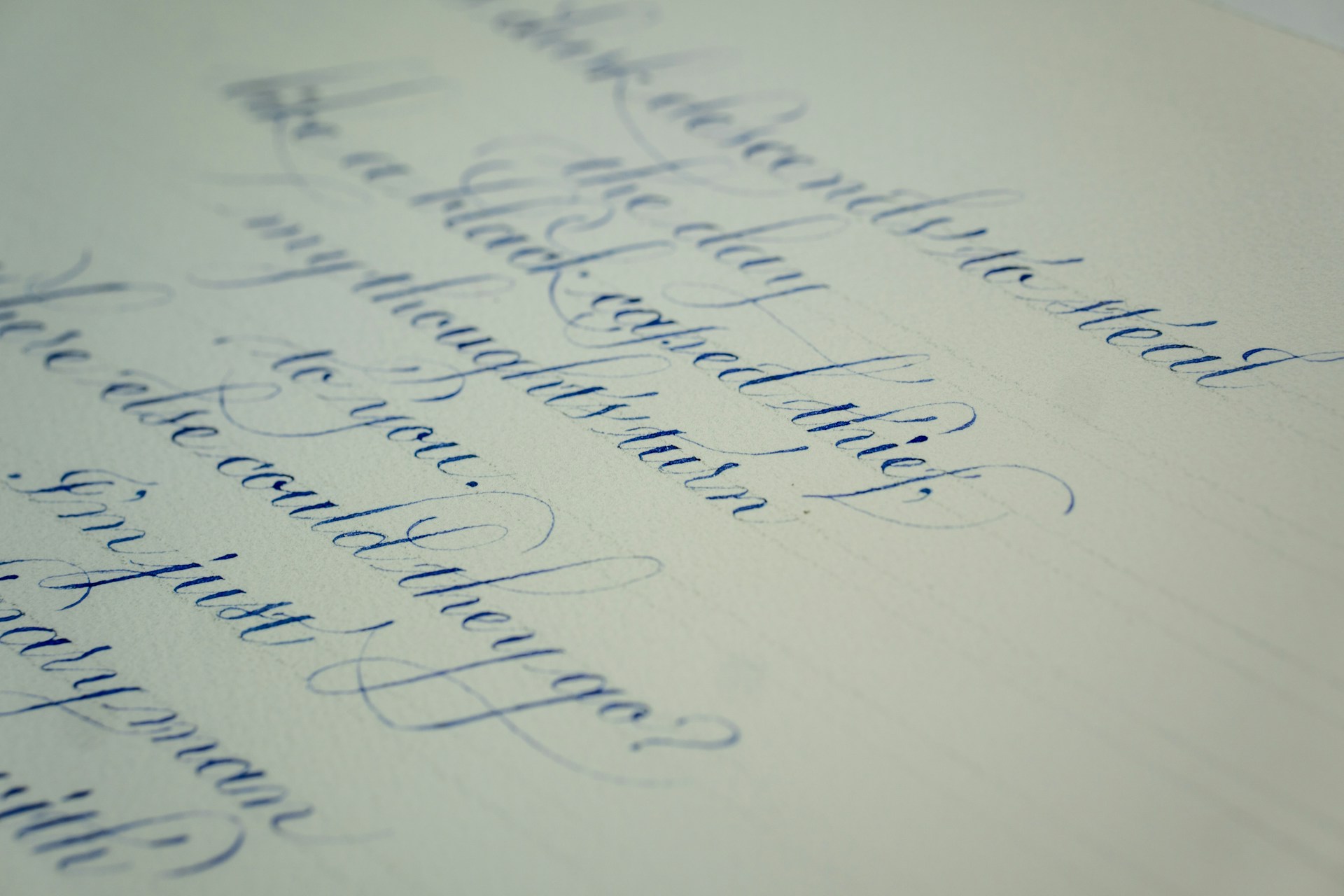
    Many schools no longer teach cursive. Typing has replaced pen and paper, and some students now struggle to read handwriting that earlier generations would have considered entirely ordinary — including, on occasion, their own grandparents’ birthday cards. For centuries, handwriting was a mark of identity, instantly recognisable, impossible to fake convincingly. Today, personality arrives in the form of a font menu.

    Books once demanded hours of attention, and people gave it willingly. Now many grow restless if a video takes longer than thirty seconds to reach the point. Constant notifications, short videos, and endless scrolling train the brain to expect immediate rewards on a fairly aggressive schedule. Deep concentration — the kind a long novel or a difficult chapter requires — is slowly becoming a specialist skill, like upholstery or beekeeping.

    “Technology saves effort. Sometimes it saves us from exercising abilities we still need — right up until the moment we discover we no longer have them.”

    lost-skills-004

    Photos: Unsplash

    When Things Break, We Replace Them

    There was a time when broken things were repaired. Shoes were resoled. Appliances were opened up and inspected. Furniture was restored rather than replaced. Today, many products seem designed by engineers who regard screwdrivers as a personal insult — sealed units, proprietary parts, warranties that evaporate the moment a casing is opened. When something breaks, replacing it is often easier, and sometimes cheaper, than fixing it. As a result, practical repair skills are becoming rare, and the planet is quietly accumulating the consequences. The Repair Association has spent years documenting how manufacturers actively design against repairability — and pushing for laws that would make fixing your own belongings a right rather than a small act of rebellion.

    lost-skills-005

    The Conversations We Are Forgetting How to Have

    Text messages have replaced a great many real conversations. Eye contact, body language, listening, and reading social cues all improve through practice — and, like any skill, they weaken when neglected. Many people now have hundreds of digital connections and fewer and fewer opportunities to develop the kind of social confidence that only comes from sitting across from another human being and managing the silence without reaching for a phone.

    Access to information has exploded in the same period. The habit of questioning it has not kept pace. Headlines are shared, opinions are repeated, and claims travel around the globe before anyone thinks to ask whether they are true. Researchers at MIT found that false news spreads roughly six times faster than true news on social platforms — not because people are foolish, but because novelty and outrage are simply more shareable than accuracy. Information has become abundant. Scepticism appears to be operating on reduced hours.

    lost-skills-006

    What Happens When the System Fails

    Building a fire. Growing food. Finding clean water. Basic first aid. For most of human history these were simply ordinary skills — the kind everyone had because everyone needed them. Today many people depend entirely on systems they neither control nor understand. Everything works beautifully right up until the moment it doesn’t, at which point a great many of us discover that our backup plan was assuming the system would fix itself.

    Before calculators occupied every pocket, people estimated totals, percentages, and change in their heads, quickly and more or less accurately. Now many calculations are outsourced before the brain receives so much as an invitation to participate. Technology saves effort. Sometimes it saves us from exercising abilities we still need.

    The One Nobody Lists

    No scrolling. No notifications. No background noise. Just silence. For many people, that description sounds less like peace and more like solitary confinement. Yet reflection requires stillness. Some of our best ideas, hardest truths, and most honest conversations happen when there is nobody else in the room. Ironically, in an age of constant connection, spending time with our own thoughts has quietly become one of the least practiced skills of all — and arguably the one we can least afford to lose.

    Back to the Chair

    None of these abilities disappeared overnight. They are fading gradually, the way most important things do — replaced by convenience, automation, and a thousand small decisions that each made perfect sense on their own.

    Progress is not the villain here. Most of these inventions have improved life in countless real and measurable ways, and I would not trade my phone for a paper map on a daily basis any more than the woman in my chair would. I come from a place where some of these skills were not optional — where finding your way, fixing what broke, and sitting with your own thoughts were simply what living required. Which may be why I notice their absence here a little more readily than someone who has never had to rely on them.

    We have followed a similar thread in our piece on technology and human connection — the question of what gets quietly displaced when something more convenient arrives to take its place. The pattern repeats. The new thing is rarely the problem. The problem is what we stop doing once the new thing is there to do it for us.

    The woman in the chair left with clean, freshly cut hair and a folded paper map I had no business handing her, except that I happened to have one. Whether she used it, I cannot say. But I like to imagine her unfolding it in the car, turning it the right way up on the first try, and remembering that she always knew how.

    The question is not what technology can do for us. The question is what we stop doing for ourselves once it does.

    The Salon California Journal is a space for ideas, culture, and conversation from my chair in Brasschaat, Belgium. I write about beauty, technology, society, and the intersections between them.
  • No to Greed

    No to Greed

    How Norway Turned One Oil Find into a Lesson the World Never Bothered to Learn

    The oil companies complained. Some threatened to leave. Norway wished them a safe trip. What happened next produced the largest sovereign wealth fund on earth — and a story almost nobody has heard.

    A client who runs his own small business settled into the chair last Tuesday and, within three minutes, had arrived at the topic that small business owners in Belgium reliably arrive at sooner or later: the government, and what it does with everyone’s money.

    “They always spend it wrong,” he said. It was not a question.

    “Not always,” I said.

    He looked at me in the mirror with the expression of a man who has filed a tax return at least once.

    “Name one,” he said.

    I thought for a moment. “Norway,” I said. “1969. Christmas Eve.”

    He waited.

    “They found oil,” I said, “and they decided not to spend it.”

    He set down his phone. That was when I knew the haircut was going to take longer than usual.

    [Switches to serious face.] Most stories about a country finding oil end the same way. The resource is discovered, foreign money arrives, politicians hold press conferences, and within a decade or two, the story has become either a cautionary tale or a geopolitical hostage situation dressed in a business suit. Norway is the story that went differently. And it went differently not because of luck or geography, but because a small group of people made a very deliberate, very unpopular, very correct series of decisions — and then stuck with them.

    1969 Christmas Eve — the year oil was discovered beneath the North Sea

    1972 Statoil established — Norway’s state-owned energy company

    $1.6T  current value of the Government Pension Fund Global

    #1  largest sovereign wealth fund in the world

    no-to-greed-002

    A Small Country With Nothing Obvious Going for It

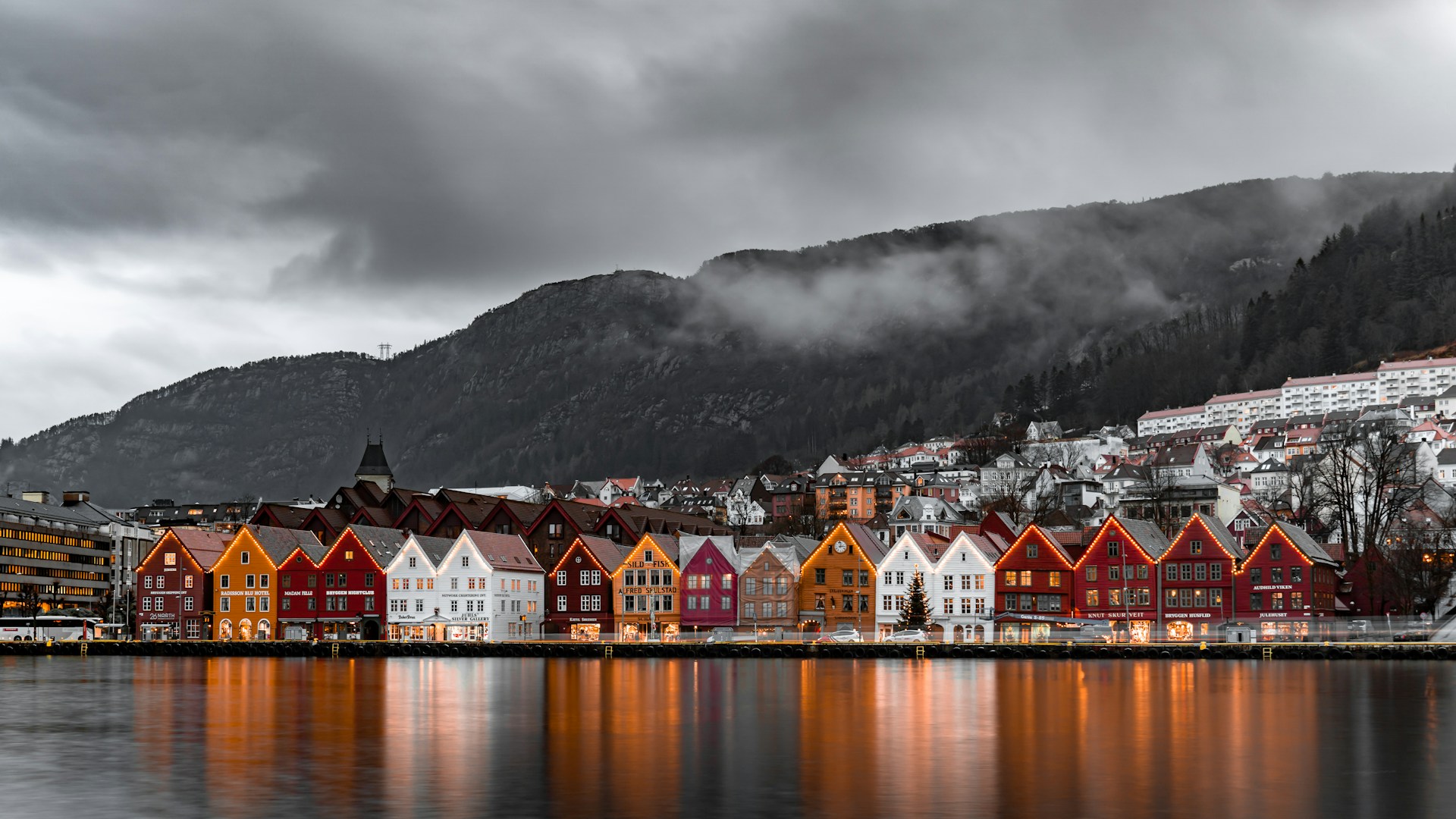
    On June 7, 1905, Norway declared independence from Sweden. It was a nation of just over two million people whose economy rested on fishing, timber, and shipping. There were no vast mineral deposits, no industrial giants, and no obvious route to extraordinary wealth. For decades it remained largely what it had always been — a country that exported fish, built ships, and carried on without attracting much attention from the rest of the world.

    Then, on Christmas Eve in 1969, everything changed. Beneath the North Sea lay enormous oil reserves. Almost immediately, foreign companies arrived carrying contracts, promises, and forecasts of prosperity. They had seen this story many times before. A country discovers valuable resources, foreign interests move in, profits flow outward, and the local population receives a generous supply of speeches about development and a somewhat less generous supply of development itself.

    Norway paid attention.

    no-to-greed-005

    Photos: Unsplash

    They Had Seen the Script Before

    Arve Johnsen, Norway’s Minister of Industry, along with a generation of policymakers, studied what had happened elsewhere. They examined nations blessed with oil and cursed by its consequences. They found corruption, political patronage, economic dependence, and governments that had forgotten how to produce anything except the one resource that made them temporarily rich. They found what economists would later name the “resource curse” — the pattern by which the discovery of natural wealth, rather than improving a country’s position, tends to hollow it out from the inside, replacing diversified industry with dependency, and long-term planning with short-term extraction.

    Norway decided it would not audition for the same role.

    In 1972, the government created Statoil, a state-owned energy company. The rules were simple. Norway would control its resources. Foreign companies could participate, but they would share technology, train Norwegian workers, and operate under Norwegian oversight.

    The oil companies complained. Some threatened to leave.

    Norway wished them a safe trip.

    “Oil in the ground has value. Control over it has far greater value.” — The principle that separated Norway from every other nation that found oil and immediately sold the decision to someone else.

    The Second Decision

    Then came a second decision, arguably the most important of all.

    Norwegian politicians concluded that the oil wealth did not belong exclusively to the government of the day. It belonged to future generations as well — to people who had not yet been born, who had done nothing to earn it, and who would therefore receive it as inheritance rather than reward.

    In 1990, Norway established the Government Pension Fund Global. Oil revenues flowed into the fund rather than directly into political budgets. Strict rules governed its use. The principal remained untouched. Only a limited percentage of the annual returns could enter the national budget each year. The fund is managed by Norges Bank Investment Management with full transparency — every holding, every decision, and every percentage point of performance published for anyone who cares to look.

    The arrangement lacked excitement. There were no grand announcements, no monuments, and no election campaigns built around the singular achievement of fiscal restraint. Politicians usually enjoy spending money they did not earn. Norway chose to save it.

    By 1996, the fund held roughly nineteen billion dollars. Today, it exceeds one point six trillion — invested in over nine thousand companies across seventy countries — and remains the largest sovereign wealth fund in the world.

    The North Sea discovery that changed everything — and the decision that separated Norway from every country that made a different one.

    no-to-greed-003

    The Man Nobody Built a Statue For

    Arve Johnsen died in 2005. Few people outside Norway recognise his name. He did not conquer territory, build an empire, or commission monuments in his own honour. He achieved something far less glamorous and far more rare: he helped prevent his country from becoming another cautionary tale.

    At a moment when easy money tempted everyone, Norway chose patience over greed, ownership over dependence, and tomorrow over today. One decision — or rather, a chain of connected decisions made by people who thought beyond the next election — changed the trajectory of a nation.

    Sometimes the greatest achievement in politics is not what a leader builds, but what he refuses to sell.

    The Resource Curse, in Plain Terms

    The pattern is well documented. Countries that discover large natural resources — oil, minerals, gas — frequently end up poorer, less stable, and more unequal than they would have been without the discovery. Transparency International consistently links resource wealth to elevated corruption risk when governance and oversight structures are weak — precisely because the money arrives faster than the institutions built to manage it. The World Bank refers to this as “the paradox of plenty.” Norway is the country that read the research before the research was written, and acted accordingly.

    no-to-greed-004

    The Uncomfortable Contrast

    I often tell this story because it highlights something difficult to look at directly.

    Many of the wealthy and supposedly sophisticated nations that praise good governance today accumulated much of their prosperity by extracting resources from weaker countries. They took the oil, the minerals, the timber, and the labour, while leaving behind fragile institutions, distorted economies, and, in many cases, decades of instability that lasted long after the ships had sailed.

    Norway faced the same temptation from the opposite side of the table. Foreign companies arrived, as they always do, with contracts designed to ensure that the profits flowed in one direction and the risk in another. Instead of allowing others to dictate the terms, Norway kept control of its resources, protected its long-term interests, and invested for generations it would never meet.

    The irony is difficult to miss. A small nation with no imperial history and no particular leverage showed greater restraint than many of the great powers that spent centuries lecturing others about discipline, governance, and the proper management of public affairs — while quietly helping themselves to whatever could be carried away. The outsider eye tends to notice these inversions, perhaps because it is not required to pretend they do not exist.

    I followed a similar thread in this journal on the language we use to describe people and the assumptions that language protects — how the framing of a story often reveals the most about who is telling it, and why. The story of oil in the developing world is usually told by the companies and governments who extracted it. The Norway story is one of the few where the country in possession of the resource got to write its own ending.

    Back to the Chair

    My client left with a haircut and a slightly revised relationship with the phrase “governments always spend it wrong.” He was not fully converted — Belgian tax returns have a way of making optimism difficult to sustain — but he left with a name he had not known when he walked in, and a story that does not fit the version of history most people carry around without examining.

    Norway did not become wealthy because it found oil. Many countries have found oil. Venezuela found oil. Nigeria found oil. Angola found oil. The list is long, and the stories are not, in most cases, stories of sovereign wealth funds and generational patience.

    Norway became wealthy because it understood that the resource was never the real asset.

    The real asset was the discipline to control it.

    That discipline is not a Norwegian trait encoded somewhere in the national DNA. It was a choice — made in a specific room, by specific people, under considerable pressure from those who stood to profit from a different choice. It can be made again, anywhere, by anyone with the clarity to see past the money that is available today to the country that becomes possible tomorrow.

    The chair, as I have said before, is a good place to think about these things. Nobody is in a hurry. The mirror shows exactly what is there. And occasionally, in the space between the consultation and the finish, someone walks out with something more than a haircut.

    The Salon California Journal is a space for ideas, culture, and conversation from my chair in Brasschaat, Belgium. I write about beauty, technology, society, and the intersections between them.