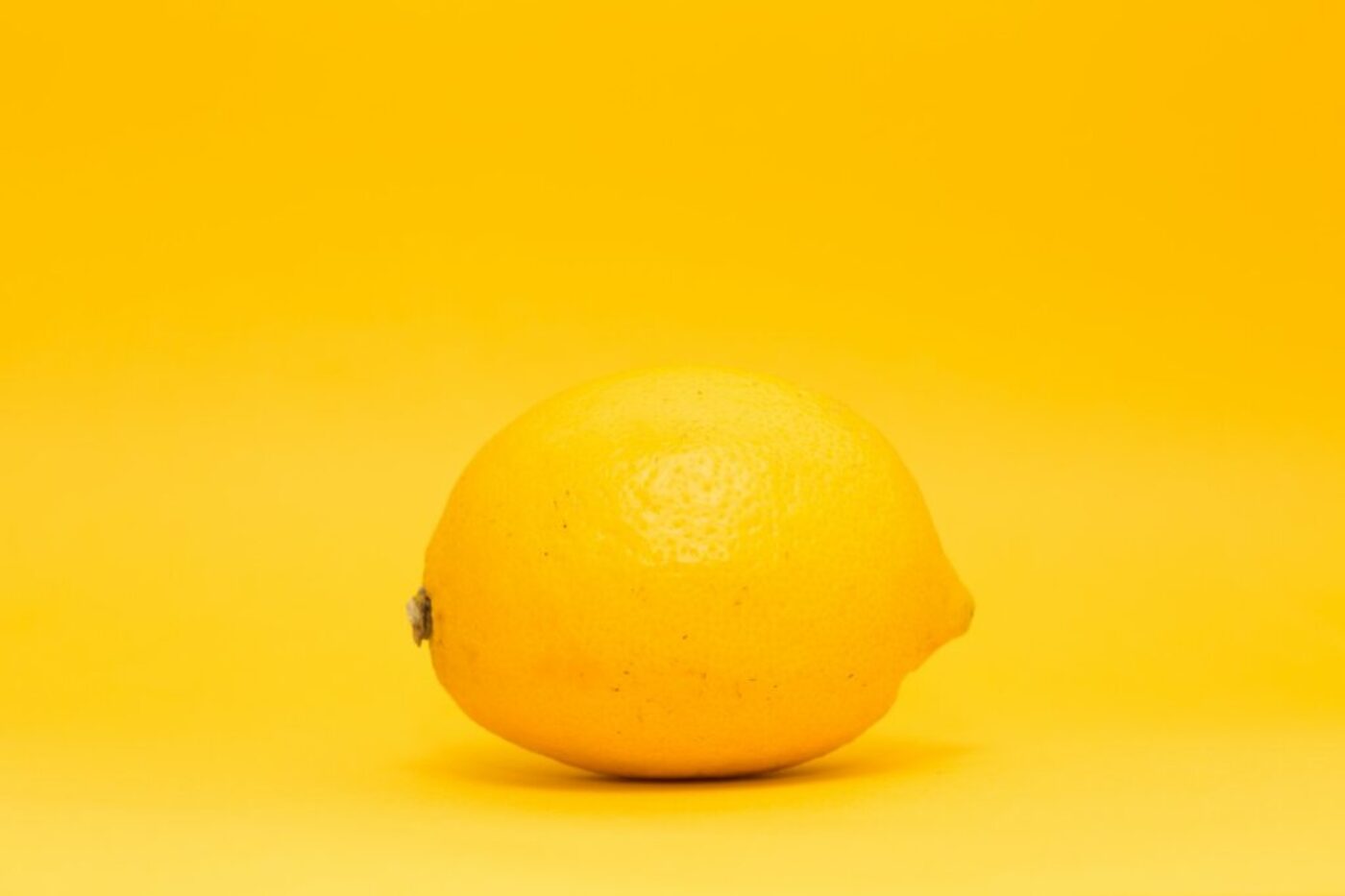
Lemon
There Was Never a Lemon. Your Body Believed It Anyway.
In sixty seconds, a piece of fruit that does not exist can make your mouth water, your jaw tighten, and your throat sting. Which raises an uncomfortable question about everything else you vividly imagine — especially the disasters. Your body is always listening. The only question is what you are telling it.
A client sat down in the chair last week already exhausted by something that had not happened. A conversation she was going to have to have — with a colleague, the following Monday. She had been rehearsing it for days. “I’ve run it a hundred times,” she said. “Every version ends badly. My heart is pounding right now, just telling you about it.”
“Can I try something?” I said. “It takes sixty seconds, and it involves a lemon.”
“A lemon.”
“Close your eyes. Humour me. You’re standing in your kitchen. On the counter sits a bright yellow, perfectly ripe, juicy lemon. Reach out and pick it up. Feel the cool, waxy skin in the palm of your hand. Now take a knife and slowly slice it in half. Watch the juice burst from the fruit. Smell that sharp citrus scent filling the air. Now take one half… and bite into it as hard as you can. The sour juice floods your tongue. The tingling. Your jaw tightening. That sting at the back of your throat.”
I watched her face pucker in the mirror.
“Open your eyes,” I said. “Did your mouth water?”
“It’s still watering. That’s horrible. Why did you do that to me?”
“Because there was never a lemon.” [Switches to serious face.] No fruit, no juice, no knife — nothing physically present. And yet her body responded as if it were all real: saliva, jaw, throat, the works. In sixty seconds she had produced physical evidence of something most of us never quite believe about ourselves. Your body does not simply react to what is happening around you. It reacts to the images and stories your mind creates.
60 seconds — roughly how long the lemon experiment takes to produce a real, measurable response from your body
0 lemons present. No juice, no scent, no knife — nothing but a picture held in the mind
1930’s when physiologist Edmund Jacobson showed that merely imagining a movement produces measurable activity in the very muscles that would perform it
24/7 how often your body is listening to the pictures your mind rehearses — including the ones you would never choose to screen
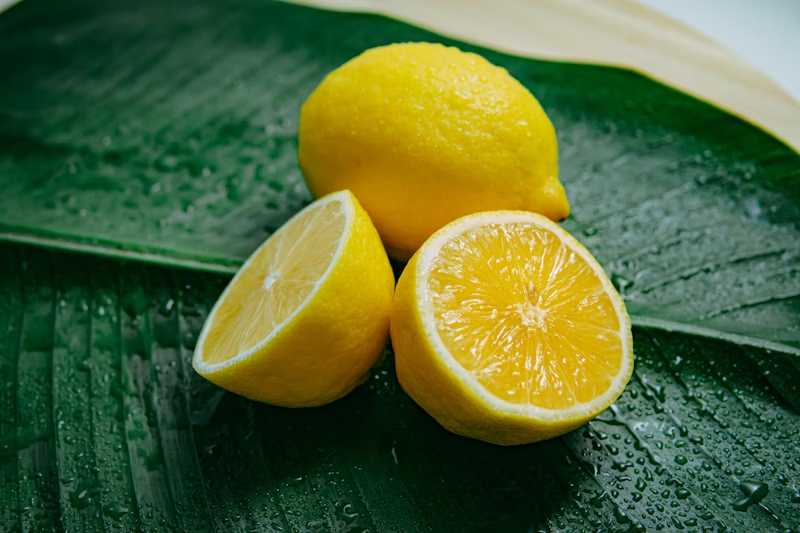
The lemon that never existed, and the machine that made it. Photo: Unsplash
The Projector and the Screen
What the lemon demonstrates is not a party trick. It is the basic architecture of being a person. Somewhere in your head a projector runs day and night, and your body is the screen it plays on. The autonomic systems that water your mouth, tense your muscles, and speed your heart do not conduct an independent investigation into whether the lemon exists. They take the picture and respond to the picture.
This has been measured for nearly a century. In the 1930s, the physiologist Edmund Jacobson attached electrodes to people and asked them merely to imagine movements — and recorded real electrical activity in the corresponding muscles. Nothing moved, and yet everything prepared to. Athletes have built an entire discipline on this: sprinters, skiers, and pianists rehearse performances in vivid mental detail because the rehearsal itself trains the system. The body attends the screening and takes notes.
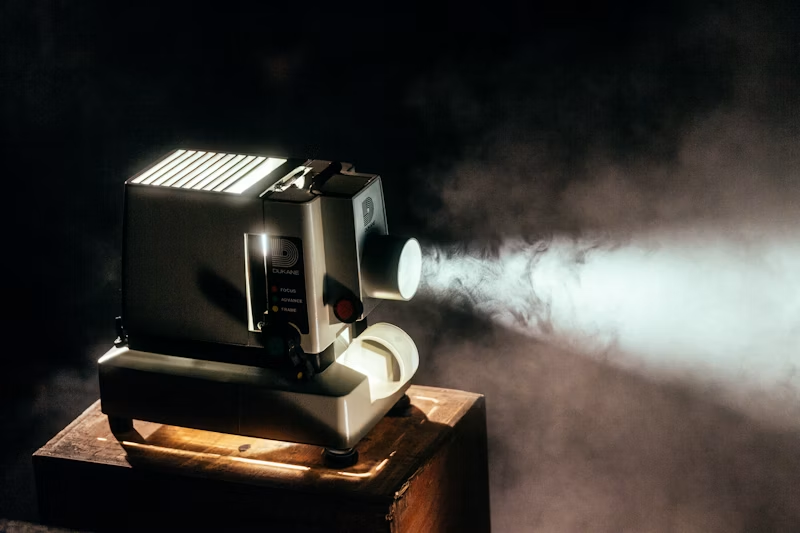
Your body watches whatever is playing. Photo: Unsplash
The Lemons You Bite at Three in the Morning
Here is where the experiment stops being amusing.
If your imagination can make your mouth water over a lemon that does not exist, consider what it is doing when you replay worst-case scenarios about your future. The difficult conversation, run a hundred times, every version ending badly. The diagnosis you have not received. The mistake you might make in a meeting that has not been scheduled. Situations you are afraid might happen — and, mostly, never do.
Your body attends every one of those screenings too. Your heart races. Your muscles tense. Stress hormones are released. The alarm systems that evolved for actual tigers respond to imagined ones with impressive sincerity — the physiology of the stress response does not first check the film against reality. My client’s pounding heart in the chair was not reacting to Monday’s conversation. Monday’s conversation did not exist yet. It was reacting to her hundredth rehearsal of it — a lemon she had been biting into, hard, for days.
“You’re not just reacting to life. More often than not, you’re reacting to the movie playing inside your own mind.” — And unlike the cinema in town, this one never closes, and you are the only member of the audience.
A Word of Nuance
Let me be precise, because precision is the point. Your brain, as a whole, does know the difference between imagination and reality — you do not walk out of a daydream confused about whether you actually bit a lemon. The claim is narrower and better supported: the body’s automatic response systems react to vivid imagery in many of the same ways they react to the real thing. Harvard Health’s overview of the stress response describes how the alarm can be tripped by perceived threats, not just present ones — and a rehearsed catastrophe is a perceived threat with excellent production values. Imagery is not magic, and imagining wealth will not pay your invoices. But chronic rehearsal of fear produces chronic physical stress. That part is not motivational-poster material. It is physiology.

Same projector. Different film. The body screens whatever the mind schedules. Photo: Unsplash
The Other Direction
Now the good news, and it is genuinely good: the projector takes requests.
If your imagination can create stress, it can also create calm, confidence, and resilience — which is precisely why visualisation is standard equipment in sports psychology, why exposure therapy walks the mind through feared situations until the alarm stops tripping, and why psychologists spend so much time on the stories patients tell themselves. The mechanism is neutral. It renders whatever you rehearse. Rehearse the conversation going badly a hundred times, and your body trains for disaster. Rehearse it going well — the calm voice, the reasonable exchange, the walk out of the room with your shoulders where they belong — and the same machinery starts building that instead.
The pictures you choose to rehearse matter, because your body is always listening. It cannot hear the difference between a plan and a fear. It only hears which one you play more often.
The islands that never saw the check. Photo: Unsplash
Back to the Chair
My client came back two weeks later. The Monday conversation had happened. “Twenty minutes,” she said. “Completely civil. Slightly boring, honestly. I spent four days living through a hundred versions of it, and reality picked the one I never bothered to imagine.”
“They usually do,” I said.
“I keep thinking about the lemon. Every time I catch myself spiralling, I think — is this a real lemon or one of mine?”
Which is a better summary than I could have written. I touched a related thread in a previous piece on the color your brain invents every time you see it — magenta, the shade that exists nowhere in the physical universe and everywhere in your experience of it. The lemon is the same discovery arriving through the other door. Out there: light, air, and events. In here: color, taste, and fear. An astonishing amount of what feels like the world is being produced, live and without credits, by the person watching it.
I spend my days behind a chair, listening to people describe things that have not happened yet with remarkable conviction. I have no license to treat any of it. But I do keep lemons in the salon now, in a bowl by the mirror. Not for the water. As a staff reminder — all one of us — about which fruit is real.
The Salon California Journal is a space for ideas, culture, and conversation from my chair in Brasschaat, Belgium. I write about beauty, technology, society, and the intersections between them.