
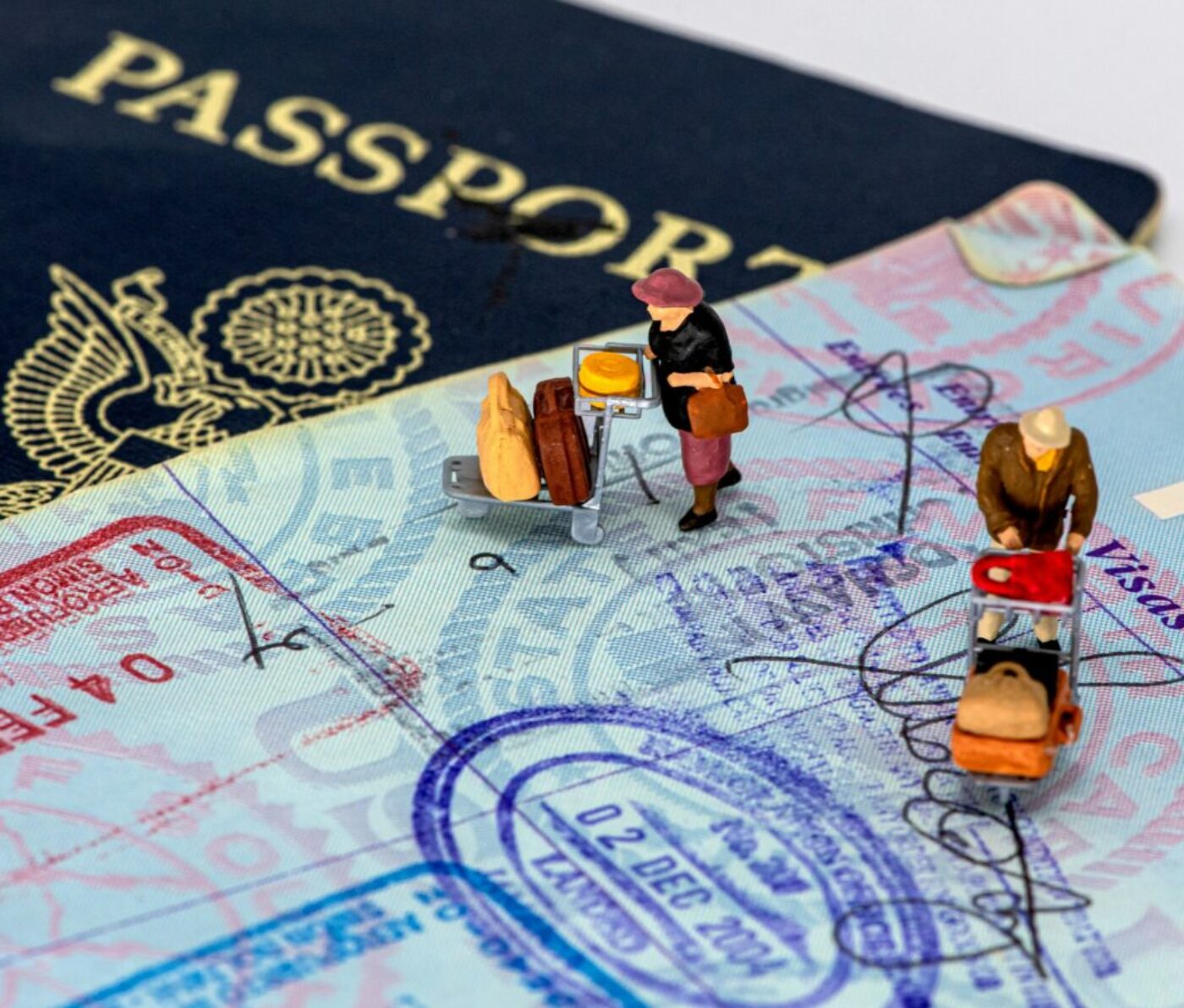
Expat vs Immigrant
Expat vs Immigrant: The Word Game Nobody Admits They’re Playing
Expat or Immigrant? The Word That Changes Everything
One word sounds like a lifestyle choice. The other sounds like a life sentence. The difference has nothing to do with what you did — and everything to do with who you are.
Word association. Quick round. I say a word, you have a reaction, and we spend the rest of this pretending those reactions are neutral observations — and not five centuries of power dynamics compressed into twelve letters. Ready? “Expat.” MacBook. Flat white. Lisbon Airbnb. Correct. “Immigrant.” Different picture entirely. Same human being. Different passport. Completely different face on the customs officer.
[Switches to serious face.] The difference between an expat and an immigrant has nothing to do with behavior, education, or morality. It has everything to do with power, passports, money, and skin color. Colonialism left fingerprints on language. The vocabulary survived long after the empires collapsed.
14% of Belgium’s population is foreign-born
180+nationalities call Antwerp home
3.6MEU citizens living outside their home country
281Minternational migrants worldwide in 2025
The Word Game Nobody Admits They’re Playing
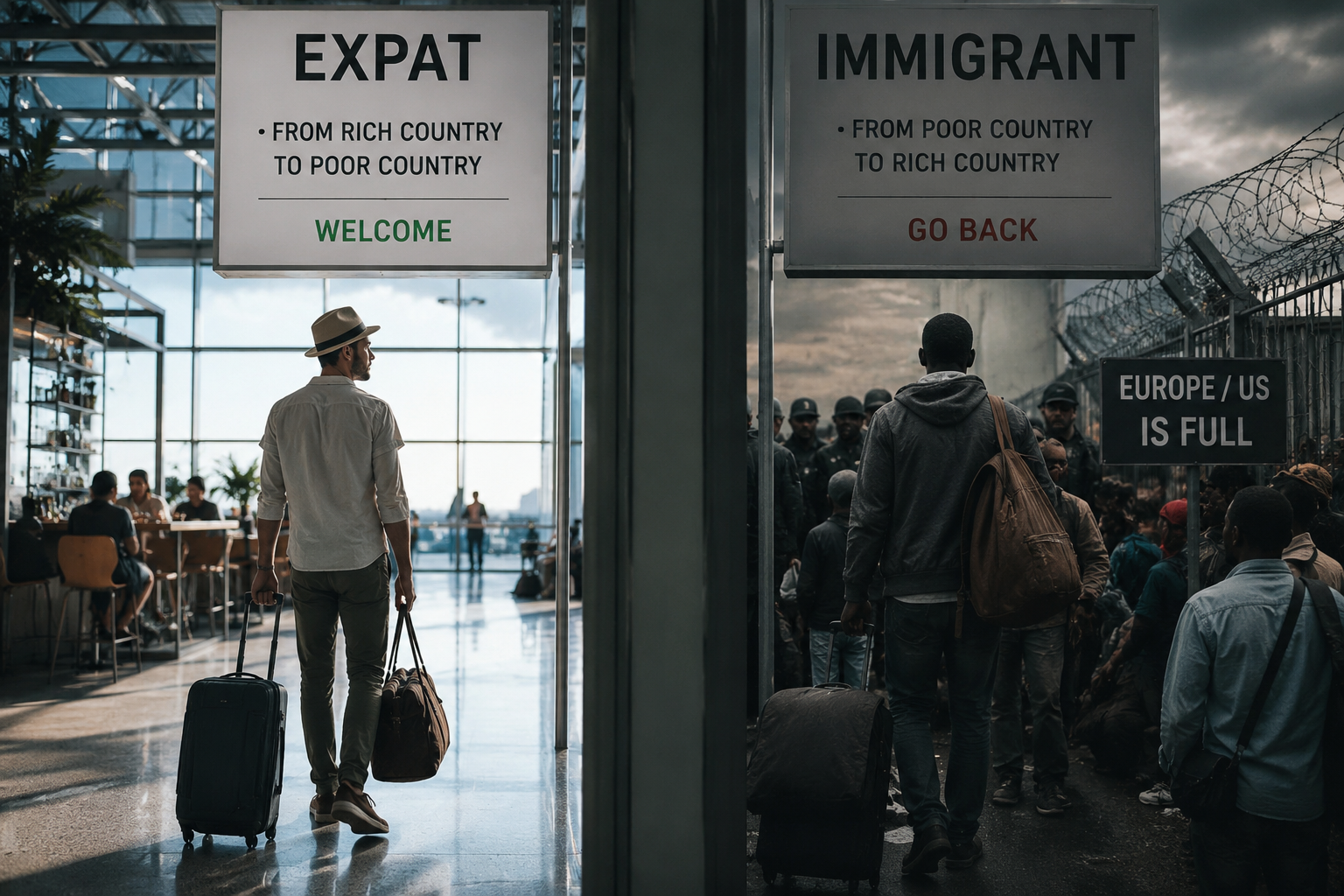
The logic is simple. From wealthy country to poorer one: expat. From poorer country to wealthy one: immigrant. One sounds adventurous and sophisticated. The other sounds like paperwork, suspicion, and a queue in a government office with posters from 2003 still on the wall.
Same journey. Different Spotify playlist. Completely different customs officer.
I am writing this from a one-person hair salon in Brasschaat — probably the world’s least likely political economist. And yet I see this play out, chair by chair, with a clarity no think-tank quite captures. People talk in salon chairs. Really talk. The mirror, the scissors, the fact that you physically cannot leave — it produces a particular kind of honesty.
The Word Game Nobody Admits They’re Playing
The logic is simple. From wealthy country to poorer one: expat. From poorer country to wealthy one: immigrant. One sounds adventurous and sophisticated. The other sounds like paperwork, suspicion, and a queue in a government office with posters from 2003 still on the wall.
Same journey. Different Spotify playlist. Completely different customs officer.
I am writing this from a one-person hair salon in Brasschaat — probably the world’s least likely political economist. And yet I see this play out, chair by chair, with a clarity no think-tank quite captures. People talk in salon chairs. Really talk. The mirror, the scissors, the fact that you physically cannot leave — it produces a particular kind of honesty.
One Is an Immigrant With a LinkedIn Profile
Here is the comparison nobody wants on a PowerPoint slide but everybody already knows:
One is an immigrant with a LinkedIn profile. The other is an immigrant without one.
The first moves to a country that is not his, barely integrates, spends most of his time with people from back home, complains about the locals, misses the food he grew up with, refuses to properly learn the language, demands the benefits of the country while protecting his own culture, and somehow gets paid more for fewer skills.
The second does the exact same thing.
He also stays close to his own people. He also misses home. He also struggles with the language. He also wants safety, opportunity, and a future for his family while holding onto the fragments of himself he could not leave behind.
But he gets paid less for harder work.
“One gets called global. The other gets called a problem. One arrives and people ask where he’s been. The other arrives and people ask why he came.”— The gap that has no good reason to exist
One arrives with a smile and says, “I moved here because the vibe is chill.” Wine is poured. People ask about his travels.
The other says, “I came because life back home was collapsing and I wanted a future for my children.” Borders tighten. Europe is full.
The irony is merciless. The man escaping boredom gets romanticized. The man escaping despair gets interrogated.
Human beings rarely judge migration itself. They judge who is doing the moving.
According to the IOM World Migration Report 2024, there are 281 million international migrants worldwide. Most are called immigrants. A few are called expats. The deciding factor is almost never the visa category.
Antwerp’s streets have always reflected whoever showed up with something to build. Photo: Unsplash
Hair, Identity, and the Mirror That Doesn’t Lie
The salon chair creates a particular kind of honesty — intimacy, eye contact via mirror, the physical inability to leave because someone currently has scissors near your head. People tell me things they would not tell a therapist. Things that actually matter.
Hair is among the most culturally loaded aspects of physical appearance. It communicates identity, pride, and belonging — or a principled refusal to perform belonging for someone else’s comfort. For migrants of colour especially, decisions about hair become a daily negotiation: how much of myself do I have to change to be accepted here?
The woman who straightens her natural hair for job interviews. The man who shaves rather than maintain a style that marks him as different. The second-generation immigrant who asks us to help reconnect with a cultural hairstyle their parents discouraged — because “it’s easier here if you blend.”
Not abstract positions. Decisions made in front of a mirror, with real consequences.
My practice is to take hair on its own terms — no hierarchy of which cultural expression is professional and which is not. That turns out, quietly, to be a political act. One I am perfectly happy to keep doing.
What We Lose When We Sort People by Passport

Cohesive cities are not built on hierarchies between expats and immigrants. They are built on shared investment in place. And you cannot ask people to invest in a city they are constantly being reminded is not quite theirs.
Immigrants — by any definition, with any passport — are net contributors. They start businesses at higher rates than native-born citizens. They fill critical gaps in healthcare, logistics, and care work. According to Eurostat, labour market participation among migrants in Belgium consistently runs above 65%. People who showed up and got straight to work — no lifestyle Instagram required.
I explored a similar pattern in my piece on AI and the future of education — where the same question applies: who gets access to the opportunity, and who gets left managing the consequences? The fault lines run in the same direction every time.
People can only contribute fully when they are welcomed fully. Not as temporary labour. As neighbours. As people who chose this place and deserve to have it choose them back.
One Chair at a Time
I am not naive enough to think this gets resolved with a haircut. Probably. I have not fully ruled it out.
But I will keep having the conversation — in this journal, in the salon, in the ordinary moments where two people from different continents talk about something real because one needed a trim and I had scissors and forty minutes.
The fact that you read this far means either you care deeply about getting this right — or you are a certified glutton for punishment. I appreciate you either way.
In this corner of Belgium, I believe we have the chance to be better. We have been, at our best moments. A port city that understood the people arriving from somewhere else were not a threat to what Antwerp was — they were the reason it became something worth defending. I believe that still. One chair at a time.