
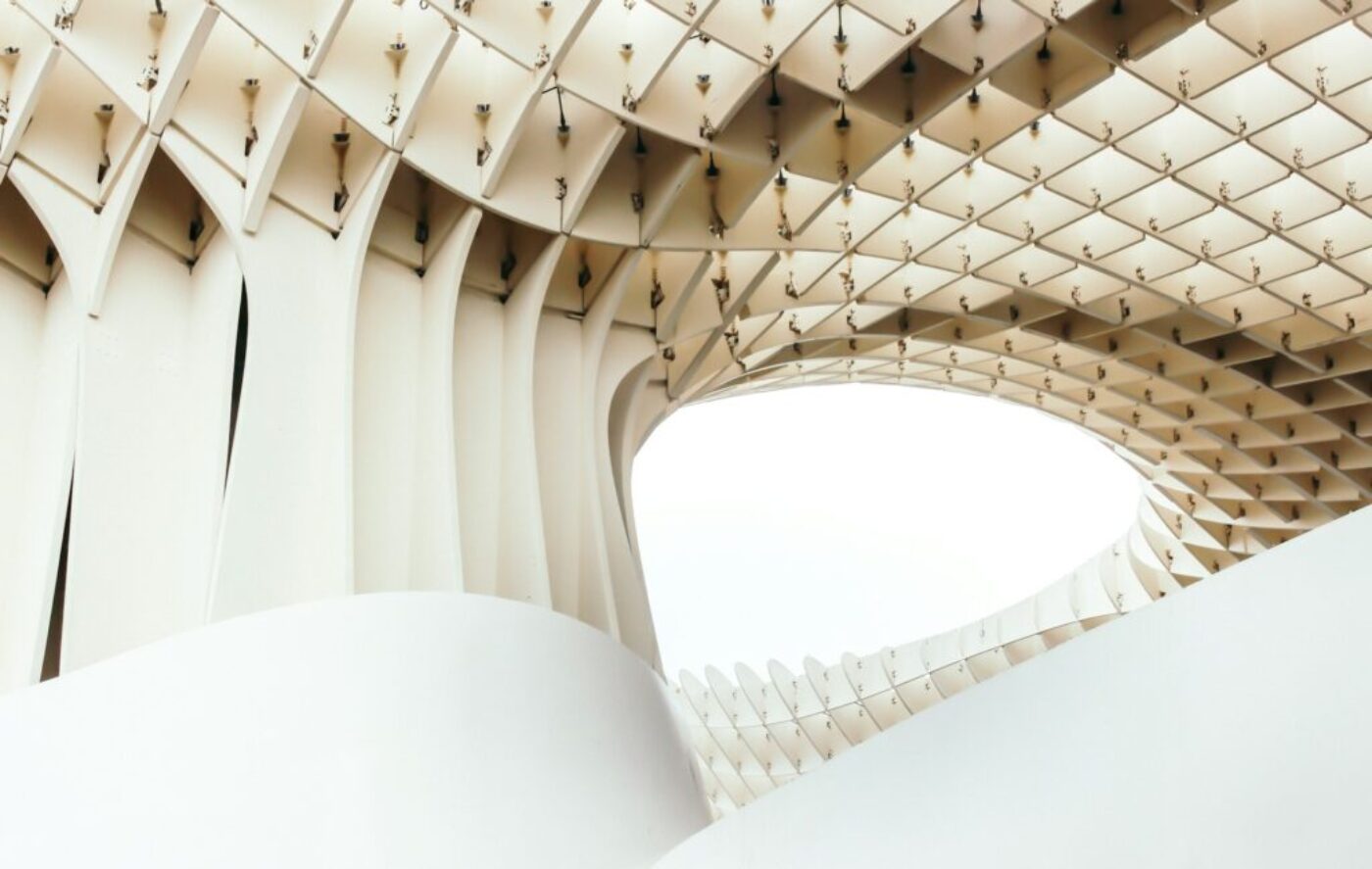
Setas de Sevilla
The World’s Largest Wooden Structure Is a Parasol. Seville Calls It the Mushrooms.
A vast timber canopy that shades a square from the Andalusian sun, shifts with the light all day, hides Roman ruins beneath it and a panoramic walkway above. The Metropol Parasol is proof that great architecture isn’t only about what we see — it’s about how a place makes us feel.
Brasschaat spent part of this July pretending to be Andalusia. For a week, every client arrived flushed, sat down in front of my heroic air-condition, and said some version of “I can’t function in this.” And every time, my mind drifted to a city that gets this heat for four months a year — and answered it, fifteen years ago, not with air conditioning but with architecture. The locals call it Las Setas. The mushrooms.
[Switches to serious face.] Would you believe that the world’s largest wooden structure is, essentially, a parasol? Known as the Metropol Parasol, this extraordinary landmark was designed by German architect Jürgen Mayer and opened in 2011, after an investment of around €100 million.
150 m the length of the canopy — seventy metres wide, stretched over what was once an overlooked, underused square
~30 m the height of the timber structure — a six-storey parasol over the heart of Seville
2011 the year it opened, after an investment of around €100 million
2,000 years of history under one roof — Roman and Moorish ruins below, a panoramic walkway above, and a living square in between
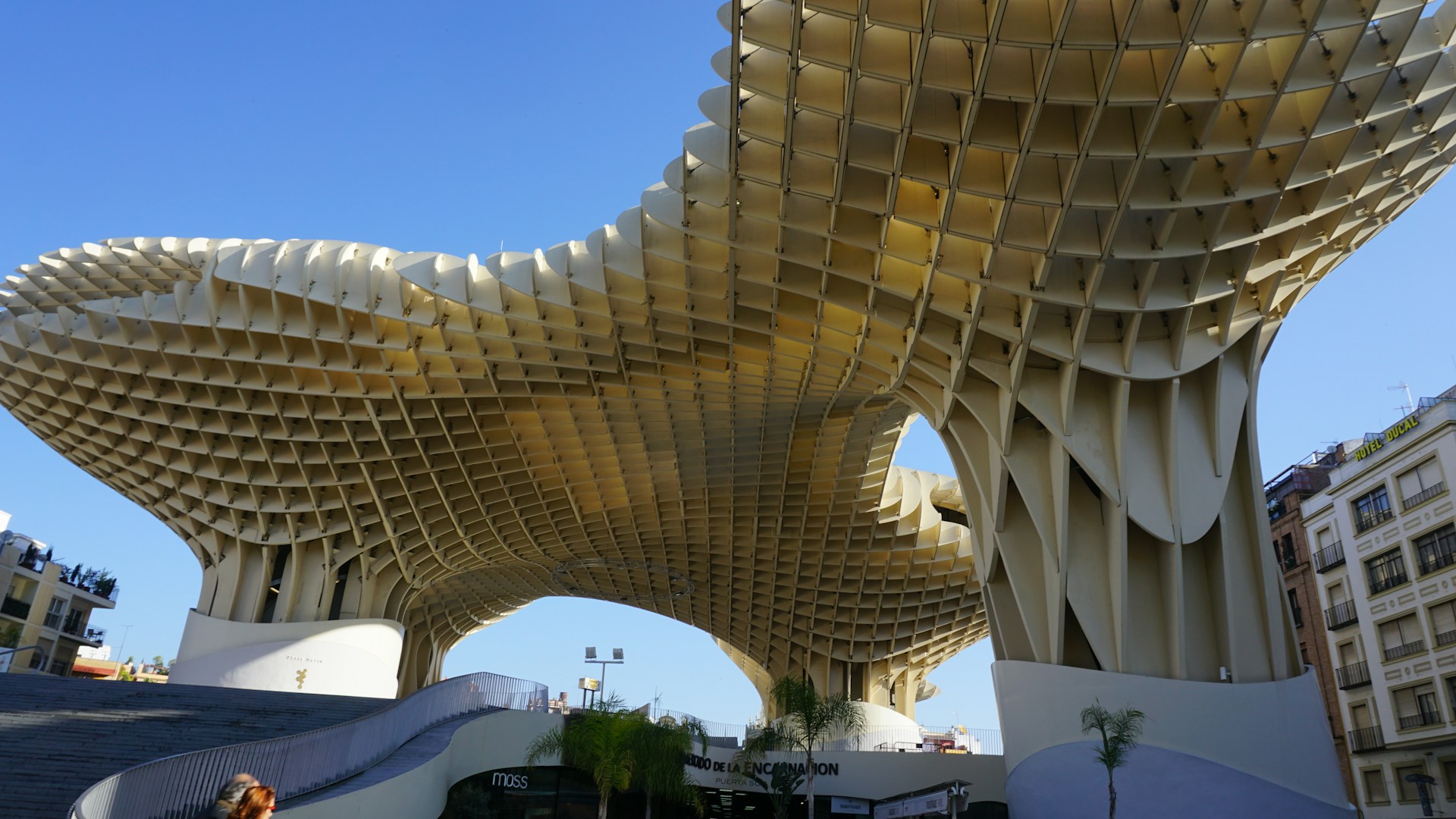
The Mushrooms of Seville
Stretching 150 metres long, 70 metres wide, and almost 30 metres high, it completely transformed what was once an overlooked and underused square into one of Seville’s most vibrant public spaces. Today, it’s far more than an architectural icon. It’s a place where locals gather, tourists explore, children play, and people simply pause to enjoy the city.
What makes the Metropol Parasol so remarkable isn’t just its size or its striking honeycomb-like form. It’s the experience it creates. The vast timber canopy provides much-needed shade from Seville’s intense summer heat while allowing soft, dappled sunlight to filter through the structure. As the light shifts throughout the day, the space beneath constantly changes, creating an atmosphere that feels calm, welcoming, and alive.
Past, Present, and Future in One Place
The design also reconnects the city with its history. Beneath the structure lies an archaeological museum preserving Roman and Moorish ruins discovered during construction, while above, a winding panoramic walkway offers spectacular views across Seville’s skyline. In a single destination, visitors can experience the city’s past, present, and future.
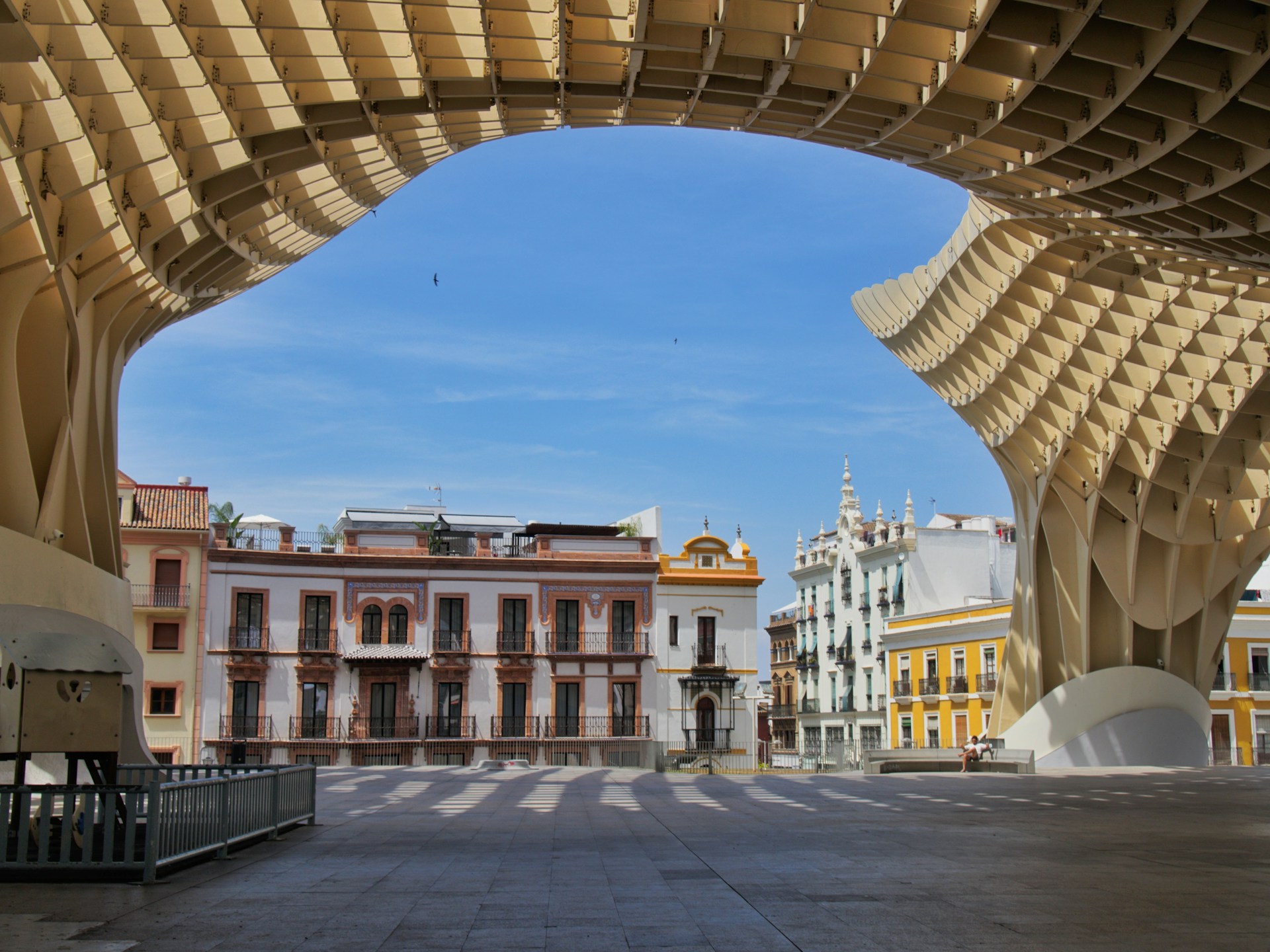
The Seville parasol keeps its own museum beneath the timber canopy. Photos: Unsplash
Designing With the Senses
Research in environmental psychology shows that thoughtfully designed public spaces can reduce stress, improve well-being, encourage social interaction, and strengthen our emotional connection to a place. When architecture engages our senses through light, texture, scale, temperature, sound, and movement, it becomes more than a building. It becomes an experience that people remember.
The Metropol Parasol is a perfect example of designing with the senses. It doesn’t simply provide shelter or create an impressive skyline. It invites people to slow down, explore, interact, and feel connected, proving that great architecture isn’t only about what we see. It’s about how a place makes us feel.
“Great architecture isn’t only about what we see. It’s about how a place makes us feel.” — Which is why the most important material in the Metropol Parasol isn’t timber. It’s shade.
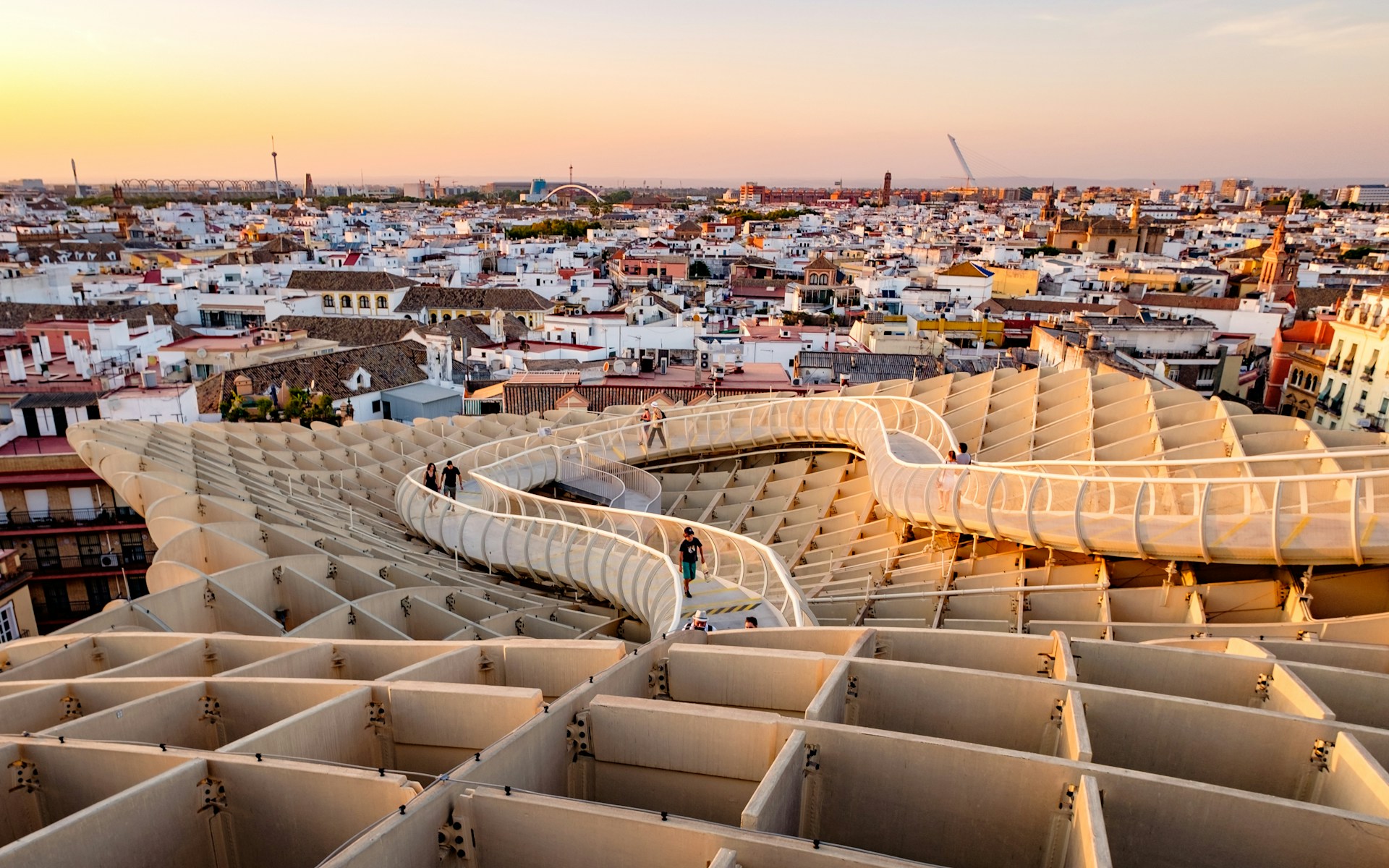
Seville’s skyline. The Parasol’s winding rooftop walkway serves this view in every direction. Photos: Unsplash
The structure’s architect, Jürgen Mayer H., documents the project — officially Metropol Parasol, eternally Las Setas to Sevillanos — through his Berlin studio, and ArchDaily has covered the building extensively since its opening. The photographs are striking. And, as with every building designed for the senses, they miss the point slightly — the shade, the temperature, the murmur of the square — which is the best possible argument for standing under it yourself.
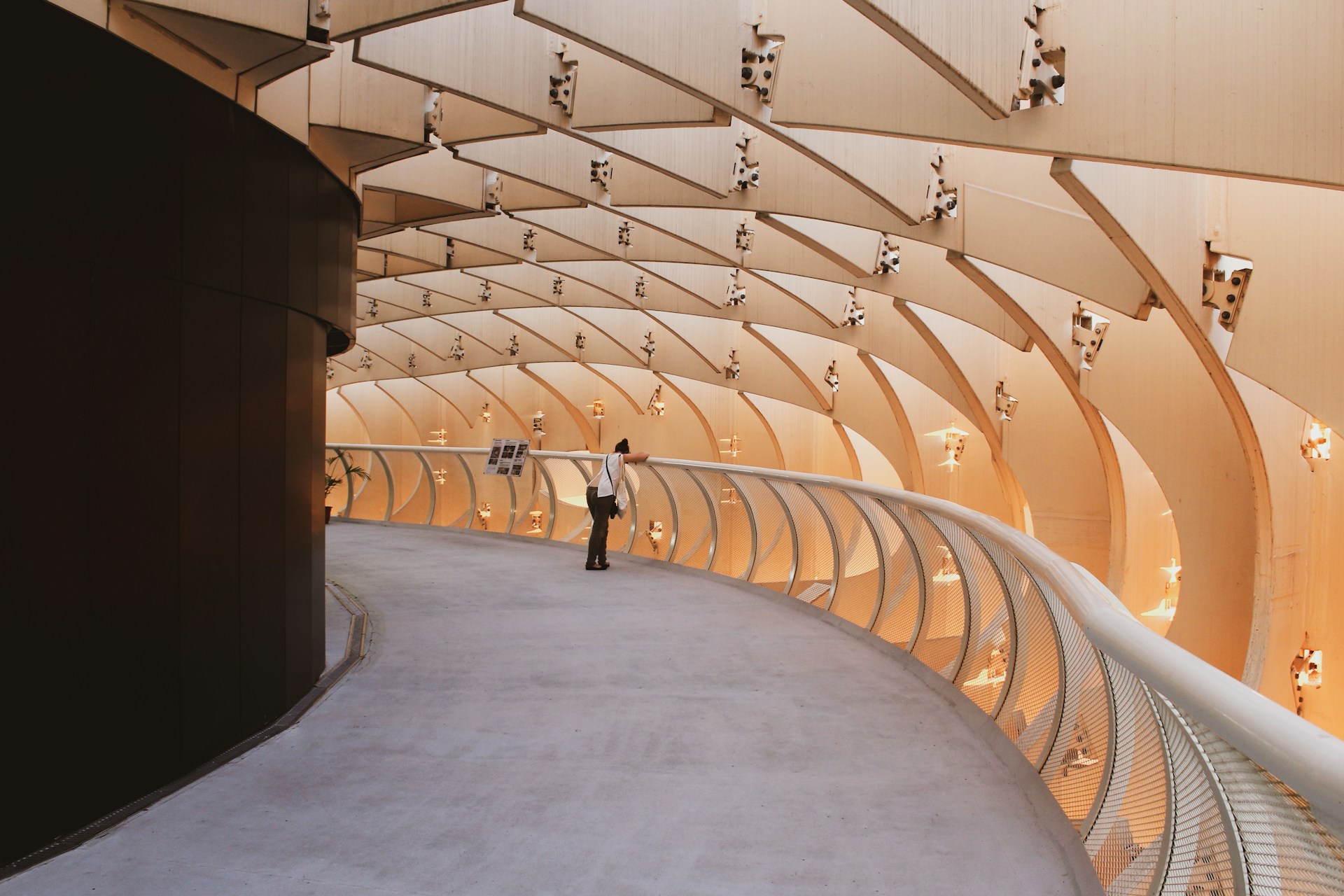
Photo: Unsplash
The Bottom Line
The heatwave broke on a Thursday. And my clients have returned to complaining about rain, which in Belgium is less a complaint than a national anthem.
I touched a related thread in a previous piece on Álvaro Siza’s Pavilion of Portugal in Lisbon — another vast canopy over another public space, built for another world fair. The two make a fascinating pair. Siza’s canopy is silent and empty: it frames a river and asks you to look. Mayer’s is crowded and alive: it casts shade and asks you to stay. One is a picture frame, the other is a living room, and both understood the same secret — that the most generous thing architecture can build is not a wall or a roof, but a reason to be somewhere.
During my two years of architecture studies, a professor once assigned each of us a sense to design for. I got sight, and I thought that was the whole assignment. The Metropol Parasol is what the full exam looks like: light for the eyes, shade for the skin, ruins for the memory, a square for the company of strangers. Seville built a place that answers to every sense at once. In my one-room corner of Brasschaat, I settle for a good haircut, a comfortable chair, and air-condition in July. The scale is different. The exam, I’ve come to believe, is the same.
The Salon California Journal is a space for ideas, culture, and conversation from my chair in Brasschaat, Belgium. I write about beauty, technology, society, and the intersections between them.