
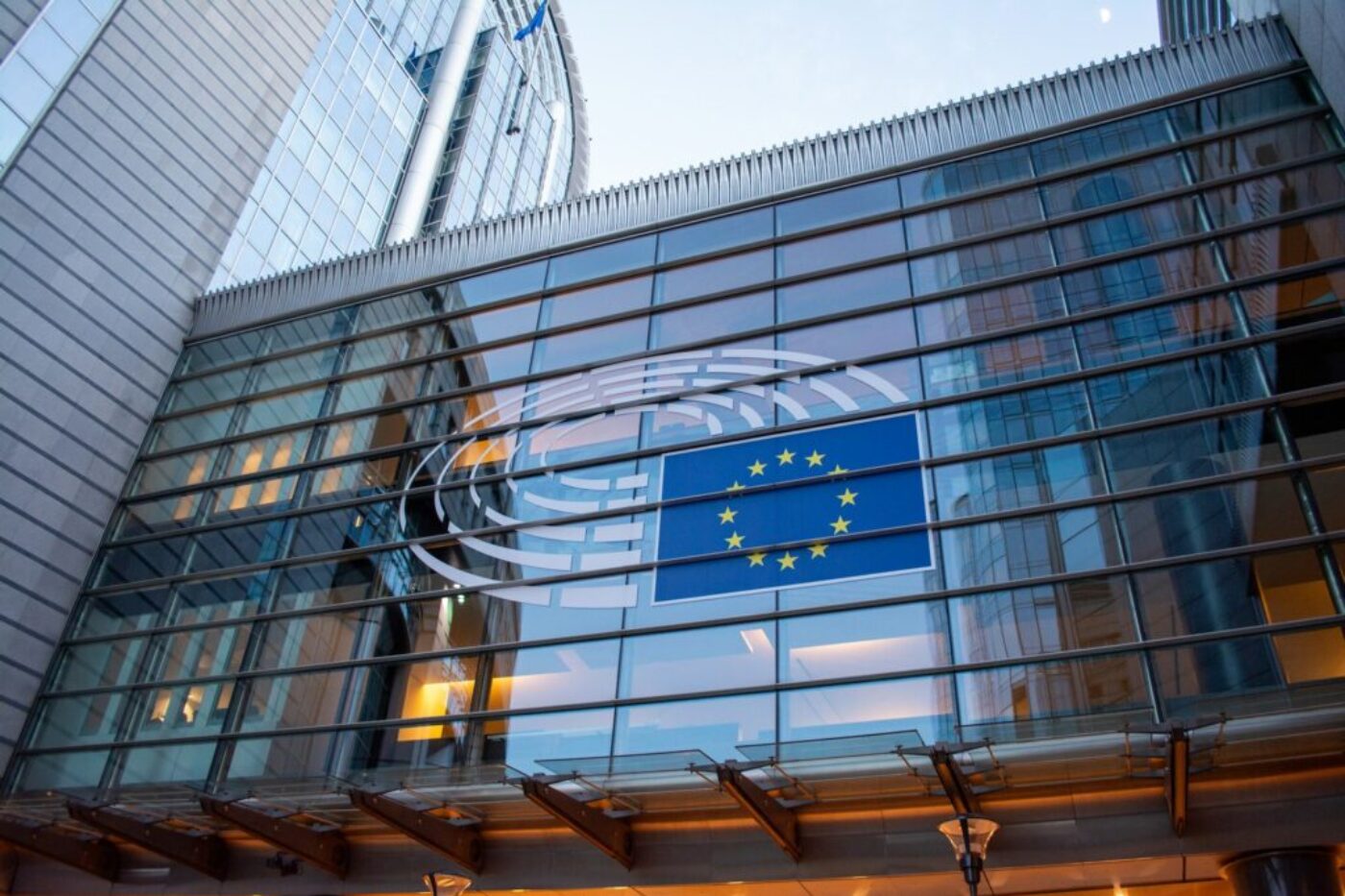
E. U. Parliament
314 Voted No. 276 Voted Yes. It Passed Anyway.
Taken one at a time, they’re modernisation, child safety, consumer protection, progress. Taken together, they’re a question nobody in Brussels particularly enjoys being asked: who wrote this, who profits from it, and who pays?
Last winter I spent a Sunday evening at my kitchen table, logged into a government portal, registering my one-person salon for something. I no longer remember which something — there have been several. What I remember is the format: a login I’d forgotten, a form that assumed I had a compliance department, and a helpful note explaining that the deadline had been communicated well in advance, which was true, in a document I had not read, because it was three hundred pages long and I cut hair for a living.
It took me most of the evening. For a company with a legal department, the same rule takes one email to a consultant and disappears into a budget line. That is not a scandal. It is just arithmetic, and it is the arithmetic underneath everything that follows.
[Switches to serious face.] Because there is a set of things happening in Europe right now that, individually, all sound perfectly reasonable, and collectively, add up to something I think deserves a much harder look.
€382 m record annual spend by the biggest corporate lobby operations in Brussels, per Corporate Europe Observatory’s 2026 count
€151 m the tech industry’s share of that, up from €113 million in 2023
890 full-time tech lobbyists working Brussels — 437 of them holding Parliament access badges
449 m people the European Union represents, most of whom employ zero lobbyists
The Vote That Explains Everything
Start with the clearest example, because it happened last month and it is a matter of public record.
Chat Control — the family of proposals that would have communication services scanning private messages for child sexual abuse material — has been fought over since 2022. The permanent version is still stuck: the fifth round of closed-door negotiations collapsed at the end of June, and talks resume in September under the Irish presidency.
But the temporary version, the one allowing voluntary scanning, expired in April. In March, the European Parliament refused to extend it, 311 votes to 228. The Council reinstated it anyway, unchanged, through April 2028. Parliament got one more shot at rejecting it on 9 July, under emergency procedure, and voted like this:
314 against. 276 in favour.
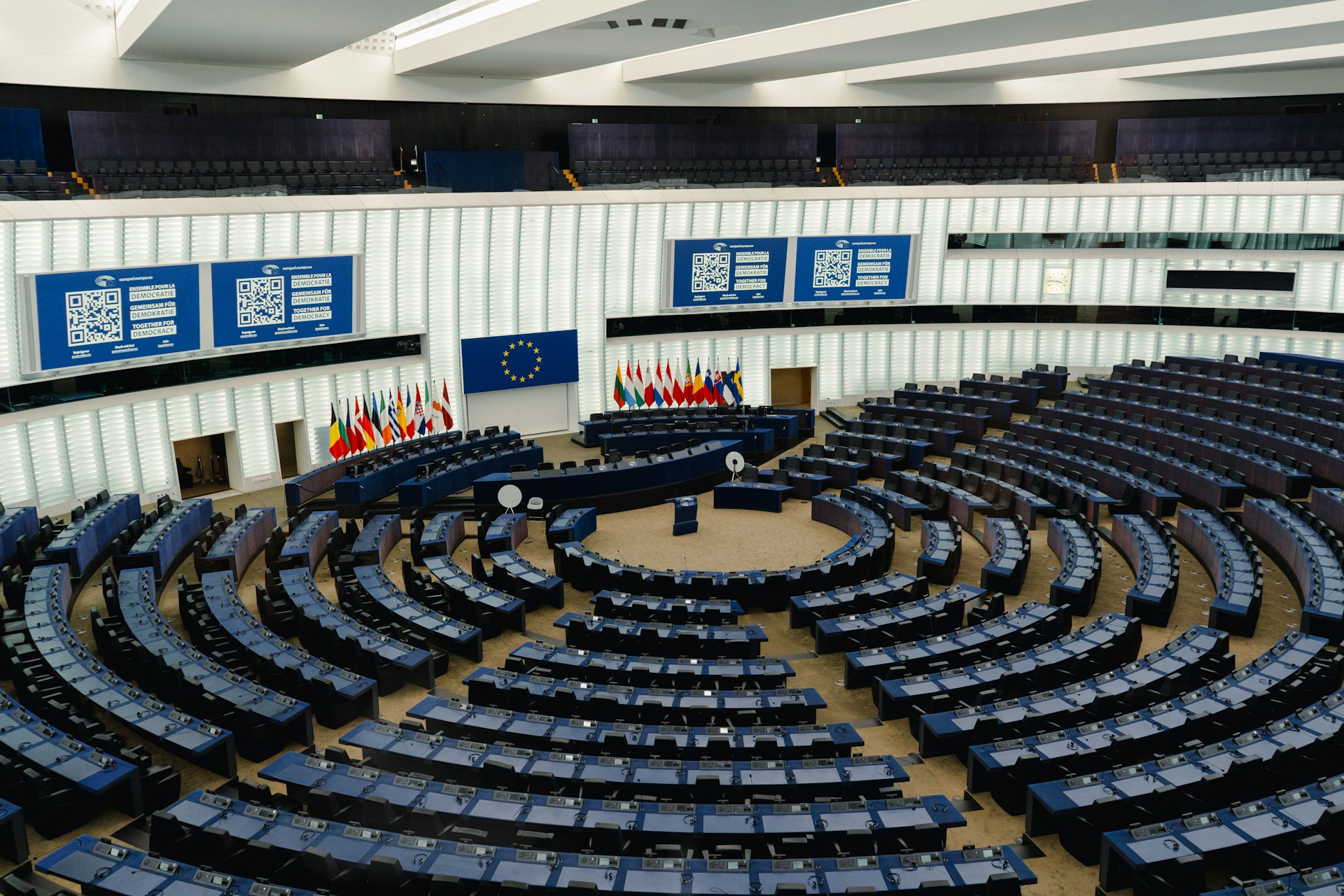
More MEPs voted to kill it than to keep it. It survived, because at second reading you need an absolute majority of all members — 361 — and not merely a majority of the people who actually turned up and voted. So it stands until 2028.
I want to be fair here: that threshold exists for real reasons, it applies to everyone, and nobody broke a rule. This is not corruption. It is procedure working exactly as designed.
It is also a sentence you should sit with for a moment. On the question of whether private messages get scanned, the elected chamber said no by thirty-eight votes, and the answer was yes.
Photos: Unsplash
Nobody Has to Conspire
Here is where I part company with the version of this argument that gets shouted on the internet.
There is no smoke-filled room. There doesn’t need to be one. A conspiracy would honestly be cheaper than what actually happens, which is entirely legal, fully documented, and published in a public register.
The biggest corporate lobby operations in Brussels now spend a record €382 million a year. The tech industry alone accounts for €151 million of it, up from €113 million in 2023, fielding around 890 full-time lobbyists, of whom 437 hold badges that let them walk into the European Parliament. Meta alone runs a budget north of €10 million.
Against that, picture the ordinary citizen the regulation is theoretically written for. She has a job, two children, and a PDF. She has roughly forty minutes of civic energy per month, and the document is three hundred pages of cross-references to four other documents.
Nobody is lying to her. Everything is technically available to her. The consultation was genuinely open. It is simply that one side of this conversation has 890 people whose entire job is this, and the other side has a Tuesday evening.
When an institution needs technical expertise to regulate an industry, and that expertise mostly lives inside the industry, the line between regulating a market and designing a market gets very thin. Not through malice. Through proximity, deadlines, and the fact that the industry always shows up with the better slide deck.

Photos: Unsplash
The Money and the Wallet
The digital euro is the piece I’ve written about before, in the context of Germany’s quiet refusal to give up cash, so I’ll be brief and I’ll be accurate, because accuracy is what this argument usually lacks.
The proposed regulation states explicitly that the digital euro shall not be programmable money. No expiry dates, no approved-purchase lists. If you’ve been sharing the version where that’s already been decided, you’ve been handing the other side a free win, and I’d rather you didn’t.
What the proposal does include is conditional payments — automation where you set the condition, such as releasing funds when a parcel arrives. The Eurosystem’s defence is that the citizen holds the switch. That distinction is real. It is also a distinction about who holds the switch rather than about whether one exists. The EU’s own privacy watchdogs looked at programmability and warned it would create unacceptably high data protection risks — that is the EDPB and the EDPS, not a militia.
Meanwhile the European Digital Identity Wallet arrives on a converging timetable, with member states due to offer one to every citizen. Two systems, built separately, for good reasons, by different people. Nothing in either proposal links your identity to your grocery shopping.
The concern was never that today’s draft does that. It is that the prohibition lives in a regulation and the capability lives in the wiring, and only one of those two things is easy to amend in a bad year.
“A capability built for an excellent reason does not stay attached to the reason. The reason retires. The capability doesn’t.” — Which is why “but we’d never use it that way” is a statement about intentions, and intentions are not a form of infrastructure.


Photos: Unsplash
The Children Argument
Chat Control deserves its own paragraph on the merits, because the usual framing of it is unfair to everybody.
Protecting children from exploitation is not a pretext. It is an urgent, real, morally serious objective, and the people pushing hardest for these powers are, in the main, pushing for them because the material is genuinely out there and the current tools are genuinely inadequate. Anyone who waves that away to score a point about privacy has lost the argument before starting.
The question is narrower, and harder. Does achieving it require building a scanning architecture that touches the private messages of several hundred million people who have done nothing? Because that architecture, once it exists, is a general-purpose capability with a child-protection label on it, and labels are the easiest part of any system to change.
You can hold both thoughts. Most people do. It’s the institutions that keep insisting you must pick one.

Your Tomato Now Has a Secret
Which brings me to food, and to the cleanest illustration of the pattern I can offer, because this one is finished. It is not a proposal or a fear. It is law.
The EU’s new genomic techniques regulation entered into force in July and applies from 2028. Plants in the lower-risk category — edits that could in principle have happened through conventional breeding — are released from GMO-style rules. Seeds and reproductive material still have to be labelled. The food on the supermarket shelf does not.
Read that again, slowly, because the asymmetry is the whole point. The seed merchant gets told. The farmer gets told. You, standing in the vegetable aisle, do not.
There are respectable scientific arguments for this. Gene editing is not the boogeyman it was sold as in the nineties, the safety case for many of these edits is decent, and European agriculture has genuine problems that this technology might genuinely help with.
But notice the distribution. The company gets the patent, the proprietary seed line, and the commercial advantage. The consumer gets less information than she had before. Whatever the scientific merits, that particular split — intellectual property protected upward, information withdrawn downward — is the shape that keeps recurring, in file after file, and it is reasonable to notice a shape.


Photos: Unsplash
And the Speech Part
The last thread is the one where I have to be most careful, because it is the one where reasonable people most often talk past each other.
Governments have real obligations to act against incitement to violence, criminal coordination, and the deliberate industrial-scale manipulation of elections. Those are not invented problems, and “free speech” is not a magic phrase that dissolves them.
But misinformation, hate speech and harmful content are categories with soft edges, and soft edges move. They move with the government of the day, with public mood, with whoever is currently in the room defining them. A democracy in decent health has to leave room for a citizen to call a minister incompetent, to be wrong in public, and to hold an opinion that the sensible people find embarrassing — without that citizen becoming, administratively, a case.
Free speech was never designed to protect opinions everyone already agrees with. Those opinions are doing fine. They have never needed a single line of law. The whole apparatus exists for the uncomfortable, unpopular, inconvenient ones, and a protection that only covers the agreeable is not a protection. It’s a compliment.


Photos: Unsplash
Six Questions Worth Asking About Any of It
Who wrote the regulation?
Which companies lobbied for it, and for what wording?
Who stands to make money from it, and how much?
Who ends up owning the resulting data, patents and infrastructure?
What concrete protections exist for an ordinary person — not principles, protections?
And what happens to all of it if a government fifteen years from now is less careful than this one?
Every one of these has a findable answer. The EU Transparency Register is public, Corporate Europe Observatory and LobbyFacts do the counting, and your own MEP has an email address and a legal obligation to read it.
Back to the Chair
None of this makes me anti-European. I have lived on both sides of the Atlantic, I have run a business under two very different systems, and I would choose this one again without much hesitation. The alternative to European regulation is not freedom; it is somebody else’s regulation, written further away, by people who will never take my call either.
And most of the individual pieces are defensible — or are at least presented by people who have worked very hard on the presentation. Europe probably should not depend on two American card networks to move its own money. Child protection is not a smokescreen, though it would make an outstanding one, and I am not naive enough to believe that has occurred to nobody in the building. Gene editing is not poison, except in the cases where it turns out to be, which we will establish somewhere around 2050, at which point everyone responsible will have retired comfortably. Every file here has a real argument behind it, made by real people. Most of them believe it. Some of them are selling.
What I cannot get comfortable with is the direction of travel across all of them at once. In each case, capability accumulates upward and information flows downward a little less freely than before. In each case the answer to the obvious question is a variation of trust us. And trust us is not a governance model. It is a mood, and moods change with elections.
I wrote once about the authoritarian streak sitting quietly inside perfectly democratic systems, and about the house nobody is repairing. This is the same house. The roof isn’t leaking yet. The work being done in the attic is simply hard to see from the ground, and the people doing it keep saying it’s fine.
So I’ve settled on something small and entirely unheroic. When a client brings one of these subjects up in my chair — and they do, more than they used to — I’ve stopped saying what can you do. I look up the actual document, badly, in the wrong language, at eleven at night, and I get about a third of the way through it.
A third is not nothing. A third is more than the version I would otherwise have received secondhand from someone with an excellent slide deck.
The Salon California Journal is a space for ideas, culture, and conversation from my chair in Brasschaat, Belgium. I write about beauty, technology, society, and the intersections between them.