

Intelligence
There Are Many Ways to Be Intelligent. School Measured Two of Them.
In 1983, a Harvard psychologist argued that intelligence isn’t one fixed thing you either have or don’t. Billions of people have spent their lives believing a number that was only ever measuring one direction.
A mother sat in my chair this spring and told me, somewhere between the wash and the first section, that her son was good with his hands but not academic. She said it warmly. She said it the way you’d mention the weather. Two minutes later she was telling me he’d taken a dead scooter engine apart on the kitchen floor, found the fault, and put it back together with one part left over that apparently didn’t matter — and she said that the way you’d apologise for a mess.
I have been hearing that sentence, in three languages, for thirty years. It is never said cruelly. It is a small verdict, delivered gently, usually by someone who loves the person it lands on. And it lasts a lifetime.
I was fourteen when I started sweeping a salon floor between school days, and I already knew which of the two rooms I understood better. Nobody was handing out marks for the one I was good at.
[Switches to serious face.] So let’s talk about what a test score is actually measuring, and what it very confidently is not.
Frames of Mind
In 1983, Harvard developmental psychologist Howard Gardner published Frames of Mind and made an argument that sounds obvious now and was heresy at the time: intelligence is not a single, fixed quantity that can be captured by one number. There are several relatively independent kinds, and a person can be extraordinary in one while entirely ordinary in the next.
He proposed seven. Two more were added later. Other researchers, working in adjacent traditions, have made the case for several more. The list below is the full modern spread of twelve — and because who proposed what turns out to be part of the story, I’ve kept the origins straight rather than pretending they all arrived in one box.
1983 the year Gardner published Frames of Mind and broke intelligence into pieces
7 how many kinds he originally proposed — the number has been moving ever since
8½ his own count once he’d added a ninth he was never quite willing to fully commit to
1 the number of figures a school report reduces all of it to, before anyone turns eighteen
The Original Seven
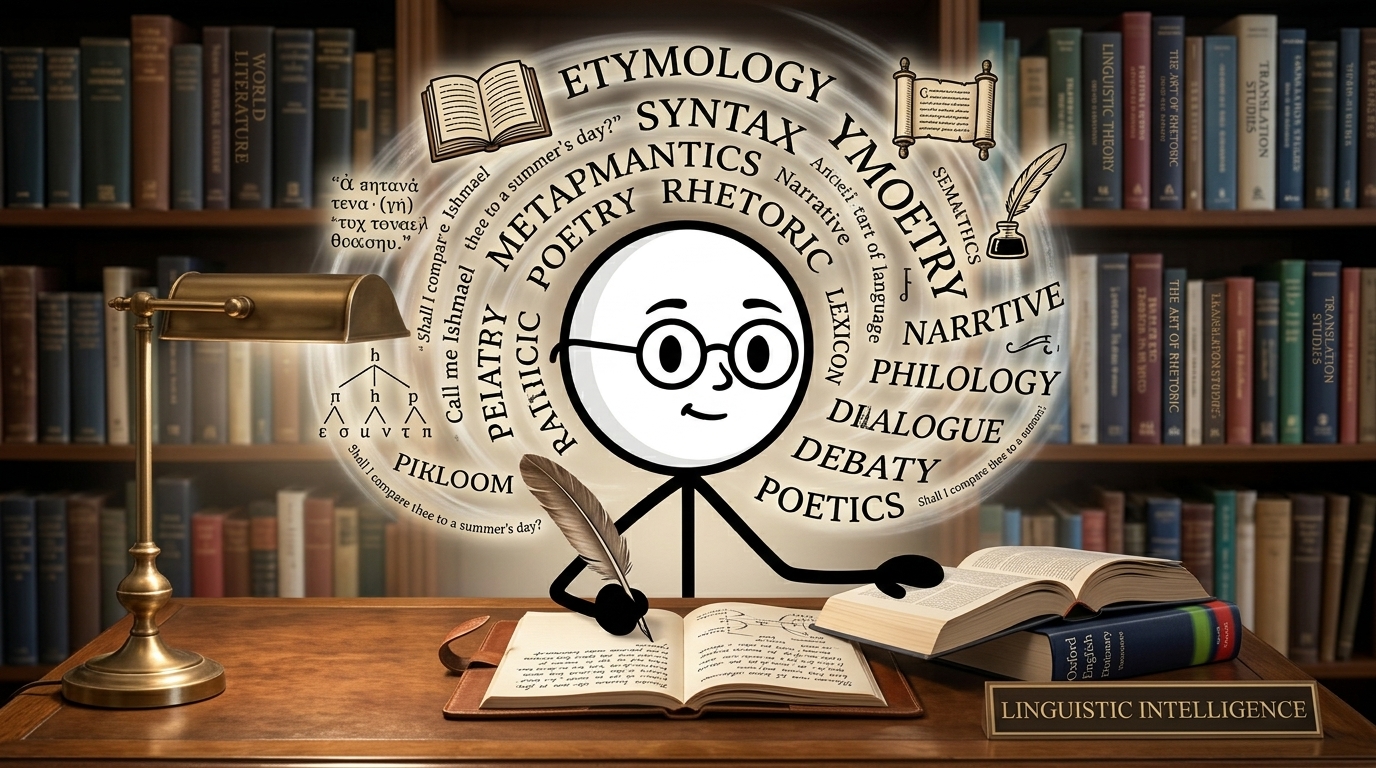
1. Linguistic intelligence
Using language with precision — finding the exact word that carries the exact weight. Writers, poets, storytellers, journalists, and anyone who can turn a vague feeling into a sentence that makes everyone else say that’s exactly it.
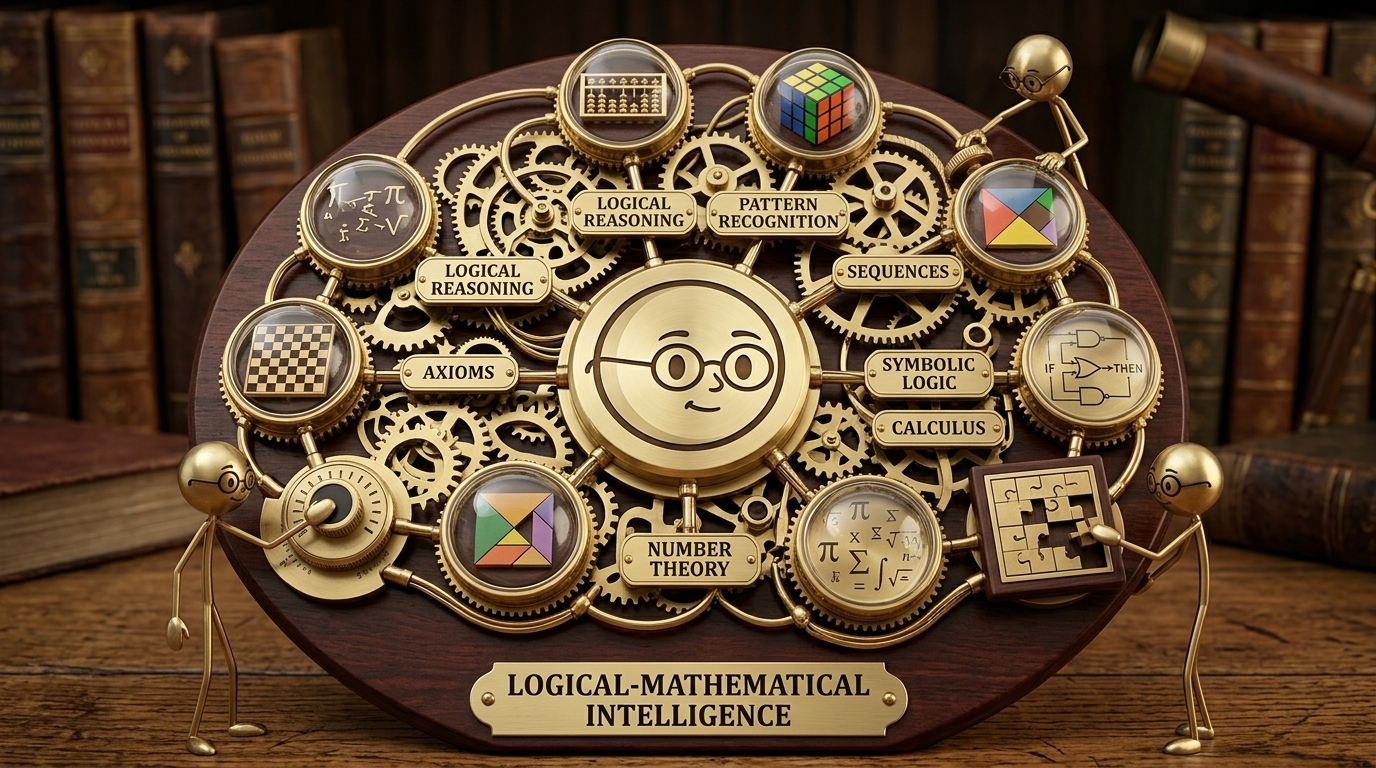
2. Logical-mathematical intelligence
Pattern recognition and abstract reasoning. Seeing the system operating underneath the visible data. These are the minds that look at chaos and think, there’s a structure in here somewhere.
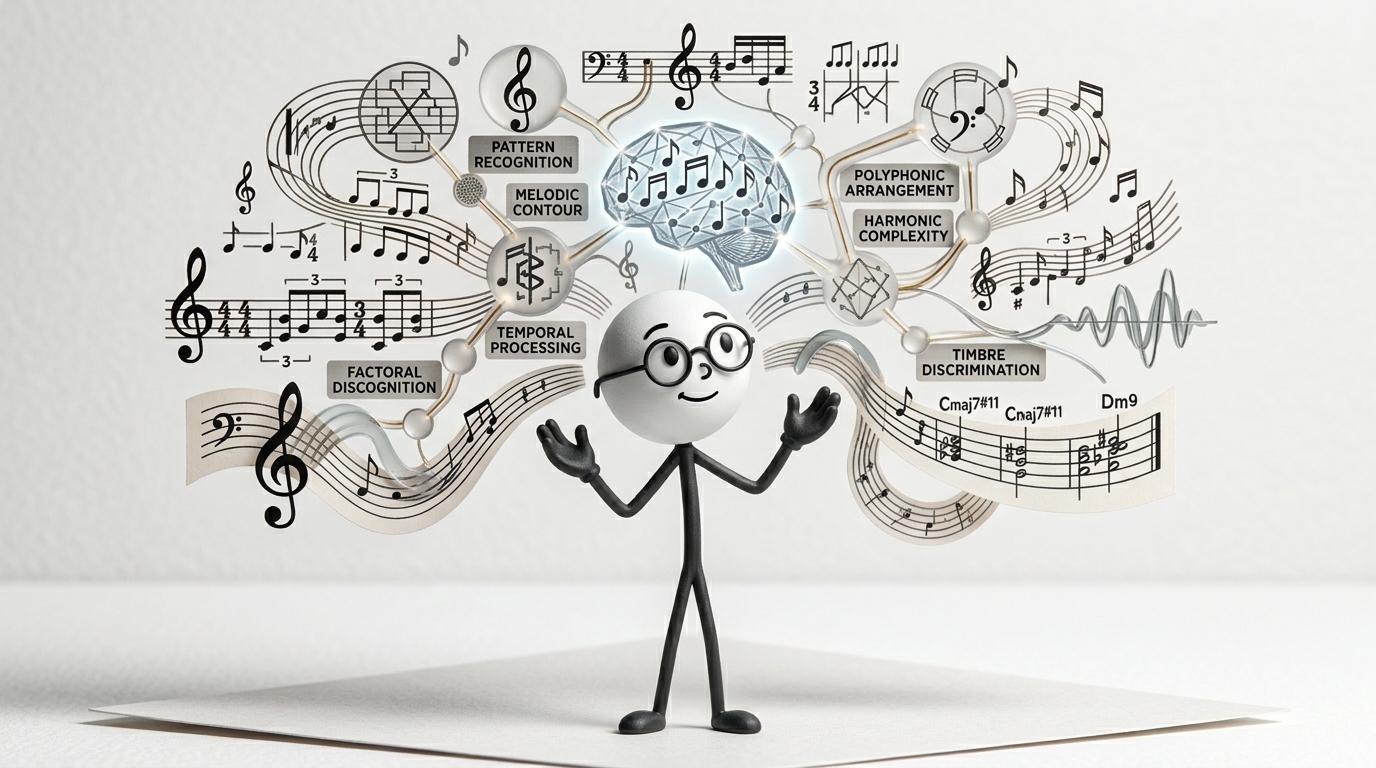
3. Musical intelligence
Not simply playing an instrument. Perceiving rhythm, harmony, pitch, structure, and emotional resonance through sound. Some people hear music. Others hear the scaffolding holding it up.
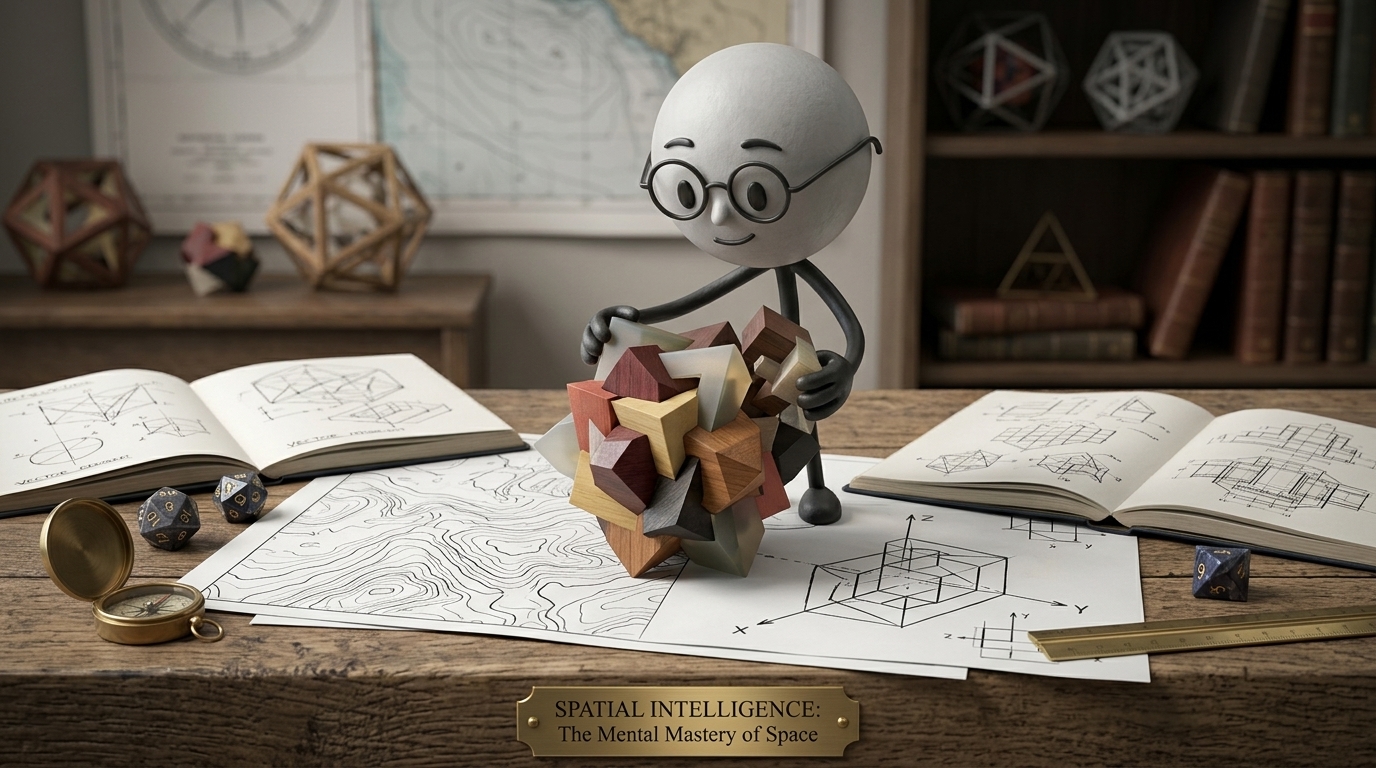
4. Spatial intelligence
Thinking in three dimensions — mentally rotating objects, distances, shapes, environments. Architects, surgeons, sculptors, engineers, designers, and anyone who can assemble IKEA furniture without entering a spiritual crisis.
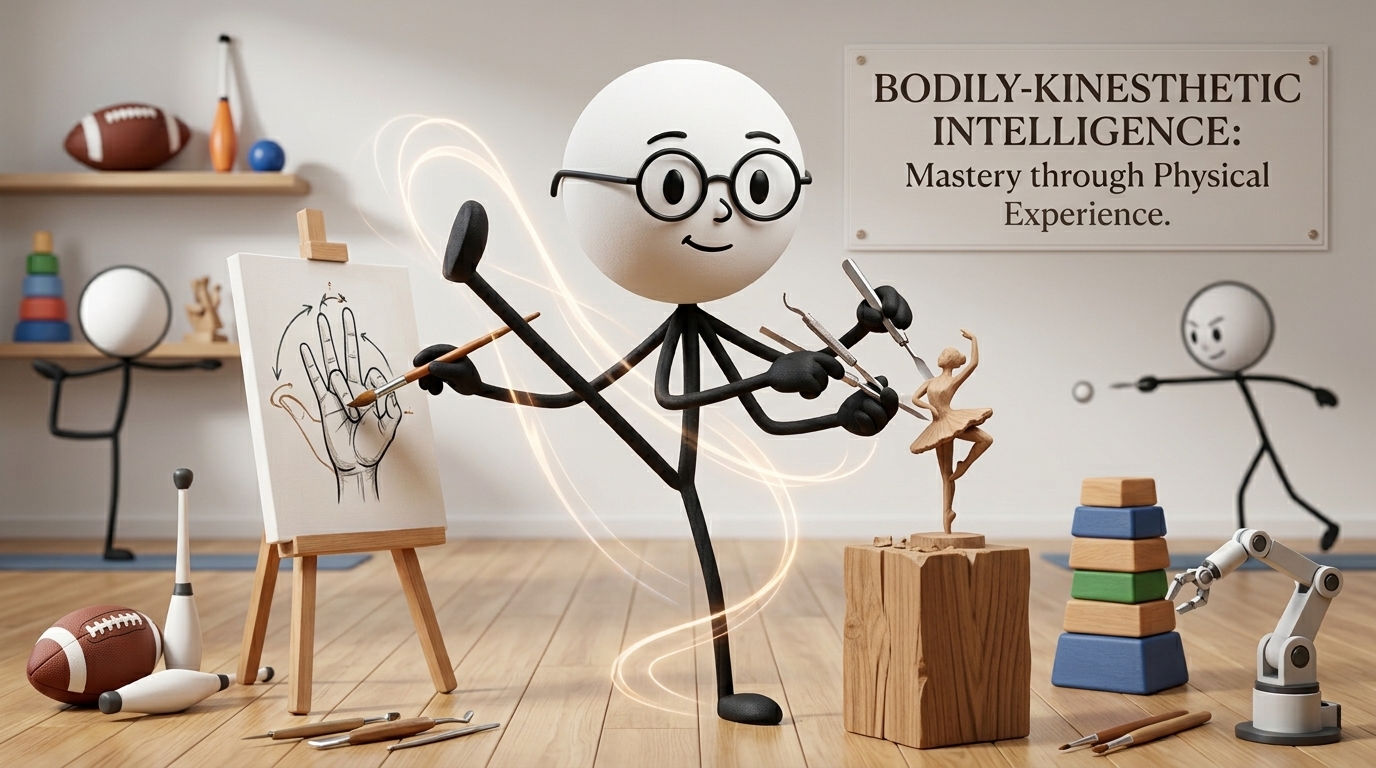
5. Bodily-kinesthetic intelligence
The intelligence of the body itself. The athlete who has read the game before the analyst has finished explaining it. The dancer who knows exactly where their body needs to be. The craftsman whose hands understand something several seconds before his mind finds the words for it.
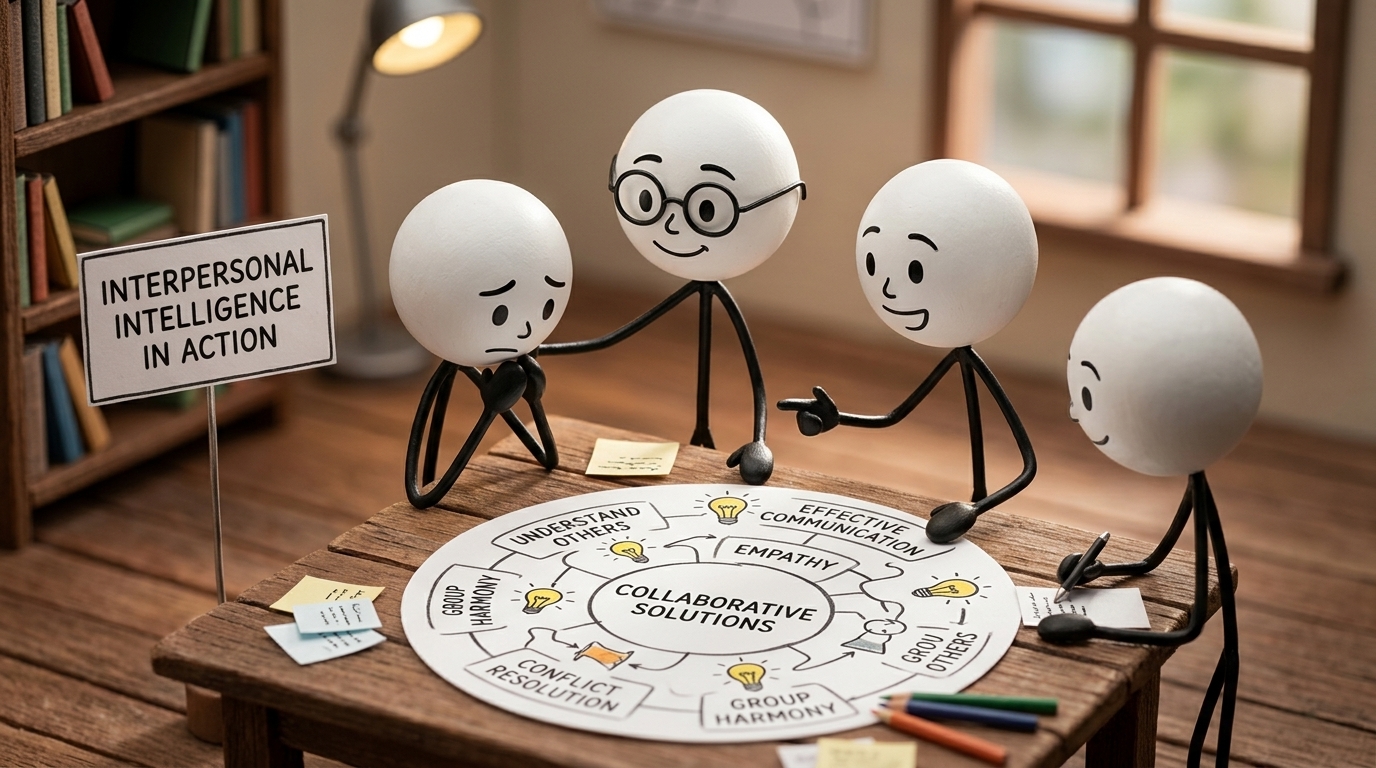
6. Interpersonal intelligence
Reading other people. Sensing what is happening beneath the surface of a conversation — the hesitation, the shift in tone, the thing someone is very deliberately not saying.
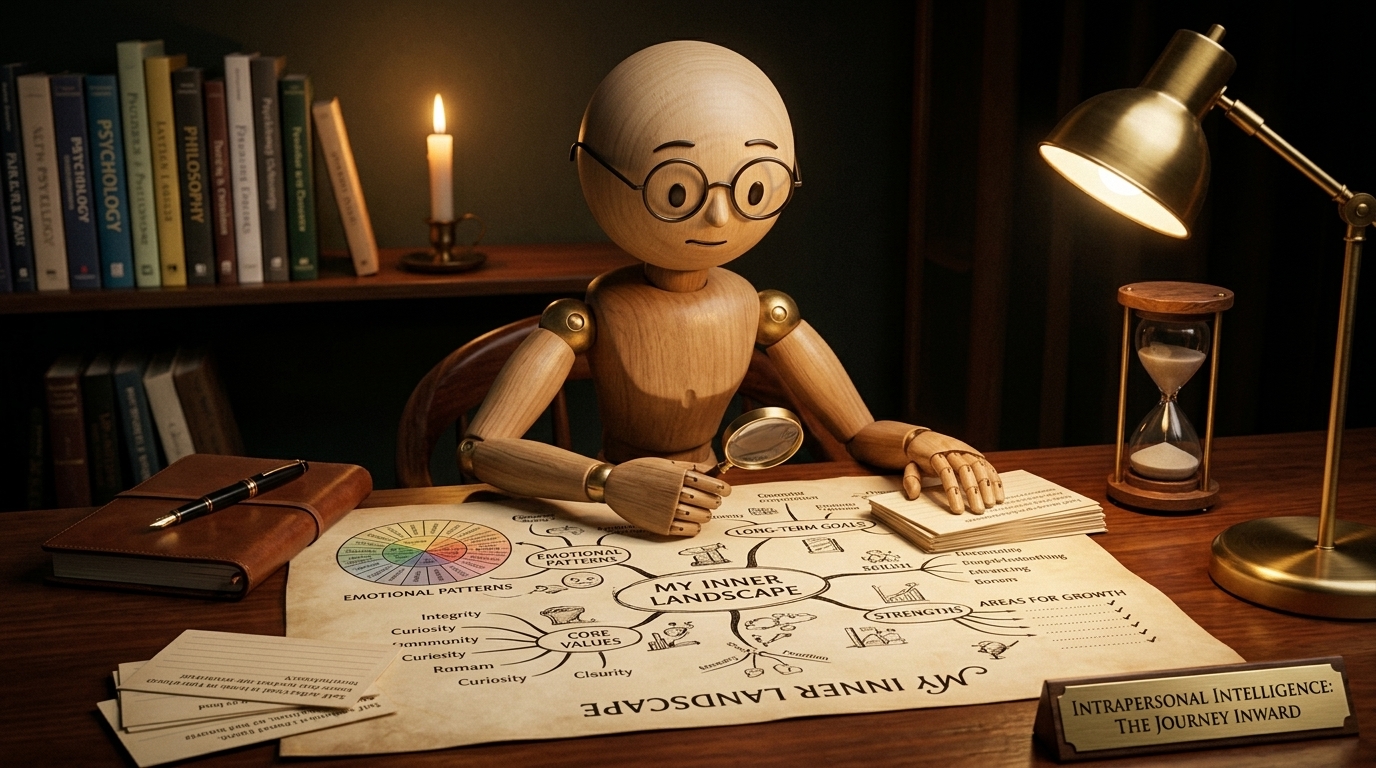
7. Intrapersonal intelligence
Understanding yourself: your patterns, your motivations, your fears, your contradictions, and the uncomfortable distance between who you perform as and who you actually are. It may be the most valuable one on the list, because knowing everyone else while remaining a complete mystery to yourself is a rather impressive form of incompetence.
The Two That Came Later

8. Naturalistic intelligence
Recognising and understanding patterns in the living world: plants, animals, ecosystems, geology, weather, systems that behave. Gardner added this one in the nineties. It is worth noting that indigenous peoples have held sophisticated, tested ecological knowledge for millennia that Western science has, in many cases, only recently got around to documenting and calling a discovery.
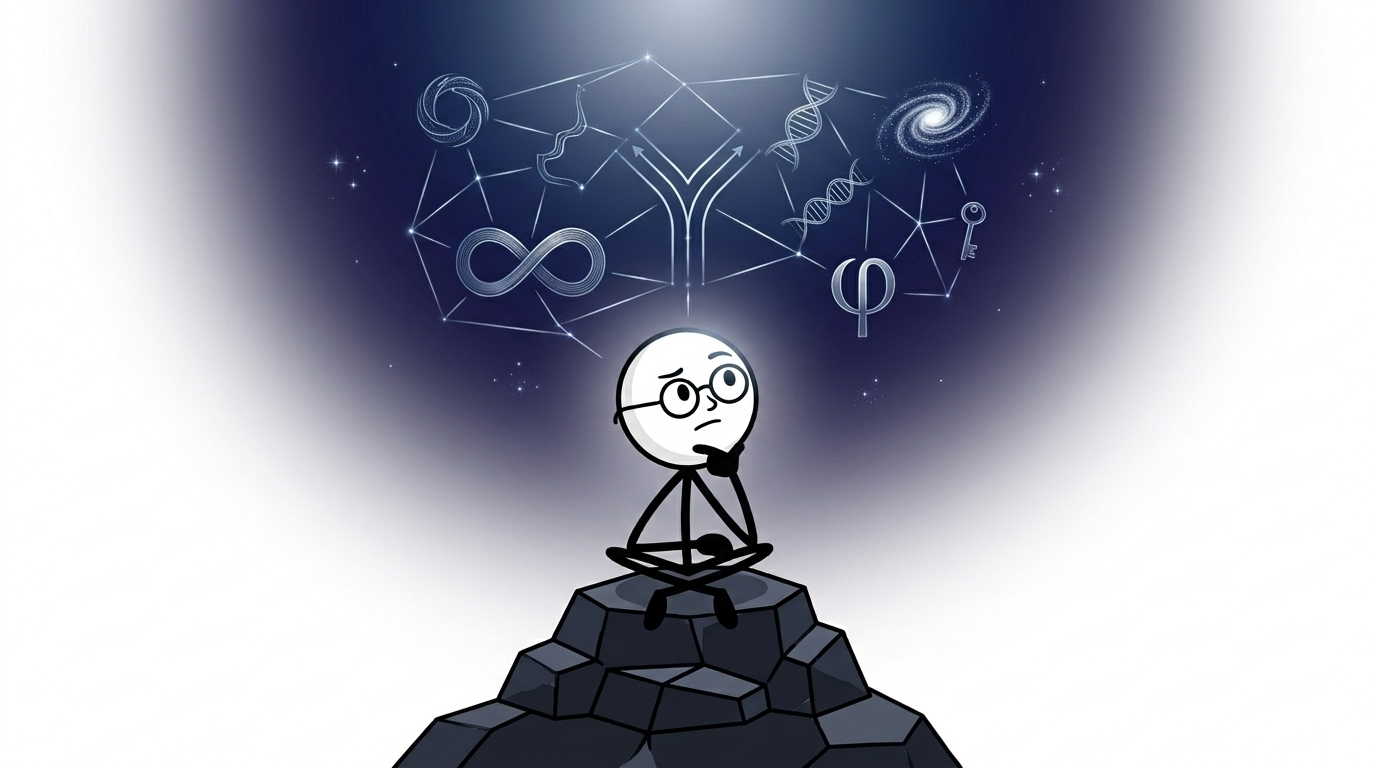
9. Existential intelligence
The capacity to sit with the largest questions — consciousness, meaning, mortality, purpose — not necessarily to solve them, but to stay in the room with them without immediately inventing a comforting answer. Gardner never fully committed to this one. He called it the “eight and a half,” which makes it the only intelligence on the list that arrived with a fraction attached.
Three That Came From Somewhere Else
10. Moral intelligence
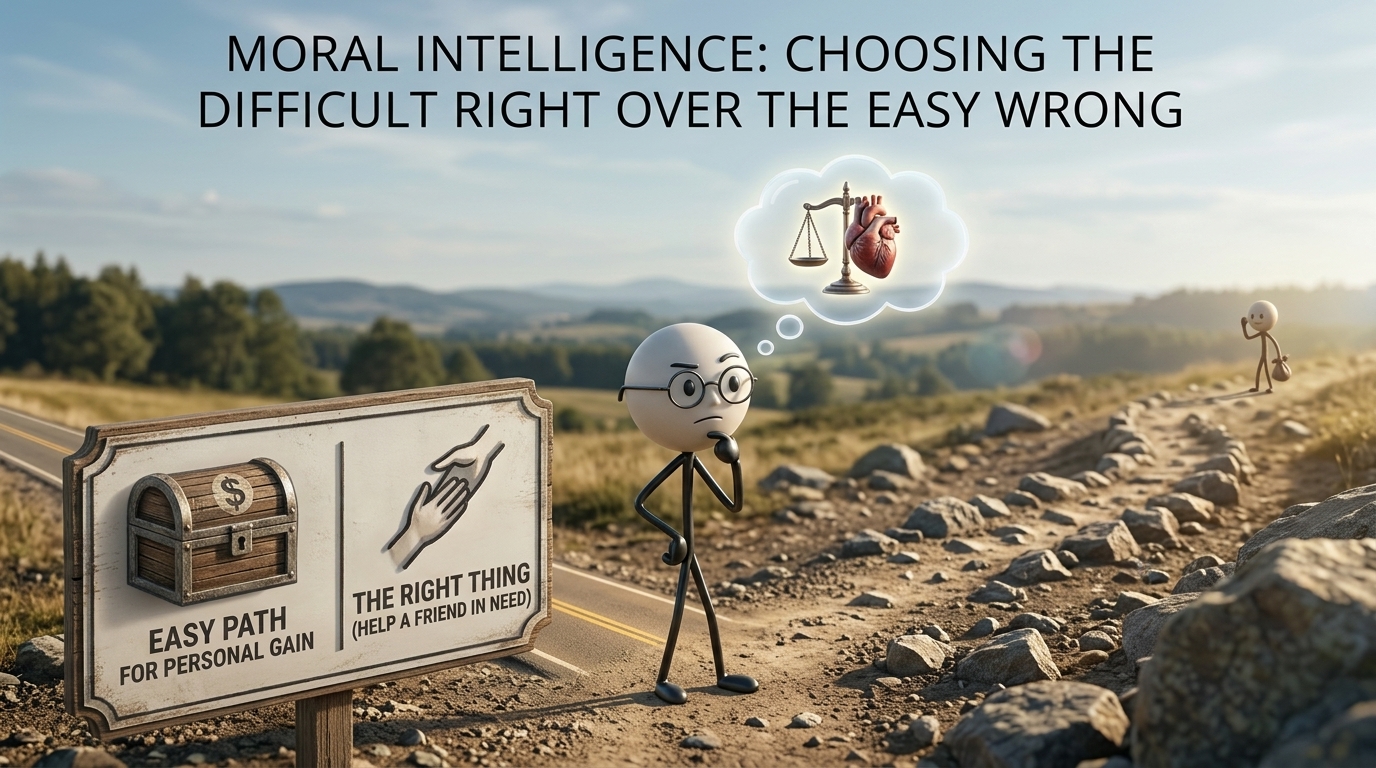
Navigating ethical complexity when there is no usable rulebook — recognising competing values, consequences and responsibilities, and holding the grey when everyone in the room would strongly prefer black and white. Gardner considered this one and declined to include it, arguing that morality is a matter of values and character rather than a computational capacity. Reasonable people have disagreed with him ever since, loudly.
11. Creative intelligence
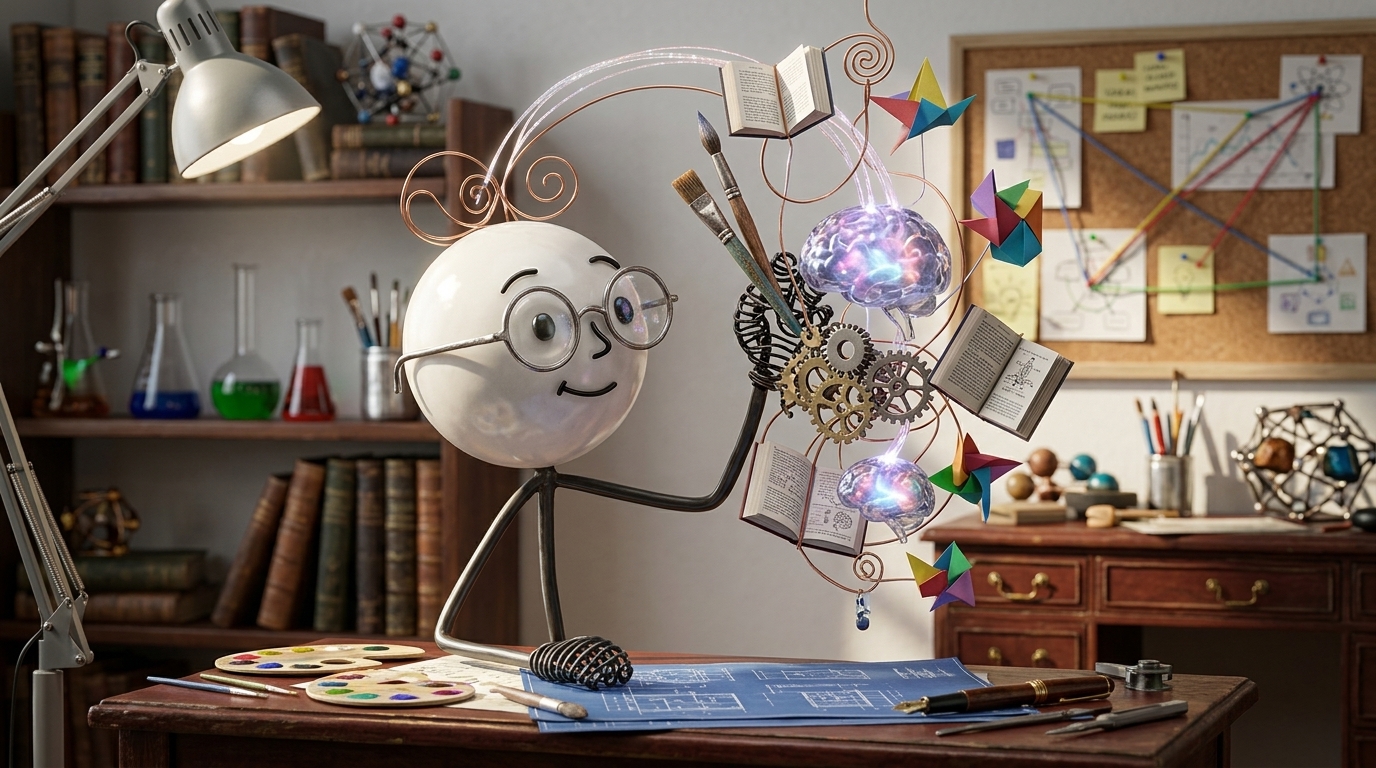
Connecting things that have never been connected, seeing a possibility that doesn’t exist yet and then dragging it into existence. This comes from Robert Sternberg’s work rather than Gardner’s. Creativity is not merely having ideas — ideas are cheap and everyone has them in the shower. It is making the unexpected connection and then doing the unglamorous work of making it real.

12. Emotional intelligence
Understanding and regulating your own emotions while reading and responding intelligently to everyone else’s: self-awareness, self-regulation, empathy, social awareness, relationship management. This is Salovey and Mayer’s work from 1990, which Daniel Goleman turned into a global bestseller five years later. Gardner has pointed out, fairly, that it lives mostly on top of his interpersonal and intrapersonal pair.
“The question was never are you intelligent? The better question is in which direction does your intelligence flow?” — One of those questions has an answer you can be failed on. The other one doesn’t.
The Argument Nobody Has Won
Here is the part that usually gets left out, and leaving it out does the idea no favours.
Psychometricians — the people who build and validate the tests — have never accepted Gardner’s framework, and they have a real case. When you measure a large group of people on a wide spread of mental tasks, the scores tend to correlate positively: people who do well on one generally do better than average on the others. That stubborn pattern is what the single-number view of intelligence is built on, and Gardner’s independent intelligences have never produced the direct evidence to dislodge it. The standard objection is that most of his list describes talents and abilities rather than intelligences, and that he won the argument by redefining the word.
Gardner’s answer is roughly: yes, and the word needed redefining. He has also spent decades trying to kill the “learning styles” industry that attached itself to his name, which was never his claim and which the evidence does not support. Whatever you do with this list, do not let anyone tell you a child is a “visual learner” and should therefore be taught differently. That is not what any of this says.
So the science is genuinely unsettled. What isn’t unsettled is the damage. Whether or not spatial reasoning deserves the word intelligence, a system that grades two abilities and reports one number will produce millions of people who believe they were weighed in full. Every school report is essentially a Rotten Tomatoes score for a film nobody has finished making, and we hand it to fifteen-year-olds as though the reviews are in.

The room measures certain abilities, under certain conditions, using certain methods — and then delivers the result like a verdict. Photo: Unsplash
Read It
Gardner is still writing, still revising, and still refusing to sign off on the ninth one — his work is collected at howardgardner.com, and the research group he co-founded at Harvard, Project Zero, has published on this for over fifty years. Frames of Mind is the original, and it is more careful and more hedged than the version of it that escaped into the world.
Back to the Chair
I have written before about what happens when education is optimised for throughput, and about what the classroom might look like once the machines arrive properly. This is the quieter half of the same problem. You can reform the curriculum, the timetable, the technology and the teacher training, and none of it matters much if the exit document is still a single number that a sixteen-year-old will carry around for forty years like a diagnosis.
Cutting hair, for what it’s worth, is four of these at once. Spatial, because you are working on a moving three-dimensional object you can only ever see two sides of at a time. Kinesthetic, because your hands make about two hundred decisions your mouth never hears about. Interpersonal, because half the job is noticing what someone means rather than what they asked for. And intrapersonal, because the other half is knowing when your own opinion about their fringe is not actually relevant. None of that appeared on a report card. All of it has paid a mortgage since 1993.
I did not say any of this to the mother in my chair. It would have been a lecture, and nobody comes to a salon for a lecture about developmental psychology, however strongly the hairdresser may feel about it. I said the boy sounded like someone who should be doing something with his hands, and that if he wanted a Saturday job to find out, I could use one.
He starts in September. We’ll see which direction it flows.
The Salon California Journal is a space for ideas, culture, and conversation from my chair in Brasschaat, Belgium. I write about beauty, technology, society, and the intersections between them.