

Age Gap RelationshipsIs
Age Gap Relationships: The Question Society Keeps Refusing to Ask
A reality show removed age from the equation and let two people find each other first. Then the families arrived. Forty-five minutes of analysis. Very confident conclusions.
A couple of weeks ago, my wife and I were doing what sophisticated adults with long working days do on a Tuesday evening: sitting on the couch in a state of approximate consciousness, negotiating the remote with the weary authority of two people who have been making this particular compromise for years. We landed on a reality dating show. I was prepared for the usual parade of attractive people making poor decisions in expensive locations. What I got was considerably more interesting than that.
[Switches to serious face.] The premise was simple, and the simplicity was the point. A group of men and women arrived at a resort for speed dating. There was only one rule: nobody was allowed to reveal their age. Age gap relationships — whether a feature or a problem — could not be prejudged. The producers wanted to remove one of society’s favourite shortcuts and force people to rely on chemistry, attraction, conversation, shared interests, and that increasingly rare activity known as getting to know someone.
An odd experiment, really. Imagine evaluating a person before checking the label.
8%of couples have age gaps of 10+ years
300M+
people use dating apps globally
3 in 4
adults say shared values matter more than age in a partner
40%+of adults have used an online dating service or app
The Experiment
The contestants ranged from their early twenties to around sixty. If two people felt a connection, they could spend time together exclusively. After a few days, they would enter a “commitment room” where they revealed hidden facts about themselves — including their age. At that point they could decide if they wanted to continue.
Some relationships ended there. A few people could not get past a particular detail from someone’s past. Others stumbled over the age gap once it had a number attached to it. Fair enough. Everyone has preferences, and preferences deserve respect even when they are inconvenient.
What caught my attention were the couples who chose to continue despite the surprise.
These were people who had already found what most dating apps promise and rarely deliver. They enjoyed each other’s company. They laughed together. They were attracted to one another. They shared values and ambitions. They had found, in other words, the qualities that supposedly matter. Then they discovered a number. According to Psychology Today, the factors most consistently linked to long-term relationship success are emotional compatibility, shared values, communication style, and mutual respect — none of which appear on a birth certificate.
“Please collect your belongings and proceed to the nearest socially approved partner.” — The unspoken message from families who had been in the room for forty-five minutes.
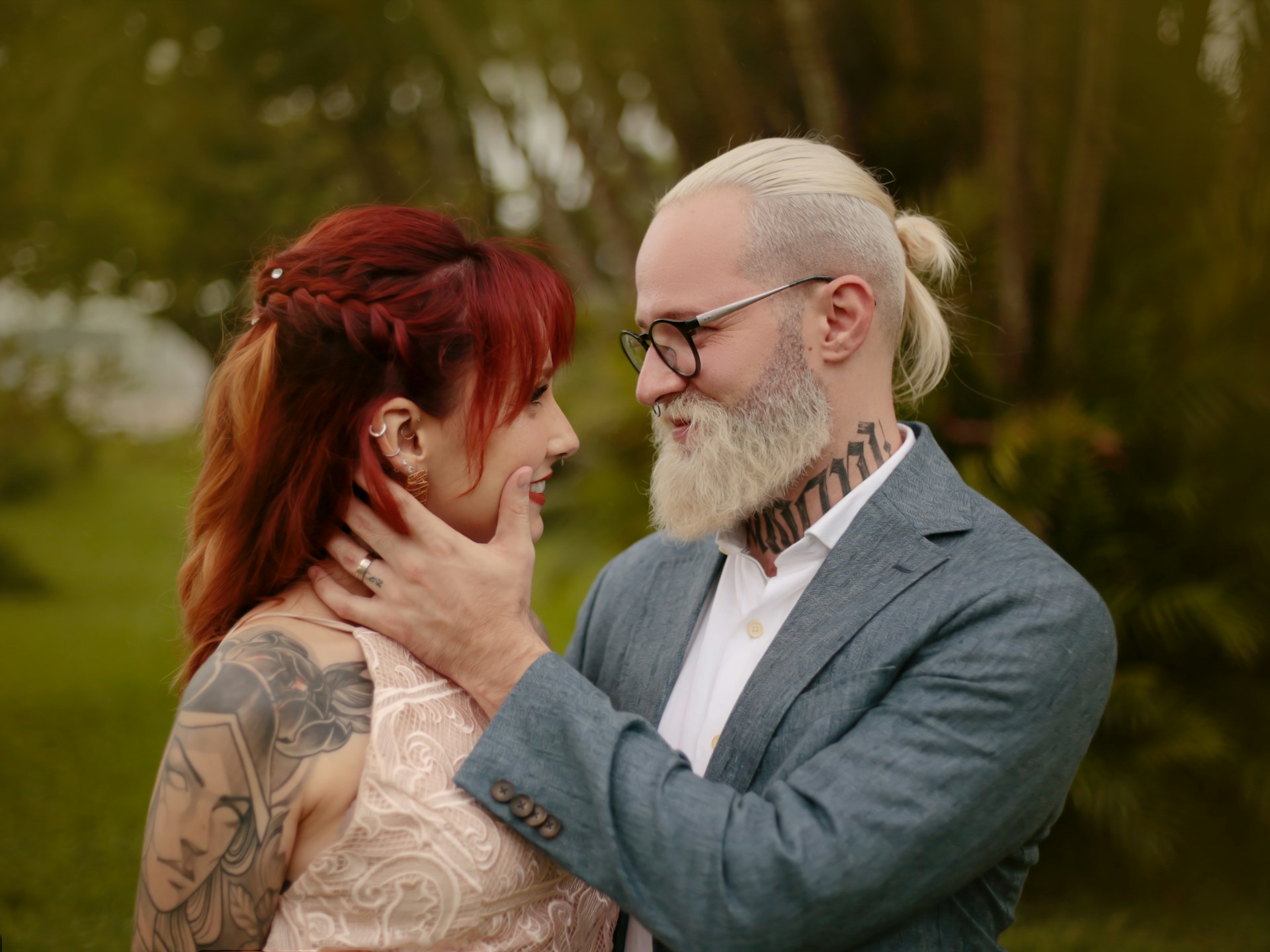
What Chemistry Actually Looks Like
After the commitment room revelation, the couples moved into apartments together in the city. This was where the experiment became less romantic and considerably more realistic.
Anyone can look compatible over candlelight and cocktails — the lighting does a great deal of heavy lifting that gets attributed to chemistry. The real test begins when two people must decide what to eat for lunch every day, share a bathroom, negotiate habits, tolerate quirks, and discover that the person they adore leaves cupboard doors open for reasons known only to them and perhaps a higher power.
Some couples struggled. Others grew stronger. This, too, is data. It tells you something that no age calculation can.

Photos: Unsplash
Then Came the Friends & Families
This was the fascinating part.
The couples had spent weeks learning about each other. Their families and friends spent less than an hour learning almost nothing — and somehow arrived with very strong opinions. Many of those opinions revolved around age gaps ranging from twenty to thirty years in either direction. Older man, younger woman. Older woman, younger man. It hardly mattered which configuration. The verdict was often swift.
Relationship denied.
Application rejected.
Please collect your belongings and proceed to the nearest socially approved partner.
What struck my wife and me was how little curiosity accompanied these judgments. Very few people seemed interested in asking what qualities had created such a strong bond in the first place. What made this person a good partner? What values did they share? How did they treat one another? Were they genuinely happy?
Those questions seemed secondary. The age gap had entered the room, and apparently no other evidence was admissible.

Society, Apparently, Needs Only a Coffee
The final stage took place at a mountain resort. One couple at a time met to decide if they would continue their relationship despite the approval, disapproval, or confusion of the people around them.
Some chose each other. Others chose society. Both decisions carried a price. That part felt true in a way that most reality television does not.
What stayed with us was the contrast. Two strangers spent weeks discovering qualities they admired in one another — intellectually, emotionally, physically — without knowing each other’s age. Then family, friends, and the general social consensus arrived, asked a handful of questions, performed roughly forty-five minutes of analysis, and confidently declared the relationship invalid because of a number.
The confidence was impressive. Scientists spend years reviewing evidence before reaching conclusions. Society apparently needs only a coffee and a first impression.
According to Pew Research, about 8% of married couples in the US have age gaps of ten years or more. Studies consistently show that relationship satisfaction is more strongly predicted by compatibility in values, communication patterns, and emotional intelligence than by proximity in age. The American Psychological Association notes that couples who navigate social disapproval together often develop stronger communication skills and higher relationship resilience as a result — which is one of those findings that sounds surprising until you think about it for a moment.

The Salon California Journal is a space for ideas, culture, and conversation from my chair in Brasschaat, Belgium. I write about beauty, technology, society, and the intersections between them.