The Line
They Didn’t Move. The Line Moved.
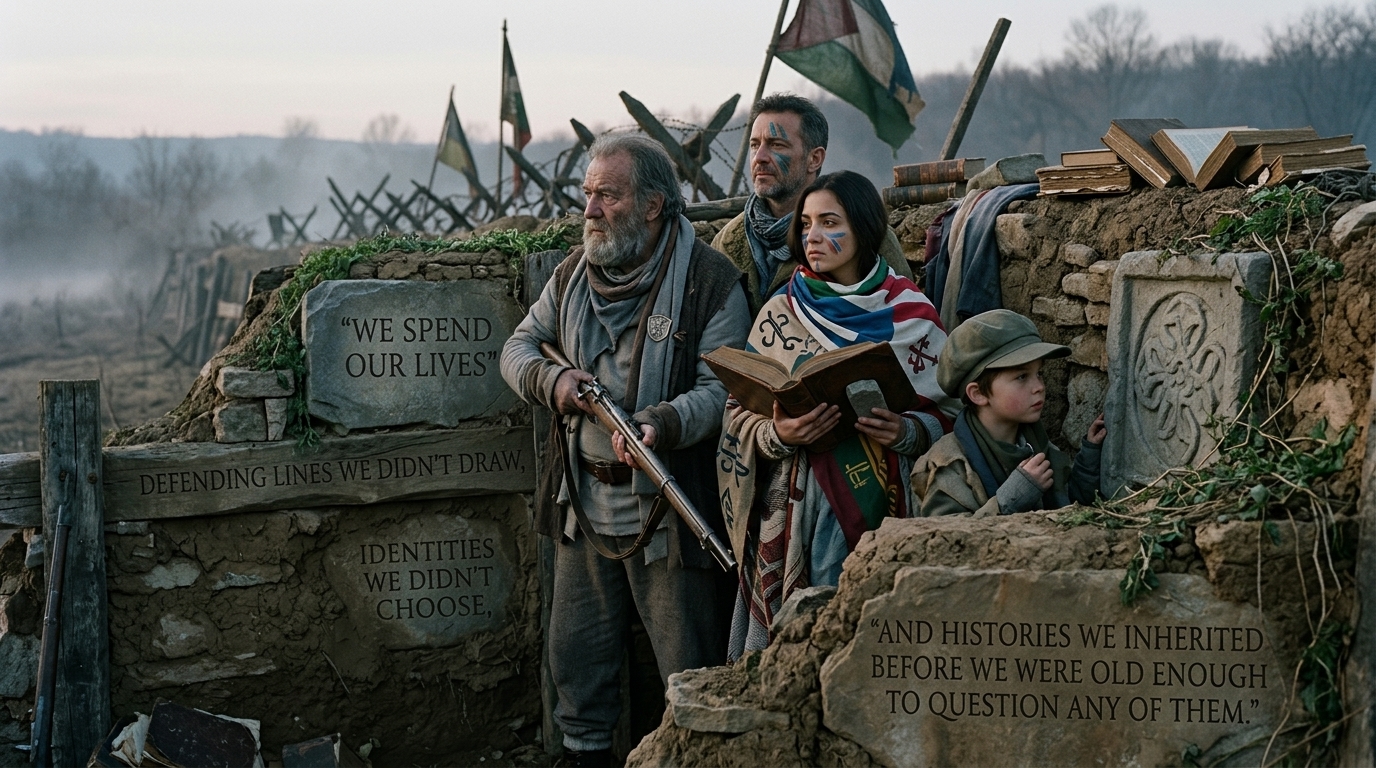
A few strokes of a pencil, and eventually an enormous amount of history. We spend our lives defending lines we did not draw and identities we did not choose.
A client was telling me about her grandmother, who grew up speaking French in a village that is now, officially and permanently, Flemish.
“One year the school was in French,” she said. “Then it wasn’t.”
I asked whether the family had moved.
She laughed. “No. Nobody moved. The line moved.”
I have not been able to stop thinking about that sentence since.
1916 the year two diplomats agreed how to divide the Arab provinces of the Ottoman Empire between them
5 weeks the time given to a British lawyer to draw the border between India and Pakistan
14 million people displaced by the result, in the largest migration in human history
0 of the people living there who were asked, on either occasion
A Few Strokes of a Pencil
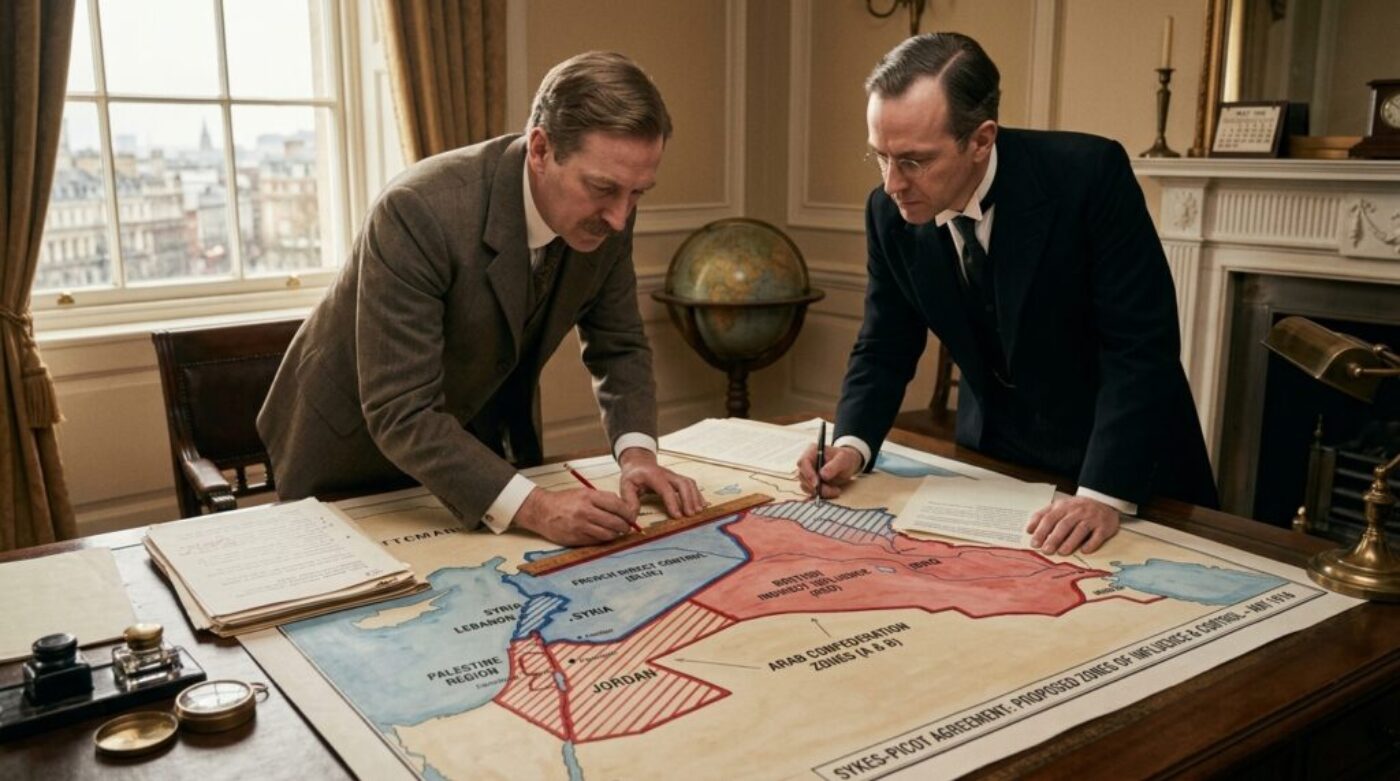
In May 1916, two men sat over a map of the Middle East and drew lines.
One was the British diplomat Mark Sykes. The other was the French diplomat François Georges-Picot. They were negotiating how Britain and France would divide much of the Arab territories of the Ottoman Empire between their respective spheres of influence after the war.
They were looking at a region often understood through the broader historical geography of the Levant — a place where communities had lived alongside one another, traded, fought, intermarried and shared histories for centuries. And now two European powers were deciding how much of it would belong to whom.
Sykes is supposed to have described his proposal like this: “I should like to draw a line from the ‘e’ in Acre to the last ‘k’ in Kirkuk.”
Not a river. Not a mountain range. Two letters, printed on the map in front of him.
A line on a map.
A few strokes of a pencil.
And eventually, an enormous amount of history.
What became known as Sykes–Picot was one of the foundations of the political arrangements imposed after the Ottoman Empire collapsed. It divided territory into British and French zones of direct and indirect control, and it shaped the political geography from which modern Syria, Iraq, Lebanon, Jordan and the Palestine region emerged.
And this is where the story becomes uncomfortable.
Was the fragmentation of the region simply the consequence of competing imperial interests? Or did dividing the territory into separate spheres also make it easier for outside powers to influence and control?
The documents show Britain and France negotiating their own territorial interests. Whether every later border was deliberately designed as part of one grand strategy to keep the region permanently weak is a much larger claim, and the historical record is more complicated than that.
But the result was unmistakable. The region was being reorganised by powers that did not represent the people living there.
Not because rivers demanded those borders. Not because ancient civilisations had conveniently left behind a blueprint.
Because empires, diplomats, wars, negotiations and political interests drew the lines.
Five Weeks
Then, in 1947, another line was drawn. This time across British India.
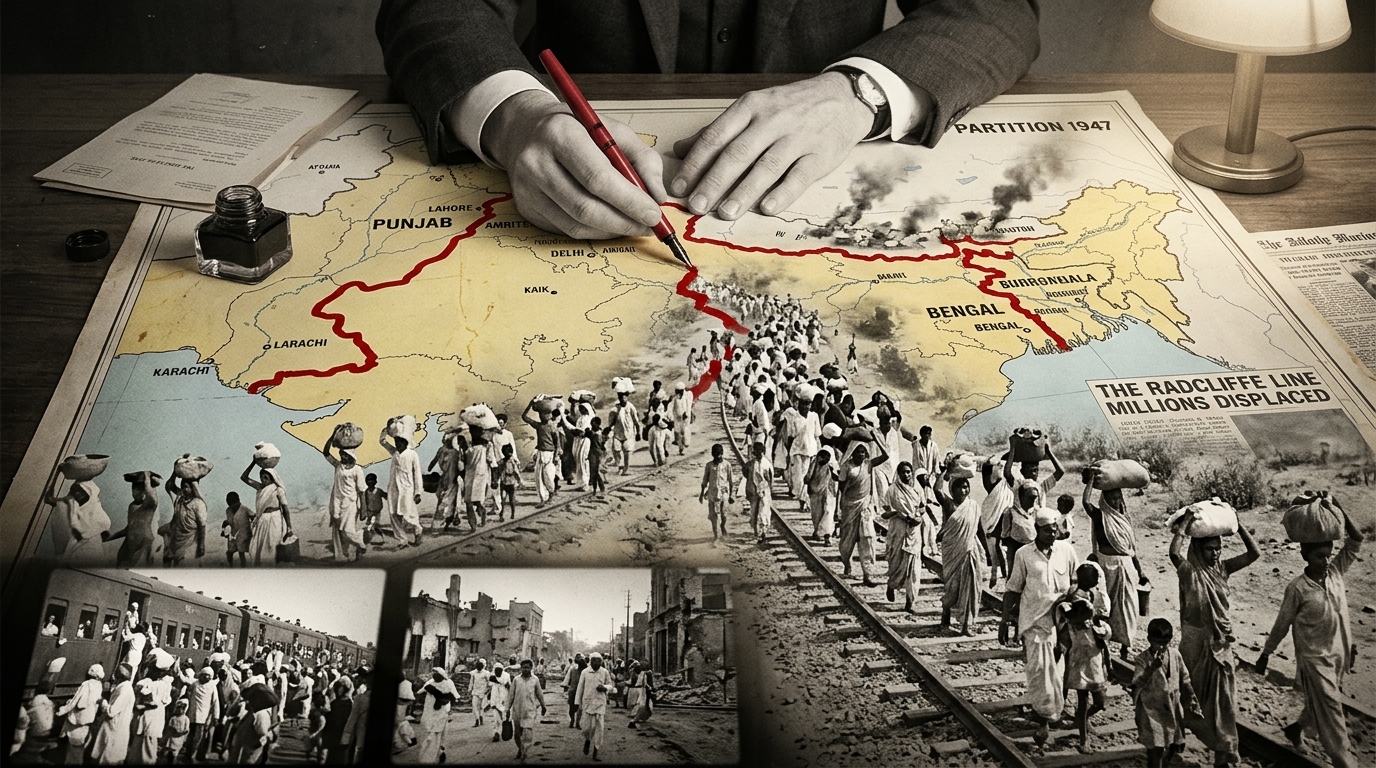
The man overseeing the boundary commissions was Cyril Radcliffe, a British lawyer who had never visited India before. He set foot in the country for the first time in July, and he was given roughly five weeks to help determine the new borders between India and Pakistan.
Five weeks.
Think about that. Five weeks to draw a line across a land inhabited by hundreds of millions of people.
The consequences were catastrophic. Partition displaced roughly fourteen million people and unleashed enormous communal violence. Estimates of the dead vary widely, from hundreds of thousands to more than a million, and the honest answer is that nobody knows.
Families were separated. Homes were abandoned. Entire communities were uprooted. People who had lived on one side of an invisible boundary suddenly found themselves on the other.
Radcliffe refused the fee he had been offered, left India shortly afterwards, and never returned. He reportedly explained that if he went back, there would be millions of people with reasons to be angry with him.
Imagine the absurdity. A man arrives in a country he has never visited. He studies maps. He draws lines. Millions of people wake up on the other side of them.
And then he goes home.
You Didn’t Choose Any of It
And then something extraordinary happened.
Generations of human beings were born inside those lines and taught to experience them as something almost sacred.
Think about the flag you defend. The anthem that gives you goosebumps. The border you instinctively call ours.
Here is the uncomfortable part. You didn’t choose any of it.
You were born somewhere. Someone had already drawn a line around that somewhere. And you inherited the identity attached to it.
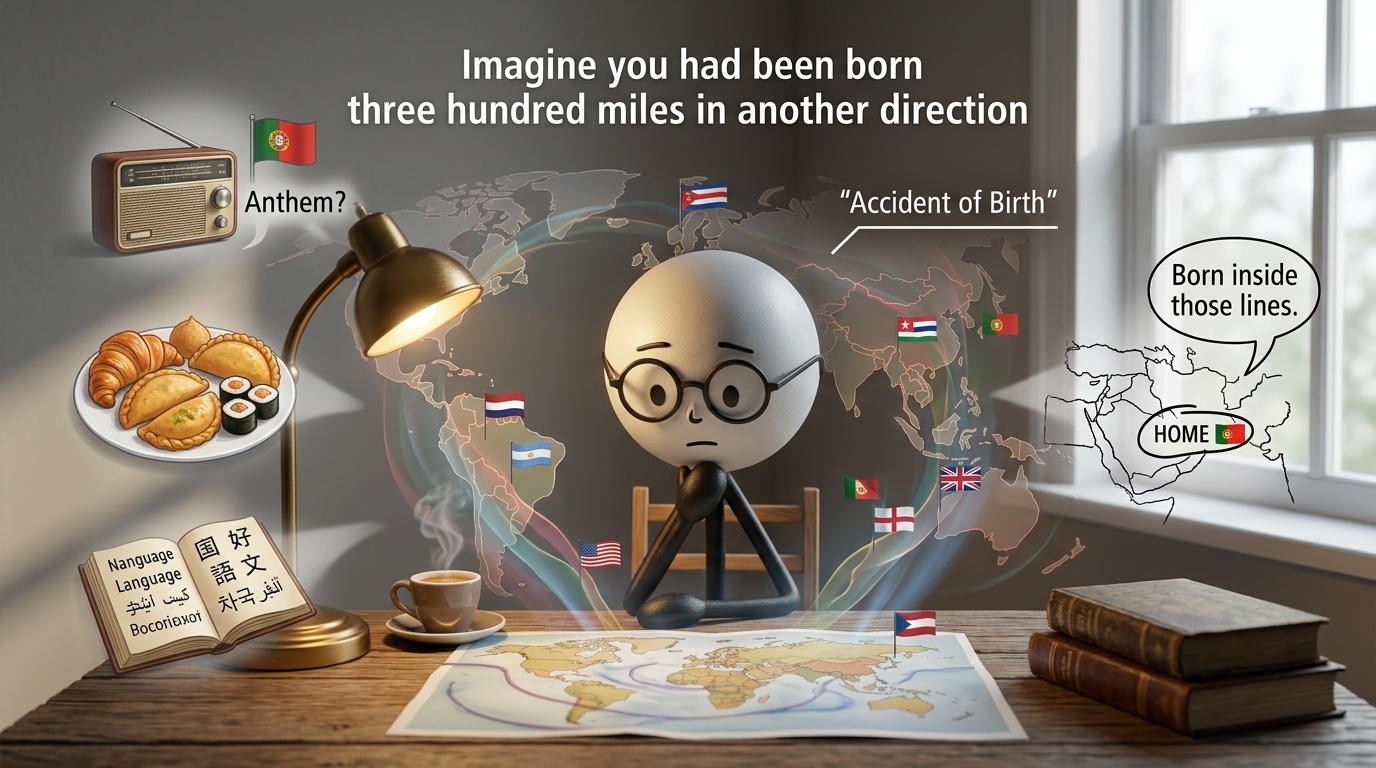
Now run a little thought experiment. Imagine you had been born three hundred miles in another direction.
Same brain. Same personality. Same capacity to love, laugh, worry, dream and get irrationally angry about things on the internet. But a different birthplace.
You might speak another language. Celebrate different holidays. Sing a different anthem. Eat different food. Call a different piece of land home.
And you might feel exactly the same certainty that your identity belongs to that flag.
That is the strange thing about nationality. The feeling is real. The attachment is real. The love can be real. But the fact that you inherited this particular national identity rather than another one is, to a remarkable degree, an accident of birth.
You didn’t choose your birthplace. You didn’t choose your first language. You didn’t choose the history you were born into. You didn’t choose the flag you were taught to recognise as yours.
And yet somewhere along the way, we start confusing what we inherited with what we are.
“We spend our lives defending lines we didn’t draw, identities we didn’t choose, and histories we inherited before we were old enough to question any of them.” — From the e in Acre to the last k in Kirkuk. Typography, as foreign policy.
So What Would Be Different?
The obvious question is what the world would look like without those lines — without colonialism’s habit of dividing whatever it found.
Nobody can answer that honestly. Counterfactual history is a parlour game.
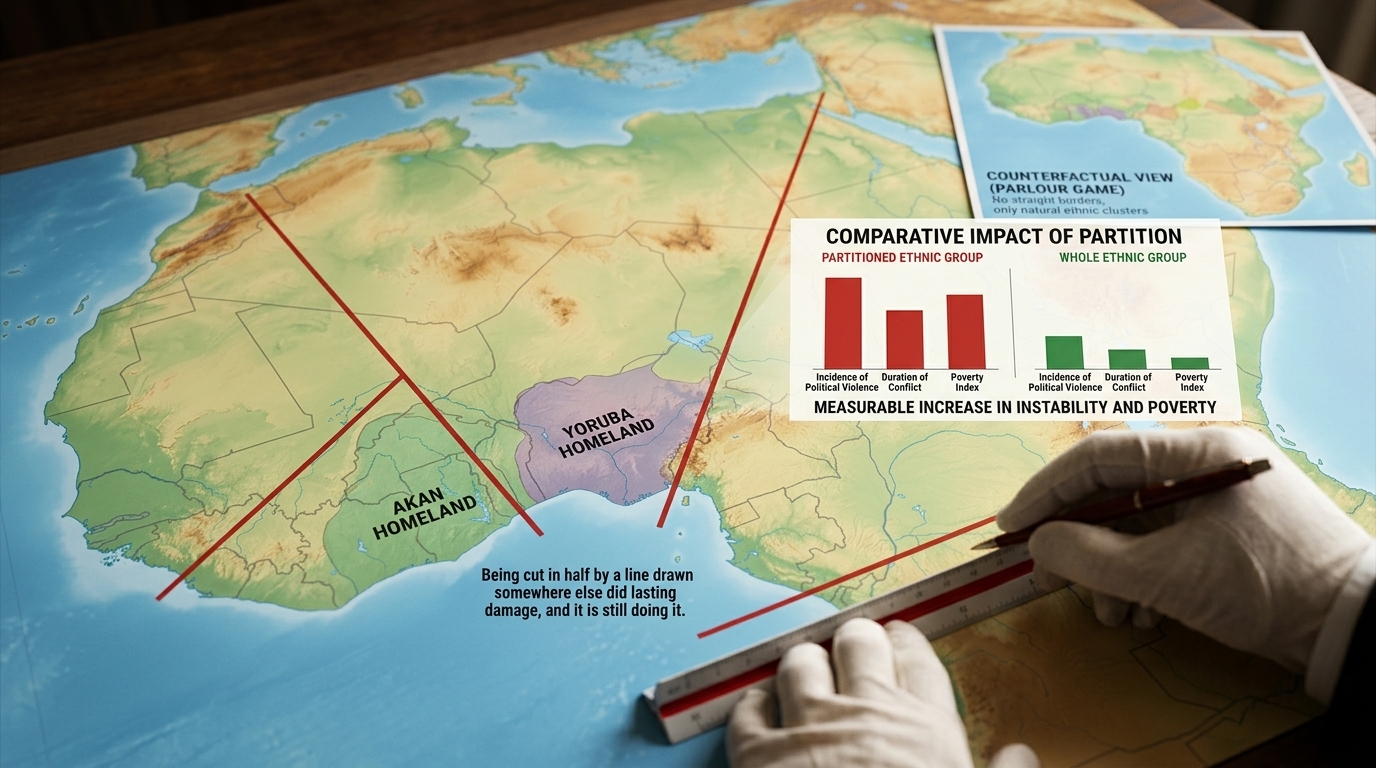
But there is one piece of evidence worth knowing. Two economists mapped the historical homelands of African ethnic groups against the colonial borders later drawn across them, and compared the groups a border happened to cut in half with the groups it happened to leave whole. The partitioned ones have suffered measurably more — more political violence, lasting longer, and more poverty.
Which is not a claim that borders explain everything. It is a narrower one, and harder to argue with. Being cut in half by a line drawn somewhere else did lasting damage, and it is still doing it.
Back to the Chair
Maybe nationality is part of who you are. Maybe it becomes part of your story, your culture, your memories, your sense of belonging. It certainly is not nothing, and I would not talk anybody out of it.
But it isn’t the whole story.
Because before you were American, Indian, Pakistani, Syrian, Lebanese, French, British, Palestinian or anything else, you were simply born.
The label came later. The border came later. The story came later.
I’ve written before about the single word that decides how a country greets you. This is what sits underneath it. Every argument about who belongs where eventually arrives at a line, and every line was drawn by somebody, on a particular afternoon, for reasons of their own.
A border can tell you where you were born. A passport can tell you what government claims you. A flag can tell you which nation you inherited.
But none of them can tell you the full measure of who you are.
My client’s grandmother learned that in a village a short drive from here, without anybody drawing a thing across the Middle East. One year the school was in French. Then it wasn’t. She didn’t move.
So here is the rather inconvenient question.
How much of who you are is really you — and how much is simply where the line landed?
The Salon California Journal is a space for ideas, culture, and conversation from my chair in Brasschaat, Belgium. I write about beauty, technology, society, and the intersections between them.