The Richest
Squirrels Taking Credit for Evolution
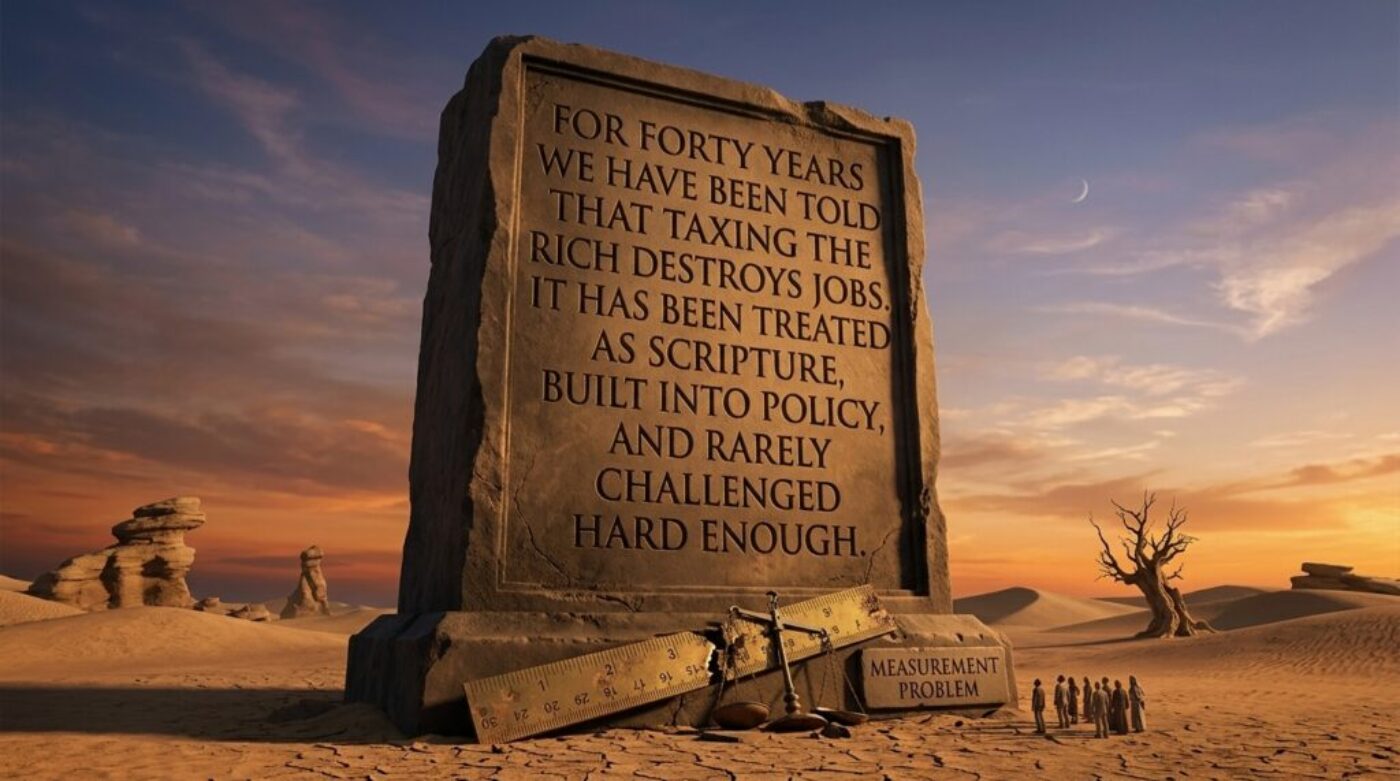
For forty years we have been told that taxing the rich destroys jobs. It has been treated as scripture, built into policy, and rarely challenged hard enough. It also has a measurement problem.
In 2008 I had a salon in La Jolla and people on the payroll. I had opened it in 1991, so by then it had been running seventeen years — long enough to believe I understood my own business.
Then the crash came, and I learned to read a different instrument.
Nobody announced it. Not one client ever sat down in the chair and said the economy has frightened me. What happened was that six weeks quietly became eight. Then eight became nine. The colour appointment turned into a cut. People who had been coming since the early nineties started apologising for leaving it so long, which is its own kind of signal, because nobody apologises for a decision they are comfortable with.
That is what a downturn looks like from behind a chair. Not empty. Slower. Every individual decision completely sensible, and collectively a hole in the book you could put your hand through.
Here is the part that matters for everything below. A stylist’s day holds a fixed number of chair-hours. When every client on your list extends the gap between visits by a third, you do not need those hours filled the way you did — and the question of how many people you can afford to keep becomes arithmetic you do at a kitchen table, late, with a calculator.
At that exact moment, the country I was working in was having a loud public argument about whether taxing high earners would destroy jobs.
Nobody asked me. And I was, on a very small scale, precisely the sort of person they were arguing about.

One Idea, Repeated
It is astonishing how much power a single idea can have. Give a society an idea, repeat it often enough, dress it up in serious language, and eventually people stop asking whether it is true. They simply start building policy around it.
Consider this one: tax the rich, and you destroy jobs.
For decades this has been treated almost like economic scripture — central to conservative economic thinking, rarely challenged with enough force from the other side, and baked into an extraordinary quantity of public policy.
But here is the uncomfortable part. Sometimes the things we are absolutely certain about are absolutely wrong.
For thousands of years humans believed the Earth sat at the centre of the universe. It didn’t. And an astronomer who carried on believing it would produce some impressively bad astronomy. The same thing happens in economics. If you are convinced that wealthy people are the ones who create jobs, and that their wealth must therefore be protected at almost any cost, you will end up designing policy around a myth and calling it prudence.
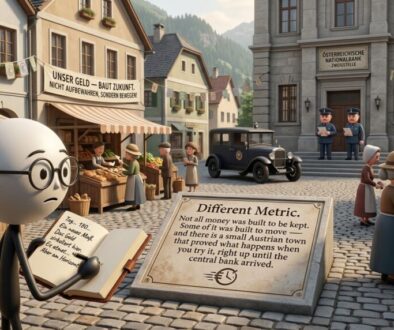
1932 the year an Austrian town issued its own money, deliberately designed to lose value if you held it
30% the unemployment rate it returned to once the central bank shut the experiment down
1 Sept 1933 the date that happened, on the grounds that only central government may issue currency
1 ski jump, built in the meantime, along with a bridge and a new water system
Rich People Don’t Create Jobs
I should say straight away that this argument is not mine. Its sharpest version belongs to Nick Hanauer, a Seattle venture capitalist and early Amazon investor, who has the useful advantage of being exactly the sort of person the phrase “job creator” was invented to protect. He put it like this in 2012:
“Rich people like me don’t create jobs. Jobs are a consequence of an eco-systemic feedback loop between customers and businesses. And when the middle class thrives, businesses grow and hire and owners profit.”
Businesses don’t create jobs either. Not really. They create jobs when customers create demand, and the difference matters enormously.
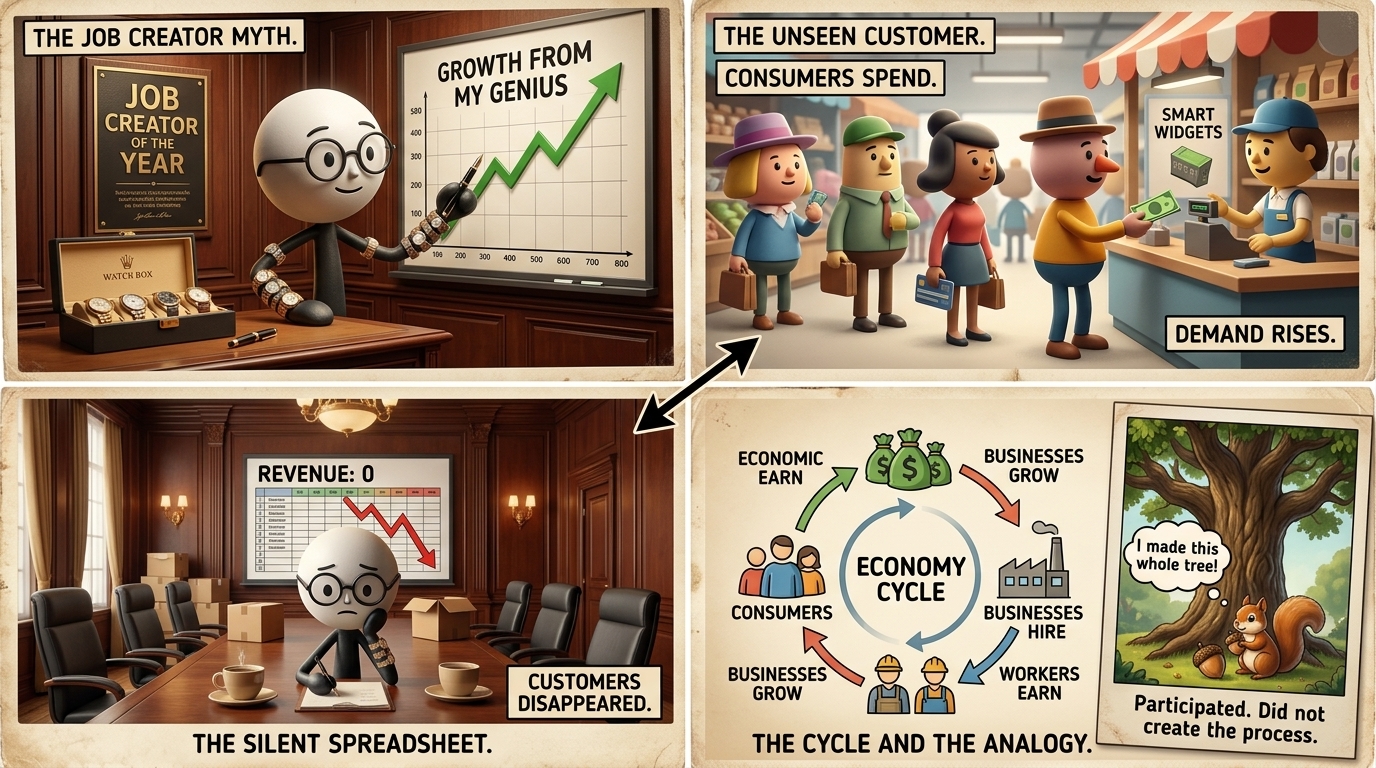
Imagine you are extraordinarily wealthy. Dozens of companies started, thousands of people hired, a ridiculous collection of watches, and an accountant who probably has an accountant. Now imagine nobody can afford what your companies sell. The companies stop growing. Then they stop hiring. Then they start firing, and you are sitting in a very expensive office staring at a very expensive spreadsheet, wondering where all your magnificent job creation went.
The customers disappeared. No customers, no revenue. No revenue, no growth. No growth, no hiring.
It turns out capitalism has an awkward little requirement. Someone has to buy the stuff.
Consumers spend, businesses respond, businesses grow, businesses hire, workers earn, workers spend, demand rises, and around we go again. That is an economy. The billionaire can own the factory. The customer is the reason the factory stays open.
Which is why business owners taking personal credit for “creating jobs” is a bit like squirrels taking credit for evolution. They participated. They were there. They may have been extremely busy. They did not create the process.
Hiring Is a Last Resort
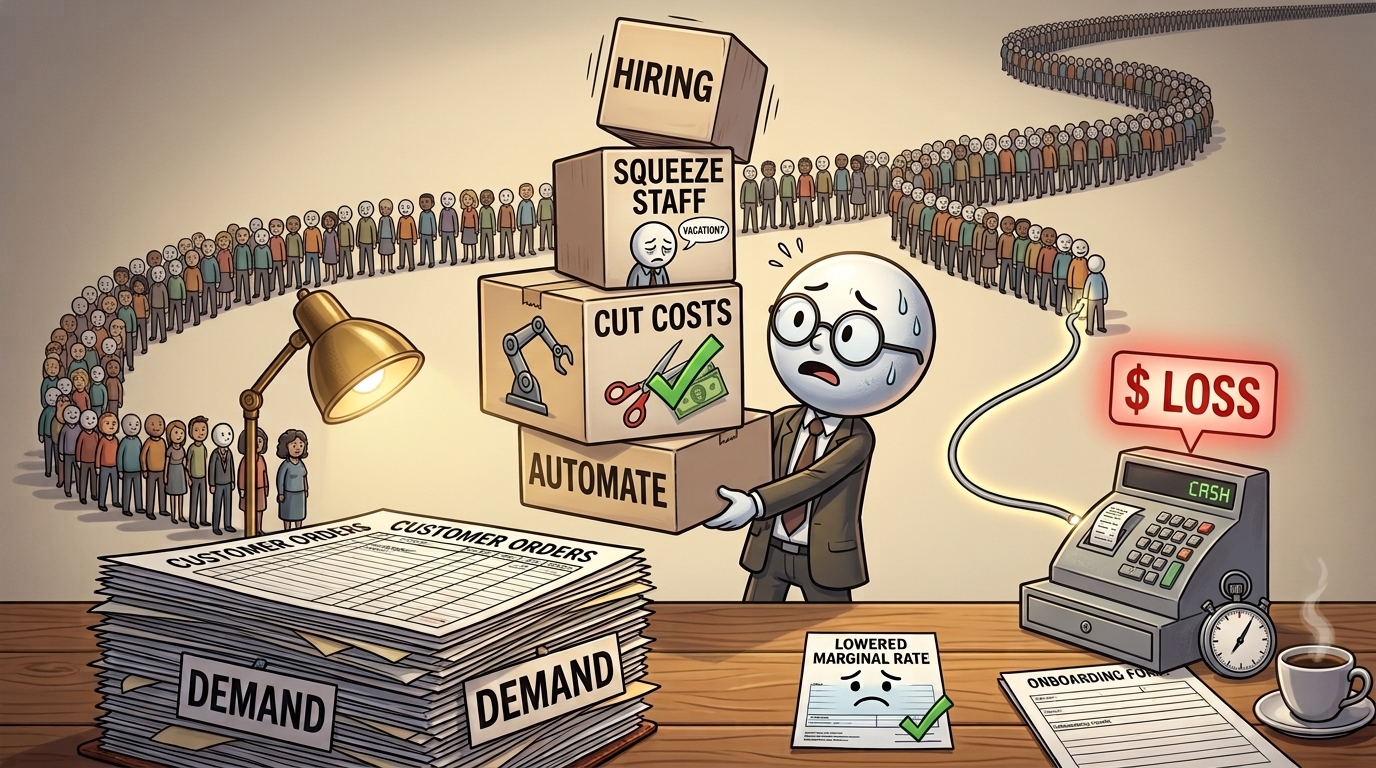
Anyone who has actually run a business knows something the speeches leave out: hiring people is the option you reach for last.
Employees are expensive. Salaries, benefits, equipment, space, computers, training. And occasionally they ask awkward questions like “when can I take vacation?”
Nobody hires because they were suddenly overwhelmed by generosity. They hire because demand forces their hand. If customers are not buying, the last thought in any sensible owner’s head is you know what this situation needs? Fifty more employees. They wait. They cut costs. They automate. They squeeze more out of the people already there. And they hire only when the queue gets long enough to cost them money.
Demand comes first. Hiring follows. That order does not reverse because someone’s marginal rate went down.
The Promotion
And yet an entire political mythology has been built on two words.
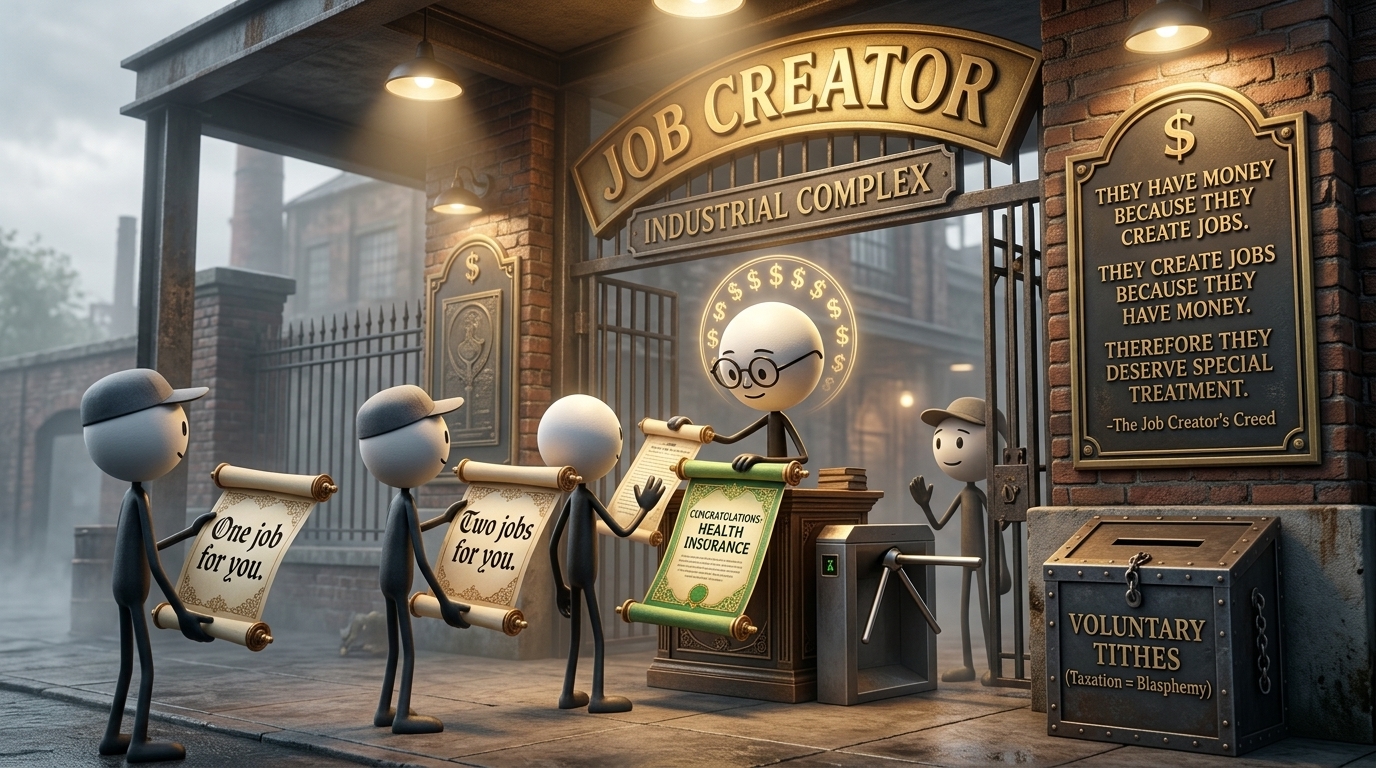
Once someone becomes a “job creator,” they stop being merely rich. They become economically sacred — and taxing the sacred sounds less like public policy and more like blasphemy. Don’t tax the job creators. As though the billionaire were personally standing at the factory gate handing out employment certificates. One job for you. Two jobs for you. And congratulations, you get health insurance.
Look at the phrase itself. “Job creator” is only a couple of steps from “Creator,” which is a remarkable promotion. One minute you are a wealthy investor, the next you are apparently responsible for the employment of civilisation.
The word quietly converts wealth into a moral credential. They have money because they create jobs. They create jobs because they have money. Therefore they deserve special treatment because they deserve special treatment. It is almost beautifully circular.
“A dollar sitting in an offshore account doesn’t employ a waiter. A dollar spent at a restaurant does.” — Capital matters. It just doesn’t order the fish.
One Stomach
There is also a physical limit that no amount of ideology gets around.
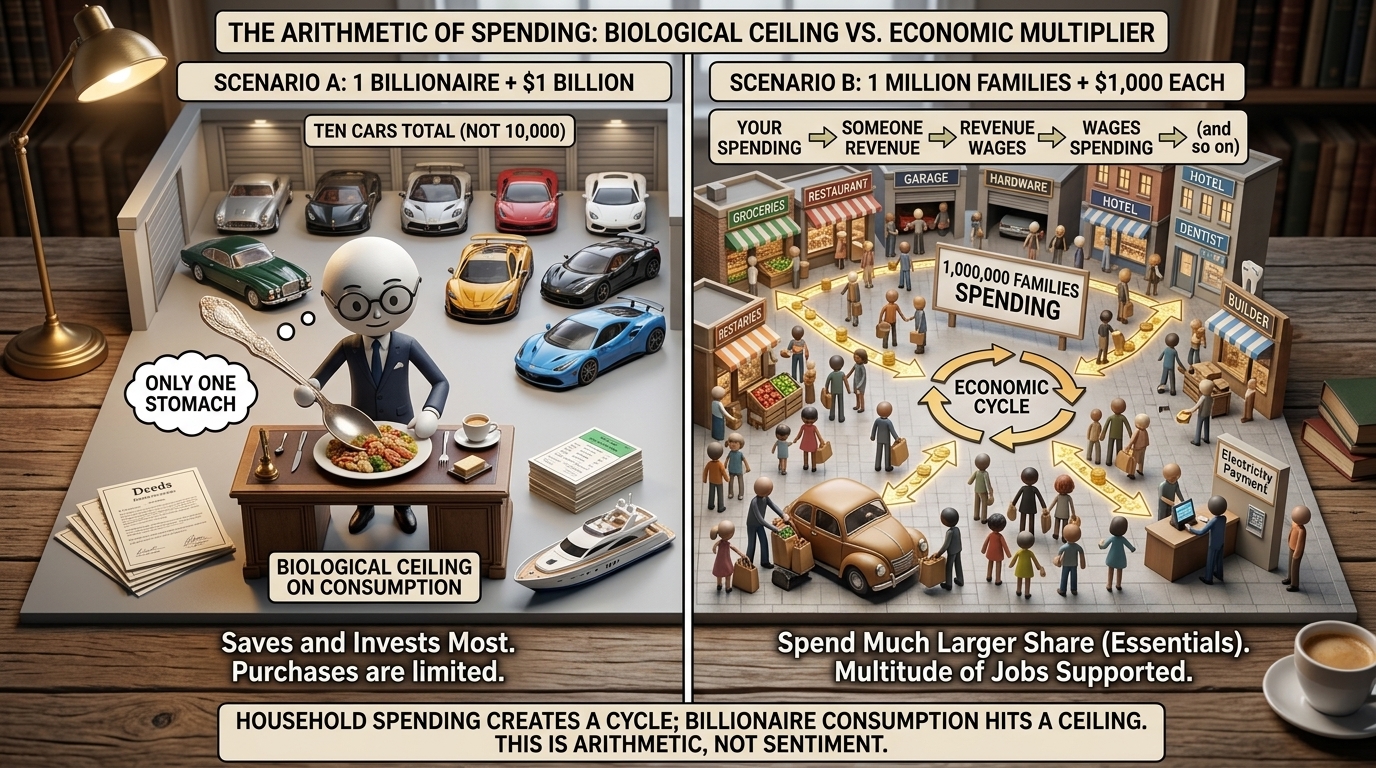
A billionaire can be a thousand times richer than an ordinary household. Does he buy a thousand times more cars? He might own ten. Not ten thousand. Expensive clothes, expensive restaurants, several houses, possibly a yacht — because apparently one house was not sufficiently inconvenient. But he eventually runs into the biological ceiling on consumption. He still has one stomach.
Meanwhile millions of ordinary households cannot afford a new car, a restaurant meal, new furniture, a holiday, or that increasingly luxurious experience known as paying the electricity bill without swearing.
Give one billionaire another billion and you may get another boat. Give a million families a thousand each and you get a million people spending — at grocery shops, restaurants, garages, hardware stores, hotels, dentists, builders, small businesses. That money moves, and every time it moves somebody else earns it. Your spending is someone else’s revenue; their revenue becomes someone else’s wages; those wages become someone else’s spending.
This is not sentiment, it is arithmetic. Households on lower and middle incomes spend a much larger share of any additional money they receive, because they have things they have been putting off. Wealthy households save and invest most of it, because they have already bought what they need. Both are entirely rational. Only one of them puts a plumber to work this month.
What Happened When Someone Checked
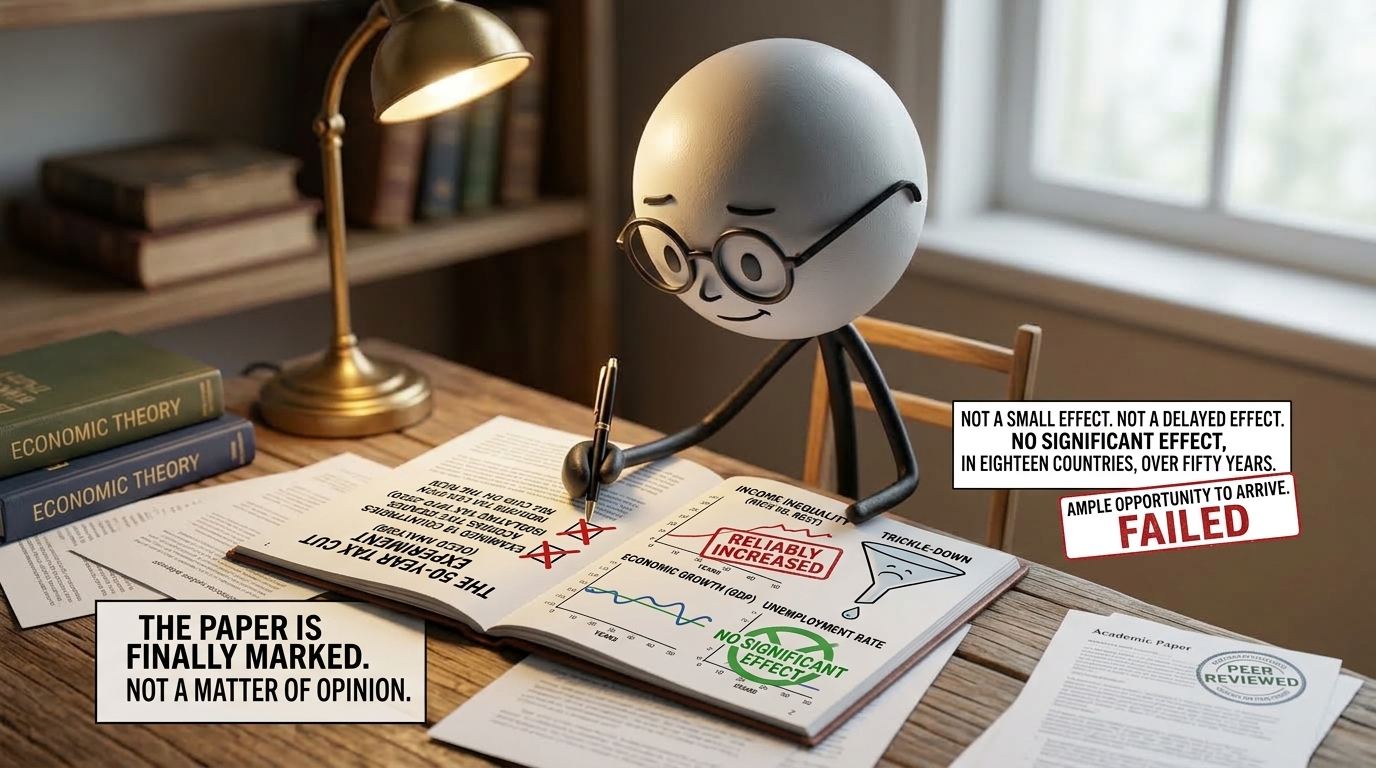
The pleasant thing about this argument is that it is not a matter of opinion. Forty years of tax cuts is a long experiment, and somebody finally marked the paper.
David Hope and Julian Limberg, at the LSE and King’s College London, examined 18 OECD countries across five decades, isolating major reforms that cut taxes on the rich and tracking what followed. Their finding: those reforms reliably increased income inequality, and had no significant effect on economic growth or unemployment.
Not a small effect. Not a delayed effect. No significant effect, in eighteen countries, over fifty years.
If the trickle were coming, it has had ample opportunity to arrive.

Where I Would Push Back on My Own Argument
Now the part that any honest version of this needs, because I would rather hand you the weaknesses than let someone else find them.
“Rich people don’t create jobs” is rhetoric, not economics. Somebody does have to build the factory. Capital does finance the machine, the lease, the first year of losses. Entrepreneurs genuinely start things that would not otherwise exist, and plenty of them are not rich when they do it. The defensible claim is narrower and still devastating: demand is usually the binding constraint, and where demand is the constraint, more money at the top does nothing about it. That is different from saying investment is irrelevant. It isn’t.
The famous story about this idea is itself exaggerated. Hanauer’s 2012 talk is endlessly circulated as the speech TED banned. It wasn’t banned. TED declined to feature it, the organisers said it was too partisan for the main stage, and it then went round the world anyway — which Snopes had to spend a whole article explaining. There is something almost funny about an argument concerning how ideas get treated arriving wrapped in a mildly inflated story about how it got treated. If you use this argument, use the real version. It is strong enough.
And it is an American argument, told in dollars. The inequality figures, the tax debate and the political vocabulary are American. But the Hope and Limberg data covers eighteen countries, Belgium among them, and I would gently point out that Europe has spent recent years importing the rhetoric while looking at very different numbers.
Back to the Chair
So here is the view from the chair, for whatever a hairdresser’s opinion is worth on macroeconomics. I have run a small business for thirty-five years, in two countries, under two entirely different tax systems, and I have employed people under one of them.
Not once in all that time has a change in my tax rate made me busier.
What makes me busier is people having enough money that a haircut does not have to wait another three weeks. I have watched that dial move in both directions, in two economies, and it has never once been connected to what the top rate was doing. When people are comfortable they come more often and they book the extra thing. When they are frightened, six weeks becomes nine. Every small business owner I know can read the national mood from their own appointment book about a month before it turns up in a newspaper.
If you had cut my taxes in 2009, I would have kept the money, because there was nothing to spend it on. There was no queue to serve. Cutting my costs would not have produced a single customer, and customers were the only thing missing.
I’ve written before about how nobody is actually anti-growth, and about a country that found enormous wealth and decided in advance who it belonged to. This is the same argument from underneath.
The people at the top of the pyramid are not standing on a mountain. They are standing on everybody else. Which should make them rather more interested in whether the people underneath can still afford to stand.
The richest don’t create the economy. They participate in it — often brilliantly, often usefully, and never alone.
It doesn’t begin at the top. It begins with people.
The Salon California Journal is a space for ideas, culture, and conversation from my chair in Brasschaat, Belgium. I write about beauty, technology, society, and the intersections between them.