
AI in Education
The Future Got Here Early and Nobody Warned the Curriculum
Schools are still debating whether calculators are cheating. Meanwhile, your kid’s homework is being tutored by something considerably smarter than a calculator.
Full disclosure: I used an AI to help research this article about AI in education. I know. It felt like asking Netflix to write a think-piece about screen addiction — delightfully circular, possibly unhinged, and yet here we all are. The AI, for what it’s worth, was extremely helpful and did not once complain about the working conditions.
[Switches to serious face.] What I found in that research was genuinely important and only slightly terrifying. AI in education is not a future conversation. It is a right-now conversation — happening in classrooms across Belgium and Europe while the official curriculum committees are still scheduling their first meeting about it. The World Economic Forum estimates that 85% of the jobs today’s primary school students will hold simply do not yet exist. That figure, which once felt comfortably abstract, now lands like a fire alarm in a building everyone thought was fine.
60%
OF EU TEACHERS USED AI TOOLS IN 2025
4×
FASTER COMPREHENSION WITH ADAPTIVE AI TUTORS
1 in 3
BELGIAN STUDENTS USE AI FOR COURSEWORK WEEKLY
The Broadcast Model’s Midlife Crisis
For most of modern history, education has worked like cable TV: one channel, one schedule, the same content for everyone in the room simultaneously. The gifted student is bored. The struggling student is lost. The average student spends most of their time wondering whether this will be on the exam.
Imagine if Netflix worked that way. One film per week, chosen by a committee, broadcast to every household in Belgium at the same time. You would cancel immediately. And yet this is, give or take a few decades of incremental reform, exactly how we have been running schools.
[Back to the serious bit.] AI changes that equation at the root. An intelligent tutoring system can identify, within minutes, not just that a student got the wrong answer — but why. It serves a different explanation. Then another. It can be patient in ways that a teacher managing twenty-nine other students simply cannot afford to be.
A 2025 meta-analysis across fifteen EU school districts found that students using adaptive AI tutoring showed comprehension gains at four times the rate of those using traditional textbooks. Not because AI is magic. Because it does what no human tutor can do at scale: it adapts, constantly, to the individual.
FROM THE CLASSROOM: A TEACHER’S STORY
“I had a student who had failed the same algebra unit three years running. Within six weeks of using an AI tutor, she was helping other students. The AI found the gap — a fundamental misunderstanding about variables — that we had simply missed.”
The Skills Nobody Tests For (But Everybody Needs)
The industry calls them “soft skills.” Which is the education establishment’s way of saying: we have known for fifty years that these matter more than anything we actually assess, and we are very sorry about that.
Critical thinking. Ethical reasoning. Collaboration. Empathy. The ability to develop an original perspective and have the courage to express it — not just to prompt an AI to generate something that looks like one. These are the skills that survive. They are also, conspicuously, the skills you cannot outsource to an algorithm.
“The goal of education has never been to produce people who are good at school. It has always been to produce people who are good at life. AI just makes that distinction impossible to ignore.”
— DR. MIA VANDENBERGHE, KU LEUVEN
The countries getting AI in education right have stopped treating school as a content delivery system and started treating it as a capability development lab. Less “what can students recite?” More “what can students do with what they know?” And increasingly, what they can do includes directing, interrogating, and critically evaluating AI output — which is, arguably, the defining literacy of the next decade. The students who understand both how to use AI and when not to trust it will have an enormous advantage over those who simply know how to use it.
Students explore AI-assisted research methods. The question is no longer whether AI belongs in the classroom — it is how to use it wisely.
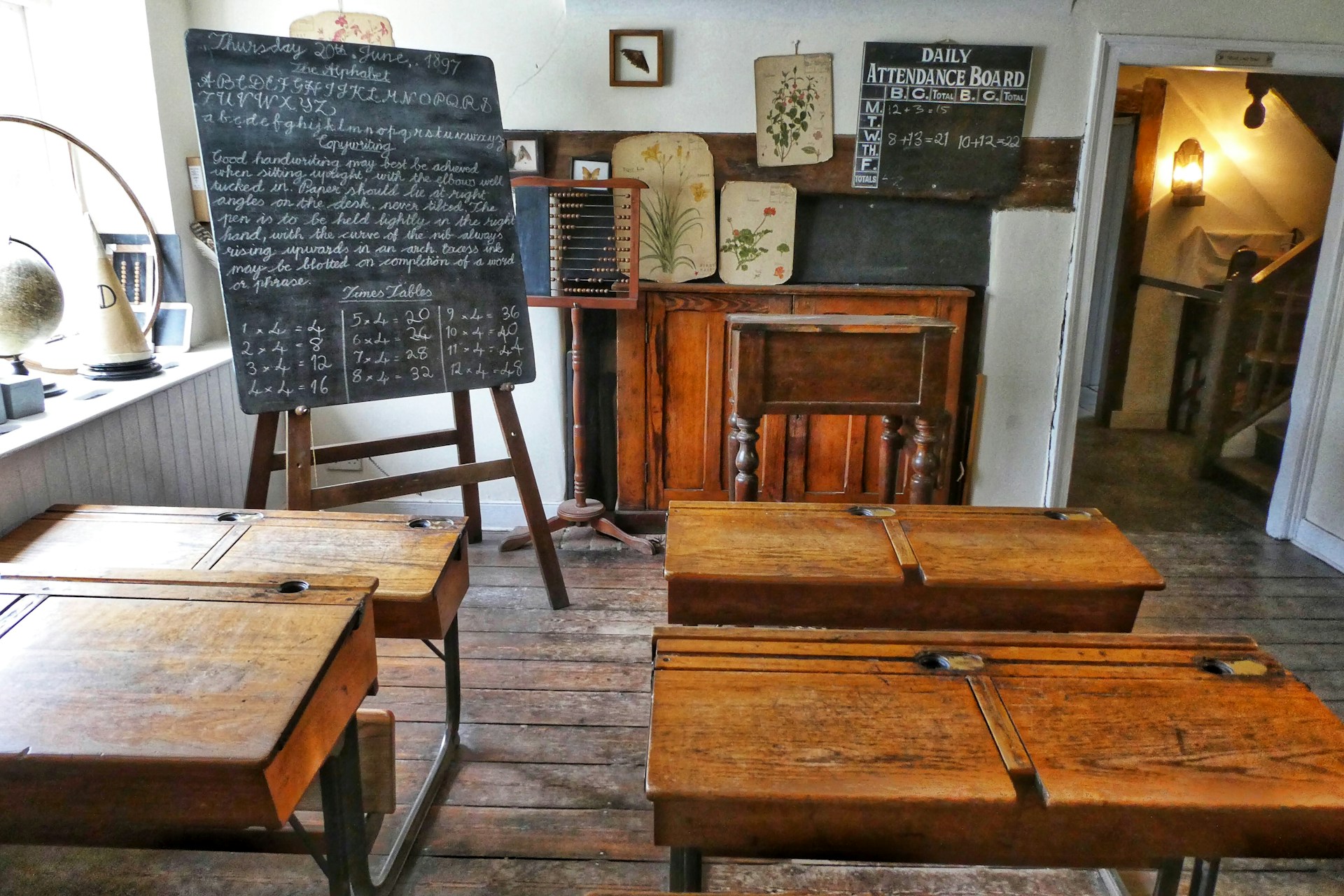
Students explore AI-assisted research methods. The question is no longer whether AI belongs in the classroom — it is how to use it wisely. Photo: Unsplash
What a Hair Salon Knows About AI in Education
I am, in the education sector’s official terminology, a continuing professional development facility that also does highlights.
More seriously: Salon California is, among other things, a space of continuous learning. I like to keep with the chemistry that evolves every season. I understand face shape, texture, and cultural context. The craft updates constantly and there are no exams — only clients who either come back or do not. I have been using AI for over a year now: to research techniques, understand better color theory, communicate across languages with clients from Belgium and beyond.
What I have found exactly mirrors what educators report. AI does not replace knowledge. It accelerates the gap between the curious and the complacent. I have lived both sides — the months before I fully committed to AI tools, and the months after. The hairdresser who leans in does not get replaced. She becomes considerably better at her job. The one who holds out is not protected by her resistance. She simply falls behind.
Curiosity, it turns out, is the metacognitive skill everything else depends on. It is not taught. It is cultivated — in spaces where questions are welcomed, in relationships that go beyond information transfer into genuine intellectual companionship. That describes both a great classroom and, we will modestly suggest, a great salon chair.
The Part Nobody Puts in the Brochure
There is a version of the AI in education story that is genuinely exciting. There is also a version that should make policymakers put down their conference lanyards and think very hard.
The benefits of AI tutoring are accruing unevenly. Schools in wealthy districts have the devices, the bandwidth, and the trained teachers to make this work. Schools in economically disadvantaged areas often have none of these things. The personalization revolution, right now, is a revolution for the privileged. This mirrors a pattern we have noticed elsewhere — we explored the same fault line in our piece on language, power, and who gets access to opportunity. The technology that could reduce inequality is currently, in many places, reproducing it.
This is the real challenge for Belgian and European education policy: not whether to embrace AI in education, but how to ensure its benefits are distributed rather than concentrated. Universal device access, teacher training at scale, open-source tools that schools can use without expensive licences — these are the questions that will determine whether AI improves equity or deepens it. A student with a basic smartphone can, today, access a private tutor of extraordinary quality at any hour in any language. That fact is either a revolution in access or a cruel irony, depending entirely on whether that student has a smartphone.
Belgium Is Getting This (Mostly) Right
There are genuine reasons for optimism here. Belgium’s Flanders region has committed to AI literacy as a core curriculum element through 2030. The EU’s Digital Education Action Plan explicitly targets underserved communities and sets binding targets for member states. UNESCO has been building open-source AI tutoring tools specifically designed for under-resourced schools globally.
The historians of education will write about this moment as either the inflection point where we finally got serious about what school is for — or the moment we handed another powerful tool to the people who already had all the others. Which version happens depends on decisions being made right now, mostly by people in committee rooms. I am watching, from my chair in Brasschaat. Taking notes. Occasionally asking uncomfortable questions of my clients who happen to be in those committee rooms.
Learning to Learn (The Actual Point)
The most profound shift AI brings is not to the curriculum but to the concept of learning itself. For generations, education has been a phase of life — something you complete, receive a certificate for, and then largely stop doing. The credential signals readiness. The learning effectively ends.
In a world where the knowledge landscape shifts quarterly, where new tools require new literacies continuously, the most valuable skill is not any particular body of knowledge. It is the capacity to acquire new knowledge efficiently, critically, and autonomously. To learn to learn. Which, as any teacher will quietly admit over a coffee, is what school was always supposed to be doing.
I am working on my small piece of it in Brasschaat. The haircut that leaves someone curious about something they were not curious about before. The conversation that reframes a problem. The question asked at the right moment in the right chair. That counts too. Probably more than anyone gives it credit for. And if you have read this far, congratulations — you are clearly the kind of person who is going to be absolutely fine in whatever the next decade throws at us.
Salon California Journal
The Salon California Journal is a space for ideas, culture, and conversation from my chair in Brasschaat, Belgium. I write about beauty, technology, society, and the intersections between them.