
The Universe Never Signed the Agreement
We treat the language we speak as a faithful representation of reality. Learn a second one and it starts looking suspiciously like one interpretation among many — and there is better evidence for this than the famous examples everybody quotes.
A client switched from Dutch into French halfway through a sentence last month, apologised, and then said something I have been chewing on ever since.
“Sorry. That bit doesn’t work in Dutch.”
I asked what she meant by doesn’t work. She thought about it, and gave up, and said: “It’s just not a thing you can say.”
I work in three languages every day, and I have come to think she is right more often than is comfortable.
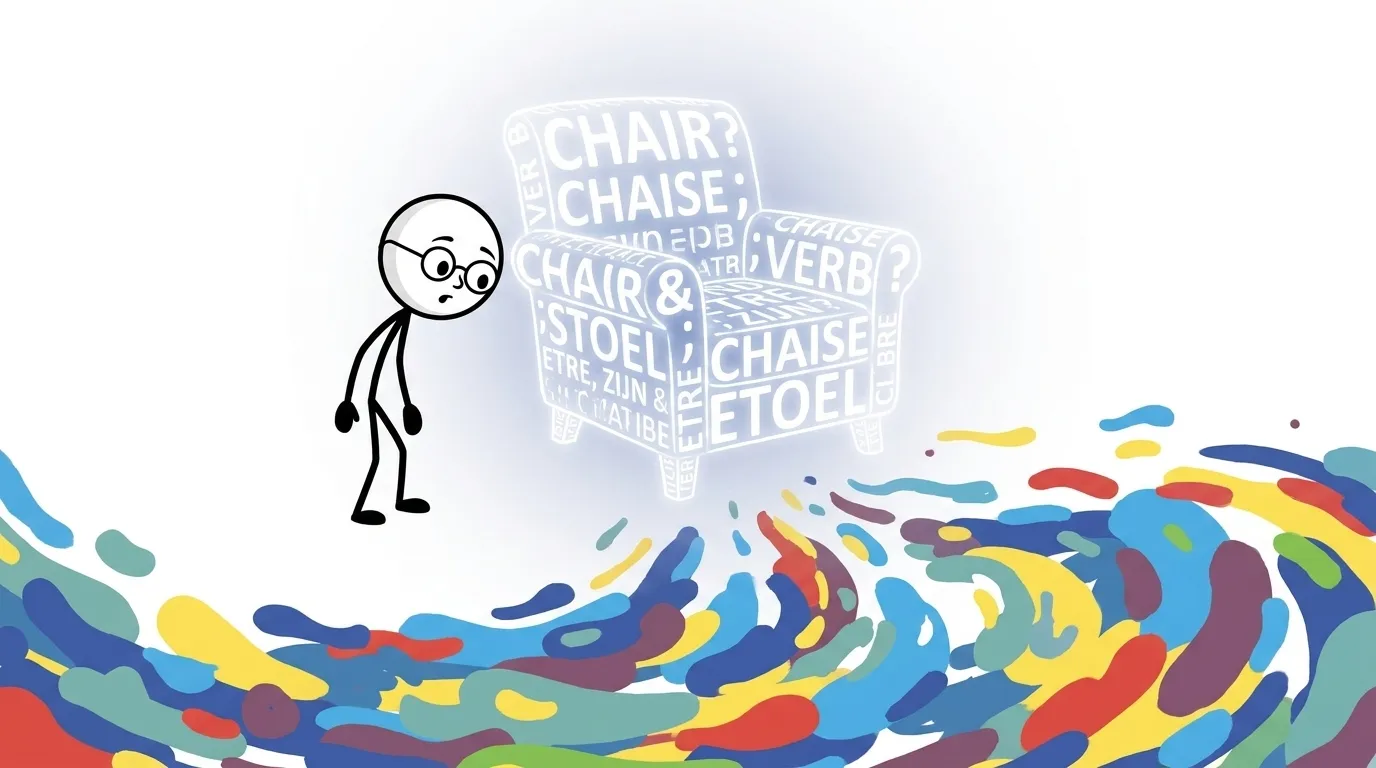
The Furniture
I think we trust the structures of our languages far too much. We behave as though the language we speak is a faithful representation of reality, as if the universe itself held a committee meeting thousands of years ago and officially declared English, French or Dutch the operating system of human existence.
Unfortunately, no such meeting took place. We just made up some words and collectively agreed to take them very seriously.
Language is a human invention, shaped over thousands of years by people living in circumstances that often have very little to do with our lives today. Yet we inherit their words, categories, assumptions and intellectual baggage as though they were universal truths rather than historical hand-me-downs. We rarely stop to inspect what we have inherited.
After all, why question the furniture when you have spent your entire life sitting on it?
Then You Learn a Second
Then you learn a second language. Perhaps even a third. And something rather inconvenient happens: you discover that the world does not look quite the same any more.
Other languages do not simply attach different labels to the same objects. They divide up reality differently, emphasise different distinctions, and sometimes force you to notice things your native language never bothered to mention.
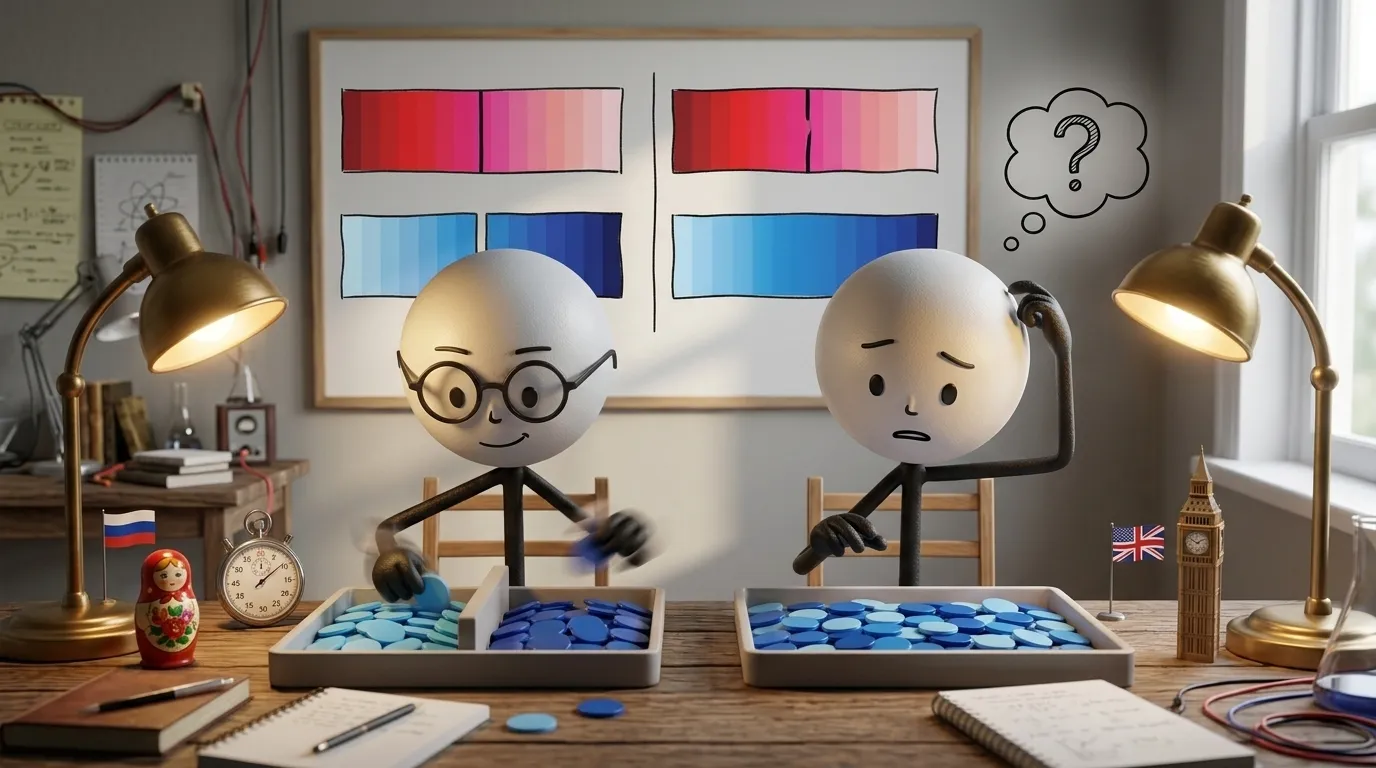
Russian, for instance, has no single basic word for blue. It has one word for the lighter end and another for the darker, the way English separates red from pink — and when researchers tested it, Russian speakers turned out to be measurably faster at telling two blues apart when the pair straddled that boundary. English speakers showed no such advantage. There was no boundary there for them to cross.
Suddenly the language you once trusted as the ultimate authority on reality starts looking suspiciously like one interpretation among many. Not the truth, but a theory of the truth that happened to win the popularity contest in your corner of the world.
The Boxes
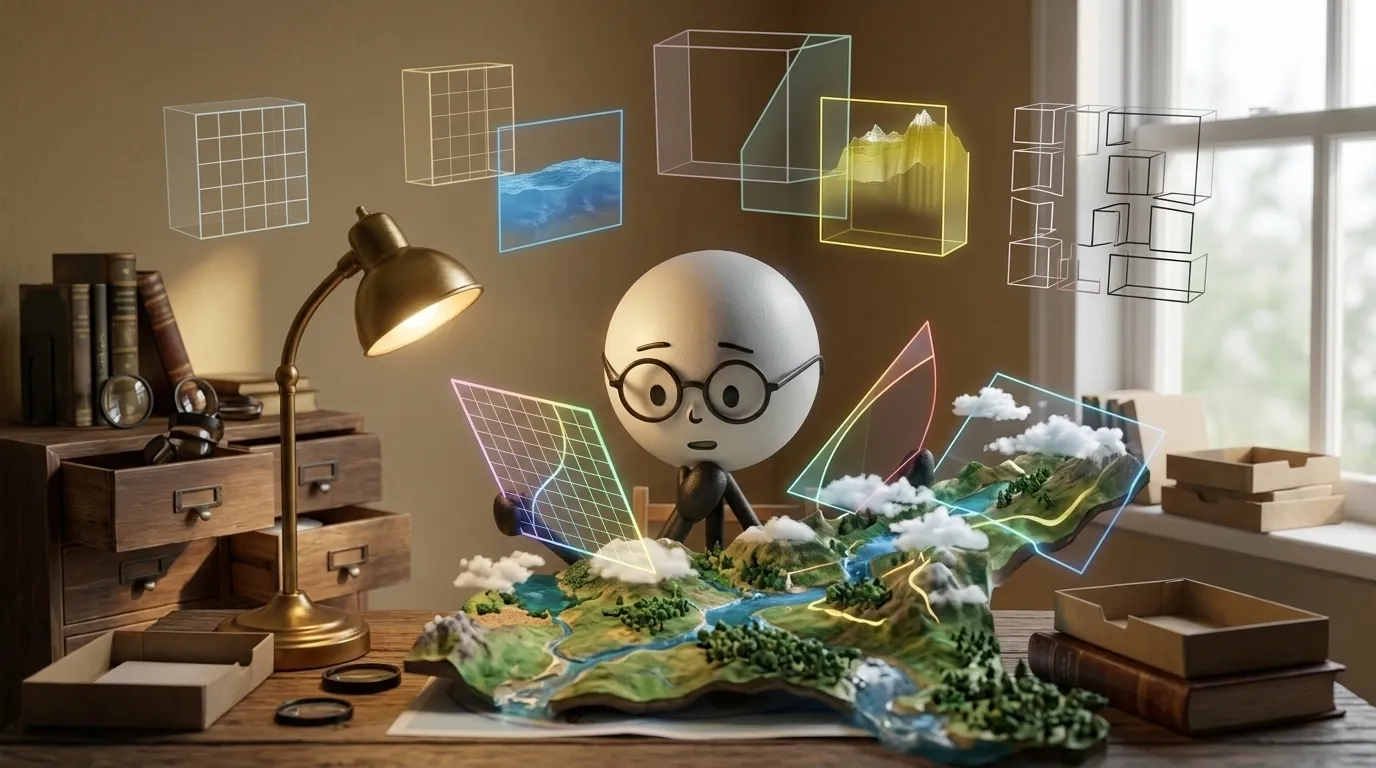
And that is when the trouble begins. You start questioning the mental boxes into which you have been sorting everything. You realise that reality did not necessarily arrive prepackaged in neat little linguistic compartments. Those boxes were built by humans, passed down through generations, and handed to you without a receipt or an instruction manual. You have simply been using them because everyone else does.
Which raises an uncomfortable question. How much of what we consider reality is actually reality, and how much is just our language telling us what we are allowed to see?
The human mind is remarkably flexible. We can learn to interpret the same world through radically different conceptual frameworks. Yet most of us spend our lives looking through the same linguistic lens, mistaking its limitations for the natural boundaries of existence. It is rather like wearing tinted glasses from birth and then insisting that the entire universe has that particular shade. Anyone who disagrees is obviously the one with a vision problem.
The real danger is not that our language might be wrong. It is that we rarely consider the possibility that it might be incomplete. We confuse the map with the territory, the label with the thing itself, and the familiar with the universal. And because everyone around us makes the same mistake, the whole arrangement acquires the comforting appearance of common sense.
“Why question the furniture when you’ve spent your entire life sitting on it?” — Nobody arrives with a receipt, and the instruction manual was never printed.

Wonderfully Disruptive
Learning another language does something wonderfully disruptive. It reminds you that the mental framework you have always taken for granted is not the only one available. It creates a little distance between you and your own assumptions, allowing you to examine them instead of blindly obeying them. For once, you get to question the software rather than spend your entire life blaming the hardware.
That distance, it turns out, can be measured. In one well-known set of experiments, a famously stubborn decision bias — people choosing differently depending on whether an identical outcome is described as a gain or a loss — simply disappeared when the problem was put to people in their second language. Your mother tongue arrives with everything attached. A learned one arrives slightly flat, and you have to actually think.
I should say that the strong version of this idea — that you cannot think what your language has no word for — has been argued down over the years, and deservedly. What survived is quieter: not a cage, but a tilt.
Learning another language does not just teach you how other people speak. It exposes how much of your own thinking you have mistaken for objective truth.

Back to the Chair
I work in French, English and Dutch, and I acquired the last of them in my fifties, which is an age at which the brain makes its objections known.
What I notice is not that I say different things in each. It is that I am a slightly different person in each. More direct in Dutch, because I have fewer words and no room for ornament. More careful in English. Funnier in French, or at least I believe I am, which may be the same mechanism as the clients who believe they look taller after a haircut.
Three versions of one man, each convinced at the time that he is simply being himself.
And perhaps that is the real value of multilingualism. Not merely being able to order a coffee in three languages or impress people at dinner parties, although humanity does seem remarkably fond of turning almost everything into a performance. It is the opportunity to discover that your worldview is not the world itself.
Because if there is one thing human beings excel at, it is taking a collection of assumptions, dressing them up as universal truths, and then looking genuinely offended when someone points out that the universe never signed the agreement.
The Salon California Journal is a space for ideas, culture, and conversation from my chair in Brasschaat, Belgium. I write about beauty, technology, society, and the intersections between them.