In 10 years
I Don’t Have a Forecast. I Have a Sense of What’s Trying to Emerge.
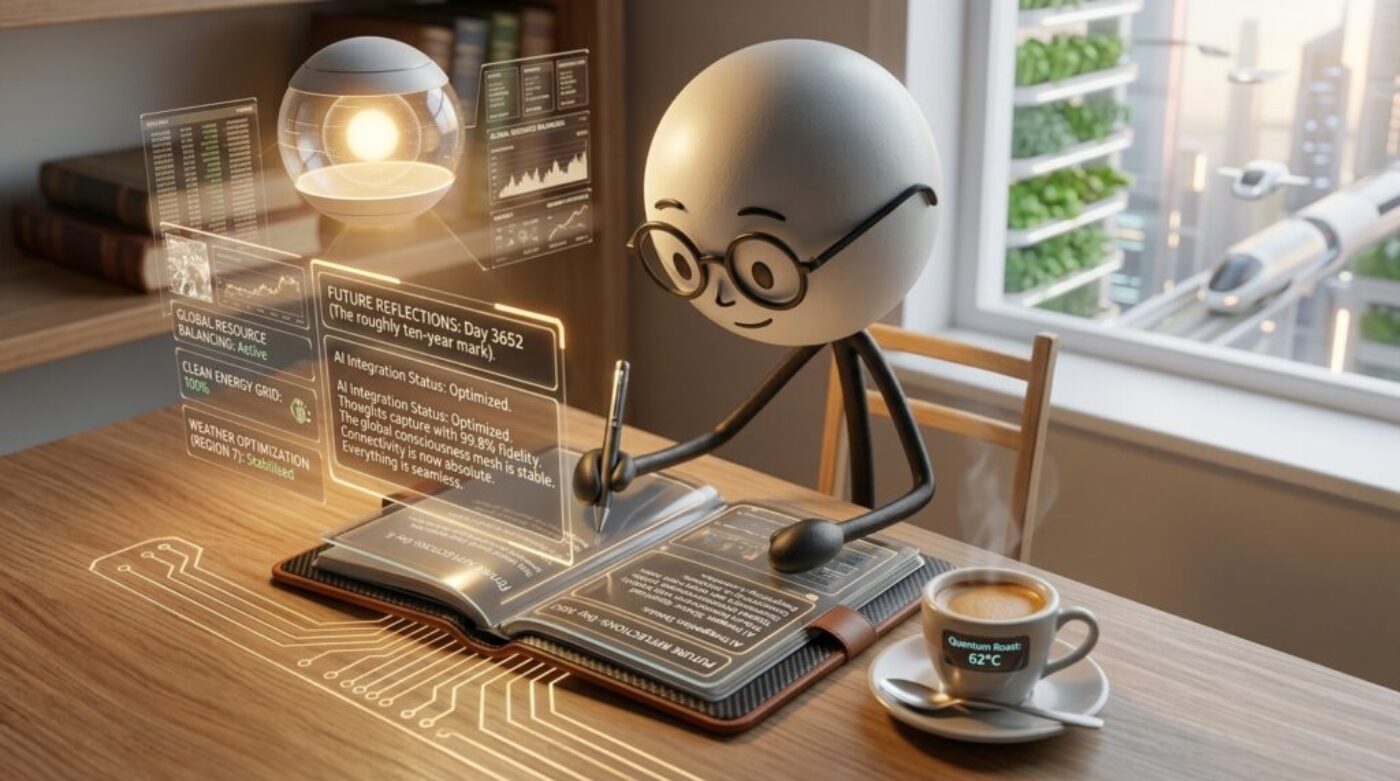
People ask me what the world will look like in ten years, and I rarely answer the way they expect. Here is what I actually think, and the small amount of evidence I would put behind it.
People ask me what the world will look like in ten years. It happens in the chair, roughly monthly, usually somewhere between the wash and the first section, and always with the studied casualness of someone who has been rehearsing the question on the way over.
I rarely answer the way they expect.
I don’t have a technology forecast. I have never had one, and I’ve stopped believing the people who do. What I have is a sense of what is trying to emerge.
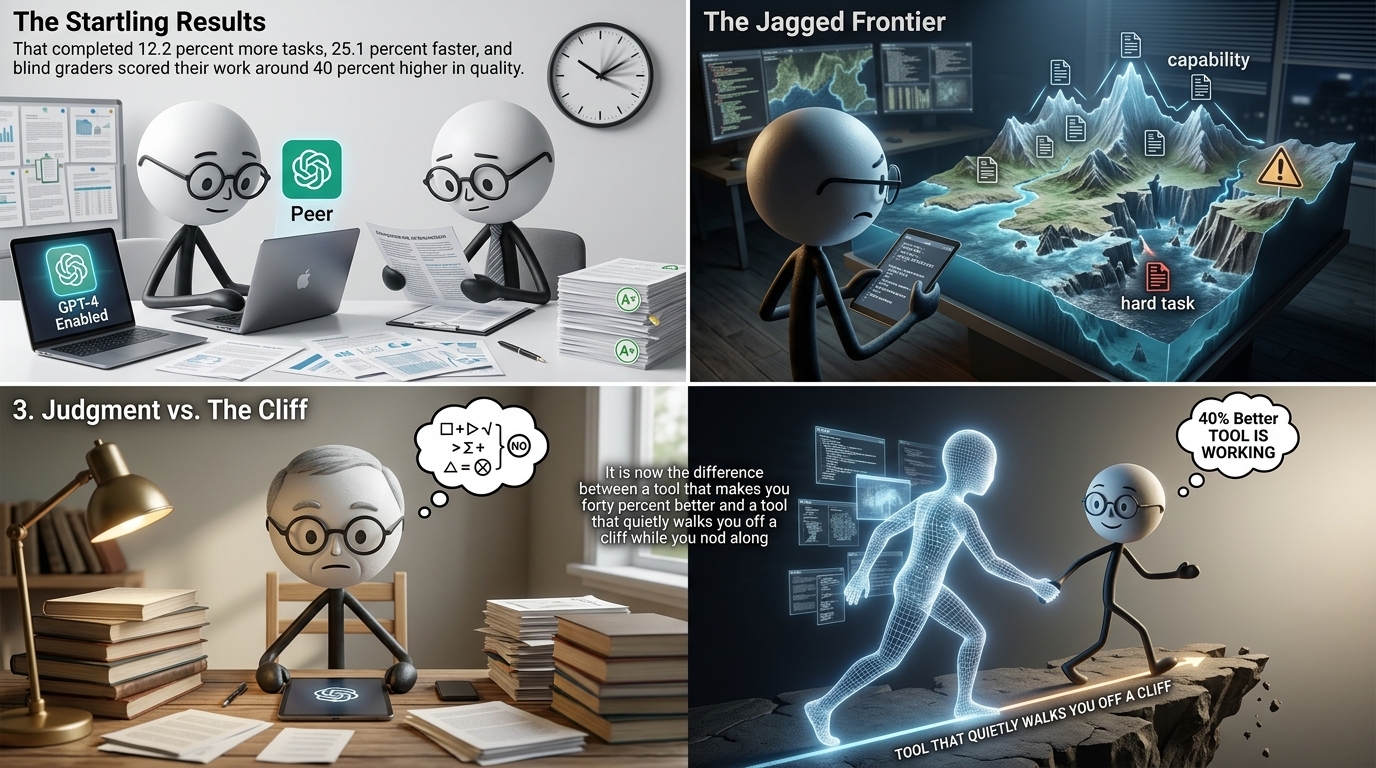
40% higher quality from people using AI on tasks inside its capability frontier, in a 758-person field experiment
19 pts less likely to be correct — the same people, same tool, on a task just outside that frontier
6 capacities worth building deliberately: creativity, judgment, presence, care, discernment, and holding complexity
0 forecasts I am prepared to offer, having watched a great many confident ones age badly
A Different Conversation About Intelligence
In ten years, I think we’ll be having a very different conversation about intelligence. Not because we’ve finally figured out AI, but because AI will have forced us to invest in the capacities it cannot replicate.
There is already a hint of this in the research, and it is the one piece of evidence I’d put real weight on. A field experiment ran 758 consultants through their actual work, half of them with GPT-4. On tasks inside the tool’s range, the AI group produced work graded around 40 percent higher in quality. On a task chosen to sit just outside it, the same people with the same tool were 19 percentage points less likely to get the right answer.
Nobody can see where that boundary runs. You can only feel it, and you can only feel it if you know the work deeply enough that a wrong answer sets something off in you before you can explain what.
So I think the organizations that navigate this transition well won’t necessarily be the ones that automated fastest. They’ll be the ones that figured out what human beings are uniquely capable of, and then deliberately built around those capacities: creativity, judgment, presence, care, discernment, and the ability to hold complexity without immediately collapsing it into a simple answer.
A Different Conversation About Leadership
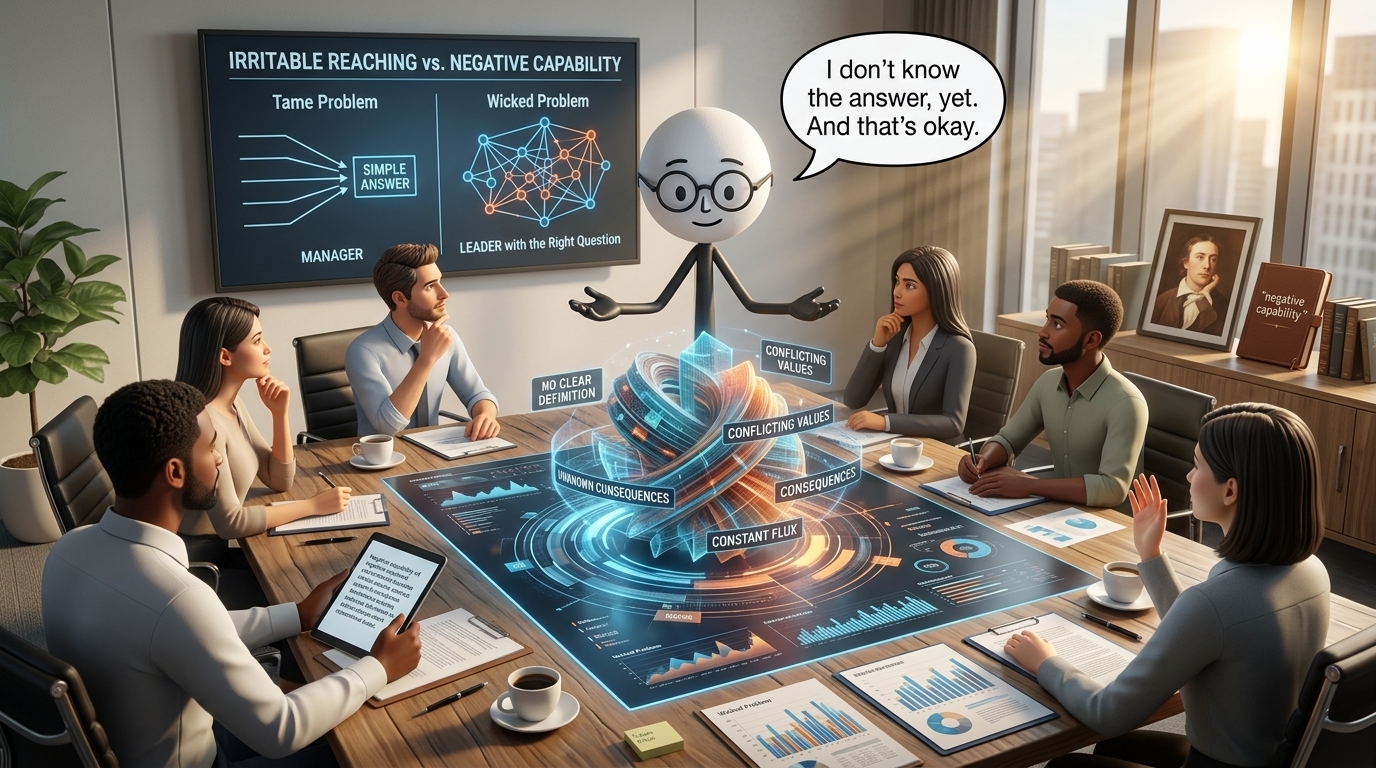
I hope we’ll also be having a different conversation about leadership.
The leaders who matter in ten years may be recognizable less by their titles or their certainty than by their ability to hold a room through genuine uncertainty. To keep people’s dignity intact in the middle of difficult things. To model what it looks like to say “I don’t know,” and keep going anyway.
That last one is harder than it sounds, and it is not a personality trait. Amy Edmondson has spent decades showing that teams do better when people can admit uncertainty and error without paying for it — and that the most reliable way to make that true is a leader who goes first, out loud, in front of everyone.
Certainty is cheap and always has been. Anyone can supply it, and in a genuinely uncertain decade most of what gets supplied will be wrong.
Grieving What Needed to Be Grieved
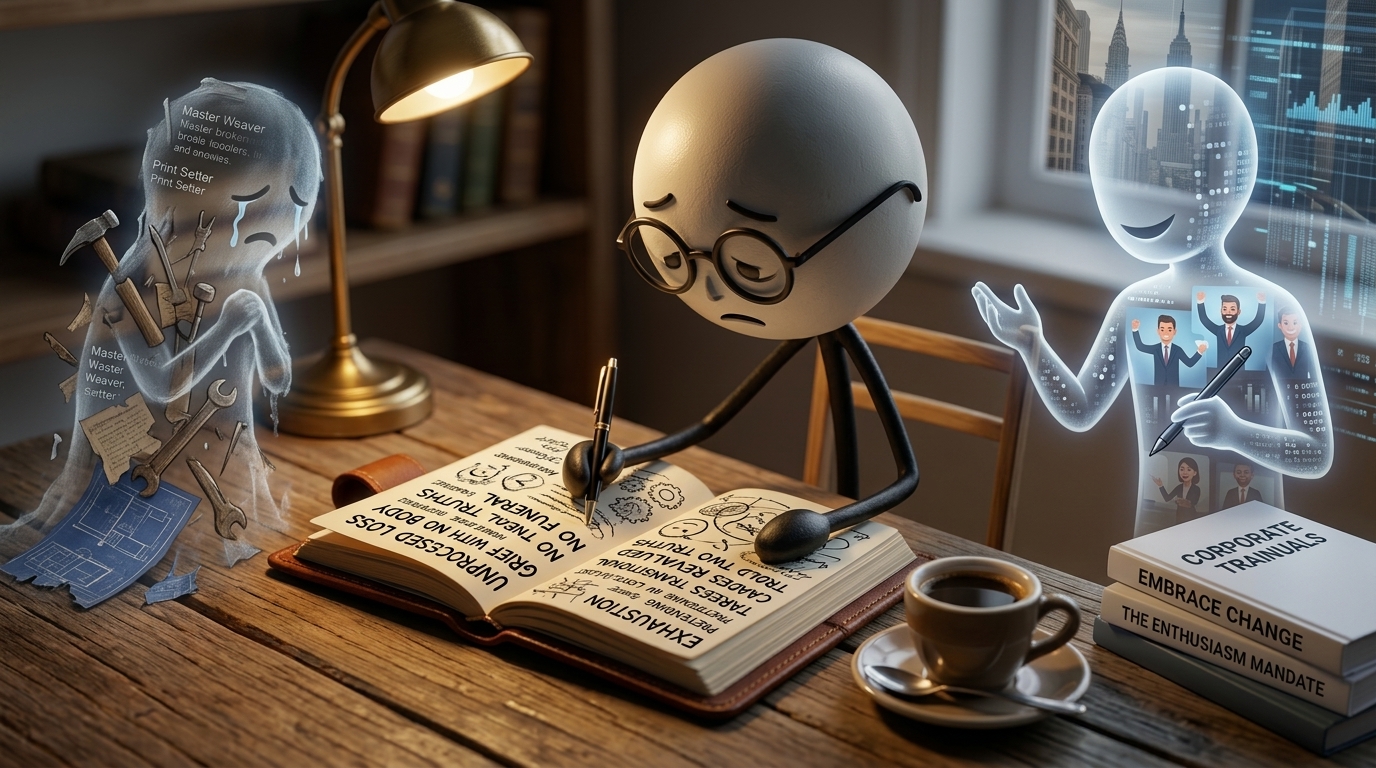
And I think, if we’re willing, we’ll have begun to grieve what needed to be grieved. To let the world that was truly end, rather than constantly trying to preserve it.
This sounds soft. It isn’t. The family therapist Pauline Boss gave this kind of loss a name — ambiguous loss, grief with no body, no date and no ceremony — and found it harder to carry than ordinary bereavement precisely because nobody ever officially acknowledges it.
Skills that took a lifetime to build are being revalued in public. Careers people organised their lives around are described from stages, cheerfully, as transitional. Asking people to retrain enthusiastically while pretending nothing has been lost is asking them to do two incompatible things at once, and it is the second one that is quietly exhausting everybody.
“The kind of hope that moves even when it cannot see the end. Especially when it cannot see the end.” — Which is the difference between hope and a forecast. Only one of them requires anything of you.
The Disciplined Kind of Hope
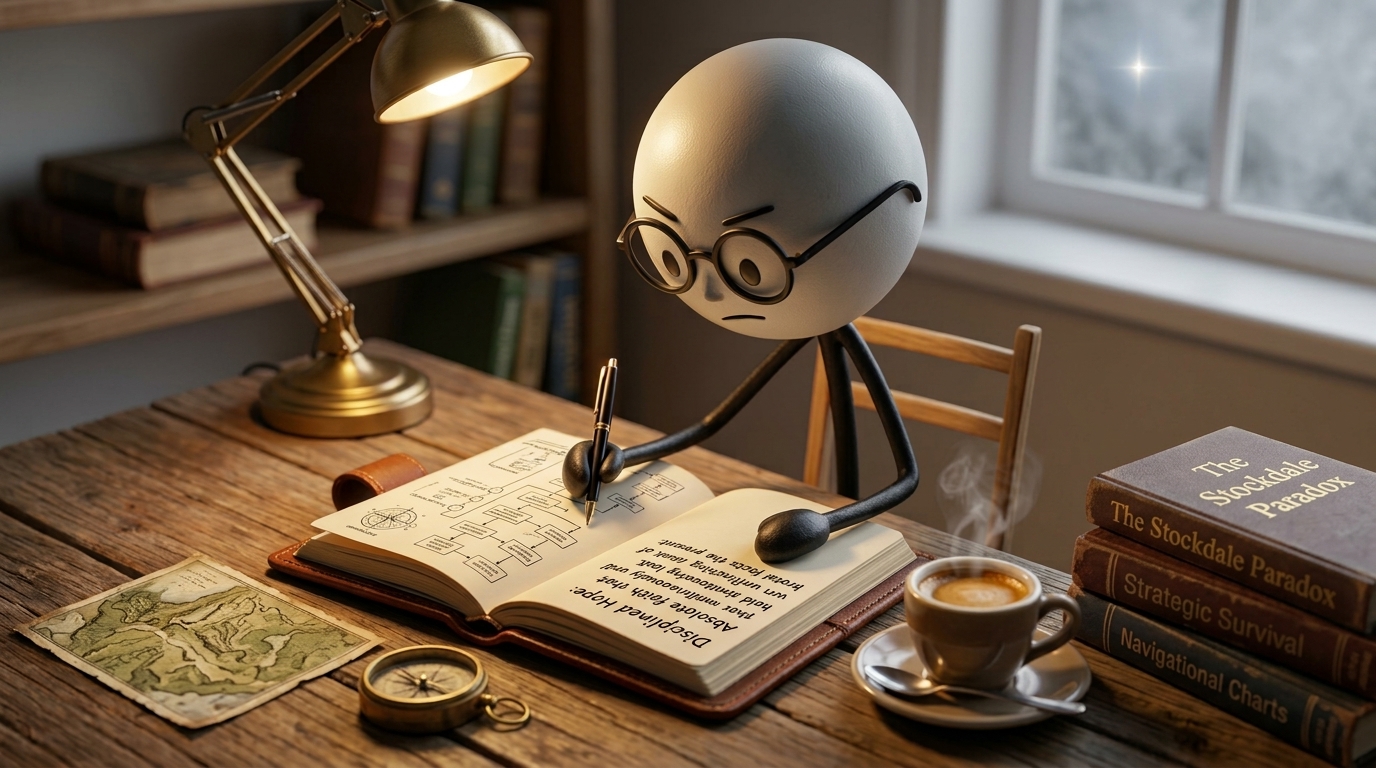
To face the world that’s coming with clear eyes. Not with shallow optimism, but with something deeper: the practiced, built, disciplined kind of hope.
Rebecca Solnit has spent twenty years drawing this line, and it is worth stealing. Optimism is a forecast — the belief that it will probably be fine, which asks nothing of the believer and collapses the moment the evidence turns. Hope is different. Hope is the recognition that we genuinely cannot know how this ends, and that the not-knowing is precisely the space in which what we do still counts.
Optimism and pessimism both let you off the hook, because both of them claim to know the ending.
Hope is a skill rather than a mood. It is practiced, and built, and it moves even when it cannot see the end.
Especially when it cannot see the end.
If You Want to Go Further
The field experiment is Dell’Acqua and colleagues on the jagged frontier, free to read and refreshingly plain about what it found. Amy Edmondson on psychological safety, Pauline Boss on ambiguous loss, and Rebecca Solnit on hope as a practice rather than a personality. Four people, four different fields, all circling the same thing from different sides.
Back to the Chair
I should admit that I write this from a comfortable position. Nobody is automating a haircut. My trade is safe for reasons that have nothing to do with my merit — it is physical, it is one person at a time, and it happens in a room.
But I studied electrical engineering long before I ever ran a salon, and I have a clear memory of how confidently people predicted which skills would matter. I’ve written since about the capacities that quietly disappear once a device does the work, and about what a classroom might look like once these tools properly arrive. The pattern is the same in both. The specific tool is never the thing worth betting on. What survives is the capacity the tool was standing in for.
So I can’t tell you exactly what the world will look like in ten years.
But I can tell you this. The people who arrive there well won’t be the people who predicted it.
They’ll be the people who kept building human capacity at the very moment the world was tempting them to stop.
The Salon California Journal is a space for ideas, culture, and conversation from my chair in Brasschaat, Belgium. I write about beauty, technology, society, and the intersections between them.